
TL;DR:
- Short-term home care helps individuals recover at home by rebuilding daily skills and preventing readmissions. It provides flexible, goal-oriented support funded by the NHS or local authorities, focusing on physical, emotional, and clinical needs during recovery. Engaging professional carers early and maintaining regular care reviews maximizes independence and minimizes reliance on family efforts.
Short-term home care is defined as a time-limited, personalised support service that helps individuals recover at home after illness, surgery, or hospital discharge. Known formally as reablement, it focuses on restoring daily living skills rather than simply managing them. The NHS and local authorities in England and Wales fund reablement for up to six weeks, making it one of the most accessible forms of post-hospital support available. Understanding the short-term home care benefits available to your loved one is the first step towards a safer, more confident recovery at home.
1. What are the short-term home care benefits for physical recovery?
Physical recovery is the most immediate reason families arrange temporary home care services. Reablement focuses on rebuilding daily living skills such as showering, dressing, preparing meals, and walking safely. Each task is practised gradually, which rebuilds confidence alongside physical ability.
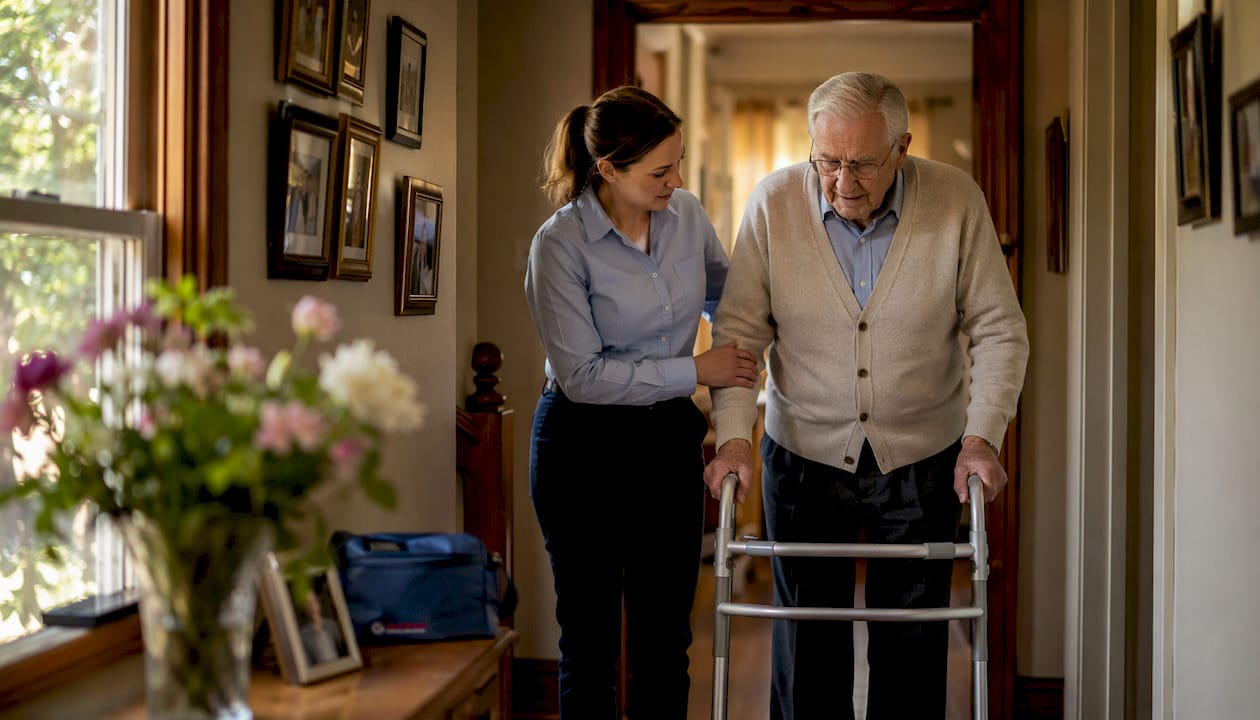
Carers also play a direct role in fall prevention. They assess the home environment, support safe movement, and encourage the use of mobility aids correctly. This is particularly important in the weeks immediately after a hospital stay, when the risk of a fall is highest.
Medication management is another core component. Carers prompt and monitor medication schedules, observe for side effects, and flag any concerns to the wider healthcare team. This level of daily oversight is difficult for family members to sustain alone, particularly those who work or live at a distance.
- Support with washing, dressing, and meal preparation
- Mobility assistance and fall prevention strategies
- Gradual, graded practice to rebuild independence
- Medication prompting and side-effect monitoring
Pro Tip: Involving a professional carer from the day of hospital discharge, rather than waiting to see how your loved one manages, significantly improves recovery pace and reduces the risk of setbacks.
2. Emotional and mental wellbeing during recovery
Emotional wellbeing shapes how quickly someone recovers physically. Familiar surroundings and compassionate carer relationships improve motivation and reduce the anxiety that often accompanies a return home after illness. Being in one’s own home, surrounded by personal belongings and routines, provides a sense of control that a hospital ward cannot offer.
Loneliness is a genuine clinical risk during recovery. Carers provide regular social interaction, which prevents the isolation that can slow rehabilitation engagement. A person who feels supported is far more likely to attempt physiotherapy exercises or follow dietary guidance.
Confidence also builds through small, daily achievements. When a carer supports rather than does everything for your loved one, each successfully completed task reinforces the belief that full independence is possible. This psychological momentum is one of the most underappreciated benefits of in-home care.
- Emotional reassurance during vulnerable recovery phases
- Social interaction that reduces loneliness and anxiety
- Confidence building through supported daily achievements
- Motivation to engage with rehabilitation exercises
3. How short-term care reduces hospital readmissions
Hospital readmission within 30 days of discharge is a significant risk for older adults and those recovering from surgery or serious illness. Professional carers are trained to recognise subtle health changes such as increased pain, loss of appetite, confusion, or changes in skin condition. These early warning signs are easy to miss without daily, attentive observation.
Timely intervention is the key mechanism here. When a carer notices a change and contacts the GP or district nurse promptly, a small problem is addressed before it becomes a crisis. This is the safety net that family members alone may overlook when they are not trained to know what to look for.
Medication adherence is tightly linked to readmission rates. Missed doses or incorrect timing can destabilise conditions such as heart failure, diabetes, or infection recovery. Carers who monitor this daily provide a layer of clinical safety that bridges the gap between hospital and full independence.
“Carers act as a safety net, spotting early subtle health changes that family alone might overlook, preventing rehospitalisation. Integration with healthcare teams ensures continuity of care and reduces avoidable complications.”
4. Flexibility and personalisation of temporary home care services
One of the clearest short-term caregiving advantages is how readily the support adapts to changing needs. Care can range from a single daily visit for help with washing and breakfast, through to live-in support for those who need round-the-clock assistance in the early days after discharge. The level of support is not fixed.
Care plans are reviewed regularly, with step-down rules that reduce visits safely as recovery progresses. This avoids what care professionals call “package drift,” where a person continues receiving more support than they actually need, which can undermine independence rather than restore it. Structured review points keep the care purposeful and proportionate.
Families benefit directly from this flexibility. When professional carers are present, family members can return to work, rest, or attend to their own health without guilt. This is a genuine home care support benefit that is often overlooked when families focus solely on their loved one’s physical needs.
| Feature | Short-term care | Long-term care |
|---|---|---|
| Duration | Up to six weeks, reviewed regularly | Ongoing, often indefinite |
| Primary goal | Restore independence | Maintain current function |
| Intensity | Decreases as recovery progresses | Typically stable or increases |
| Funding | Often NHS or local authority funded | Usually privately funded or means-tested |
| Review frequency | Frequent, with clear step-down criteria | Less frequent, based on need changes |
Pro Tip: Ask your care coordinator to set a formal review date within the first two weeks. This keeps the care plan aligned with your loved one’s actual progress and prevents unnecessary dependency.
5. Preventing dependency through evidence-based care planning
Providing too much support too soon creates dependency rather than recovery. Structured, evidence-based review of short-term care progression ensures that reablement promotes independence without crossing into over-support. The key metrics professionals track include functional improvement, cognitive stability, and clinical indicators such as wound healing or infection resolution.
Effective short-term care also involves observing functional trajectories over time. A person who improves steadily week on week is on a clear reablement pathway. One who plateaus or declines may need a different type of support, and early identification of this prevents a delayed and more difficult transition to long-term care.
This evidence-based approach is what separates professional reablement from informal family care. Families provide love and presence. Professional carers provide structured observation, documented progress, and clinical communication. Both are necessary, and neither replaces the other.
6. The role of intermediate care and NHS-funded reablement
Intermediate care services aim to maximise independence and avoid premature placement in residential care. They are usually free for up to six weeks and may include physiotherapy, occupational therapy, and nursing input alongside personal care. This multi-disciplinary approach addresses physical, functional, and clinical needs simultaneously.
Reablement is the specific term used within NHS and local authority frameworks for this type of goal-directed, time-limited support. Families arranging post-hospital discharge care should ask explicitly whether their loved one qualifies for a funded reablement package before committing to private arrangements. The assessment is usually triggered by the hospital discharge team.
Understanding this distinction matters practically. NHS-funded reablement and privately arranged short-term care can complement each other. A funded package may cover the first four weeks, with a private provider filling gaps in timing or intensity that the statutory service cannot meet.
7. Who benefits most from short-term home care?
Short-term assistance for seniors and adults recovering from acute illness covers a wide range of situations. The most common include:
- Recovery after orthopaedic surgery such as hip or knee replacement
- Stroke recovery, where daily practice of movement and speech is critical
- Recovery from falls, infections, or cardiac events
- Interim support while awaiting a long-term care assessment
- Transitional support for those moving from hospital to independent living
The common thread is a clear recovery goal and a realistic expectation of improvement. Short-term care works best when there is something to work towards, whether that is walking to the kitchen unaided, managing personal hygiene independently, or returning to a previous level of daily activity.
Early planning makes a significant difference. Families who arrange hospital discharge support before the discharge date, rather than scrambling on the day, give their loved one the best possible start to recovery at home.
Pro Tip: Contact a care manager while your loved one is still in hospital. Most discharge teams welcome this and it removes the gap between leaving the ward and receiving support at home.
Key takeaways
Short-term home care, or reablement, is the most effective way to restore independence after illness or hospital discharge while reducing the risk of readmission.
| Point | Details |
|---|---|
| Reablement restores independence | Structured daily support rebuilds skills like washing, dressing, and safe mobility. |
| NHS funding is available | Local authorities fund reablement for up to six weeks, often including therapy input. |
| Early warning prevents readmission | Trained carers spot subtle health changes before they become emergencies. |
| Flexible plans reduce dependency | Regular reviews step down support as recovery progresses, keeping care proportionate. |
| Families benefit too | Professional care gives family members rest and reassurance without removing their involvement. |
What I have seen that most families miss
When families first contact me about short-term care, they almost always frame it as a temporary fix. They want someone to “just help out for a few weeks” until their loved one is back on their feet. That framing is understandable, but it misses the most important thing reablement actually does.
The real value is not the tasks the carer completes. It is the daily, trained observation that happens while those tasks are being done. A carer who notices that someone is eating less, moving more stiffly, or becoming confused on a Tuesday morning can prevent a hospital admission by Friday. Family members, even devoted ones, often do not know what to look for or how to report it effectively.
The families who get the best outcomes are those who treat the carer as a clinical partner, not a domestic helper. They share information, ask questions, and stay involved without trying to do everything themselves. That balance, professional support alongside family presence, is where recovery actually happens. If I could give one piece of advice, it would be this: plan the care before the discharge, not after it.
— Emm
How Caremanagers supports your family through short-term care
Caremanagers provides professional home care services across South Wales and England, including short-term reablement support, hospital discharge care, and live-in arrangements for those who need more intensive help. Every care plan is built around the individual, not a standard package, and is reviewed regularly to match the pace of recovery.
Arranging care quickly after a hospital discharge is one of the most stressful things a family faces. Caremanagers makes the process straightforward by assessing needs promptly and matching your loved one with a carer suited to their personality and requirements. If you are weighing up your options, the guide to choosing home care services is a practical starting point. Contact Caremanagers to discuss what short-term support looks like for your family.
FAQ
What is short-term home care?
Short-term home care, formally called reablement, is a time-limited support service that helps individuals regain daily living skills after illness or hospital discharge. It typically lasts up to six weeks and is often funded by the NHS or local authority.
How long does short-term home care last?
Short-term care is usually provided for up to six weeks, with regular reviews to assess progress. Support is stepped down as the person’s independence improves, and a decision is made about whether long-term care is needed.
Can short-term home care prevent hospital readmission?
Yes. Trained carers recognise early warning signs such as confusion, reduced appetite, or increased pain, and alert healthcare professionals promptly. This timely intervention prevents minor changes from becoming medical emergencies.
Who pays for short-term home care in the UK?
Reablement provided through the NHS or local authority is usually free for up to six weeks. Private short-term care is self-funded, though it can complement a statutory package where gaps in timing or intensity exist.
When should I arrange short-term home care?
Arrange care before your loved one leaves hospital, not after. Contacting a care provider while the person is still on the ward allows the care to begin on the day of discharge, removing the gap that most commonly leads to complications.