
Table of Contents
- What 24 Hour Home Care Really Means
- Care Models Compared: 24-Hour Care Package vs Live-In Care
- Live-In Care vs 24-Hour Care: Which Suits Your Family?
- Overnight Care at Home: What Night-Time Support Covers
- The Home Care Assessment: How Care Needs Are Matched to Support
- What 24 Hour Home Care Costs and Who Pays
- Choosing a Provider: Questions, Checks and Continuity of Care
- Frequently Asked Questions
Last Updated: October 8, 2026
What 24 Hour Home Care Really Means
24 hour home care is continuous support delivered in a person’s own home, usually through a rotating team of carers who cover daytime, evening and night shifts across the full week. It is not one carer staying awake for 24 hours straight.
At Care Managers, we arrange this kind of support across South Wales and England, and the families who ask about it usually share one worry: that a parent or spouse will have to leave the home they love.
The term covers several arrangements. A 24-hour care package means carers work in shifts to provide full-time support. Live-in care places a carer in the home who sleeps there overnight.
Who typically needs round-the-clock support
The people who need this level of care are rarely a single group. They include:
- Older adults who are no longer safe alone overnight, perhaps after a fall or a hospital stay
- People living with dementia who may wake confused or try to leave the house
- Adults with Parkinson’s or another long-term condition that affects mobility and medication timing
- Adults with learning disabilities or acquired brain injuries who need consistent daily support
- Family carers who have reached the point where they cannot continue alone
The common thread is not a diagnosis. It is that support is needed at unpredictable times, and a few short visits a day no longer cover it.
Care Models Compared: 24-Hour Care Package vs Live-In Care
The two main models look similar on paper and feel very different in a home. A 24-hour care package uses a rota of carers, often two to four people, working shifts so someone is always on duty. Live-in care places one carer, sometimes two on a rotation, who lives in the home and provides support throughout the day and night.
Here is how they compare on the things families ask about most:
| Feature | 24-Hour Care Package | Live-In Care |
|---|---|---|
| Carers in the home | Rotating team on shifts | Usually one carer, with relief cover |
| Overnight cover | Waking or sleeping night carer | Carer present, night support as agreed |
| Privacy | Shared home, more people coming and going | Carer lives alongside the family |
| Best for | Higher or fluctuating needs | Stable needs, preference for one person |
| Continuity | Team-based, handovers between shifts | Same face most days |
Neither model is better in the abstract. A person who needs two carers to move safely, or who is awake and distressed most nights, will usually be safer with a shift-based package. Someone who mostly needs company, meals and gentle prompting often prefers live-in care, because it feels less like a rota and more like having a housemate who happens to be a professional carer.
Shifts, waking nights and sleeping nights explained
Night cover is where families get most confused, so it is worth being precise.
A waking night means the carer stays awake for the whole shift. This suits people who need repositioning, regular medication, or supervision because they wander or become distressed.
A sleeping night means the carer sleeps at the property and is available if called. This suits people who are generally settled at night but need someone nearby in case of an emergency.
If you are unsure which applies, ask a provider to assess it rather than guessing. Getting this wrong is one of the most common reasons a care package fails within the first few weeks.
Live-In Care vs 24-Hour Care: Which Suits Your Family?
Choose live-in care when needs are steady and the person values having one familiar face. Choose a 24-hour care package when needs are higher, changeable, or require two people for safe moving and handling.
That is the short answer. The longer one depends on four questions:
- How many carers does a safe transfer need? If two, a shift-based package is usually the practical route.
- What happens at night? Waking needs point towards a 24-hour package. Settled sleep with occasional reassurance suits live-in care.
- How does the person feel about a stranger in the house? Some people adapt quickly to a small team. Others find one consistent carer far easier.
- What is the budget, and how long will it need to last? Live-in care is often described as the cheaper option of the two, but it depends on the hours and the level of need. We will cover funding shortly.
There is no rule that says you must pick one and stay there. Care needs change, and a good provider will tell you when the model no longer fits rather than quietly stretching it.
Overnight Care at Home: What Night-Time Support Covers
Overnight care at home covers everything a person needs between bedtime and morning: help to settle, support with toileting, medication at set times, repositioning to protect skin and joints, and reassurance if confusion or anxiety sets in.
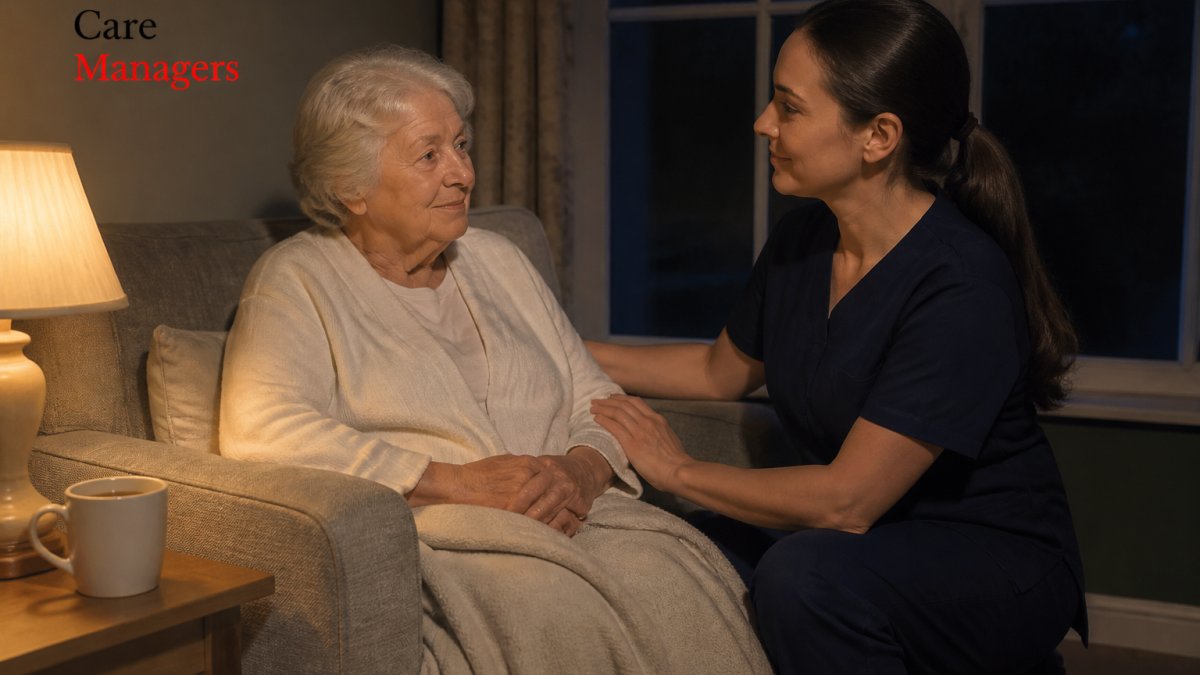
A common mistake is treating night care as an add-on. In practice, it is often the part that decides whether someone can stay at home at all.
Ask any provider how they handle a night where the person refuses help or becomes upset. The answer tells you more about their training than any brochure. A carer who has been trained to de-escalate calmly, rather than simply record the incident, is worth far more than one who ticks the box.
The Home Care Assessment: How Care Needs Are Matched to Support
A home care assessment is a structured conversation, usually in the person’s home, that records what they can do independently, where they need help, and what matters to them. It should involve the person themselves wherever possible, plus family members if they wish.
Call us for Free Assessment Today →
A thorough assessment covers:
- Personal care: washing, dressing, bathing, oral care and continence support
- Mobility and transfers, including any equipment already in use
- Medication, including timing and who administers it
- Nutrition, hydration and any dietary or religious requirements
- Memory, orientation and behaviour patterns across the day
- The home itself: stairs, bathroom access, lighting, and where a carer would sleep
- The person’s routines, preferences and what they want from support
This last point is the one most often skipped. A care plan built around the person’s own habits, when they like to rise, what they eat, how they pray, works far better than one built around a provider’s timetable.
A care plan written without meeting the person is a warning sign. If a provider offers to arrange round-the-clock support after a phone call alone, the plan will not reflect what actually happens in the home, and you will be the one managing the fallout.
Once care begins, the plan should be reviewed as needs change, not left in a drawer. Ask how often reviews happen and who attends them.
What 24 Hour Home Care Costs and Who Pays
Costs depend on the level of need, the number of carer hours, whether nights are waking or sleeping, and where you live. There is no single figure that applies across the board, and any provider quoting one without an assessment is guessing.
Funding is where families need the clearest guidance. In England, some people qualify for local authority support following a care needs assessment, and the financial side is then determined by a separate financial assessment. In Wales, the process runs through the local authority and regional partnership arrangements. The thresholds, caps and contribution rules change, so we always point families to the official source rather than quoting figures that may be out of date.
A few practical points that hold true regardless of the numbers:
- Attendance Allowance and other benefits may be available, depending on the person’s circumstances. Check the official guidance for current rates.
- NHS Continuing Healthcare can fund care in full for some people with significant health needs. It is assessed on health need, not on savings.
- If the person’s needs are primarily health needs rather than social care needs, ask for a Continuing Healthcare checklist to be considered.
Never accept a cost figure without a written care plan behind it. The plan determines the hours, the hours determine the cost, and the assessment determines the plan. Work backwards from the assessment, not forwards from a price.
Choosing a Provider: Questions, Checks and Continuity of Care
Choosing a provider comes down to three things: regulation, continuity, and how honestly they answer difficult questions.
Then ask these questions, and listen for specifics rather than reassurance:
- How many carers will be assigned to my relative, and how often will the rota change?
- What is your staff turnover, and how do you keep carers on the same package?
- What training do carers receive in dementia, moving and handling, and medication?
- How do you handle a carer being sick or on leave at short notice?
- What happens if my relative refuses care on a given day?
- How will you keep me informed, and how often?
- Can you accommodate religious observance, prayer times and dietary requirements?
- What is your complaints process, and who regulates you?
The answers to the first two questions matter more than most families expect. Continuity of care is not a nice-to-have.
This is where a provider’s approach to matching carers to a household shows. At Care Managers, we build care plans around individual routines and offer faith-based home care for families who need a carer who understands prayer times and dietary practice, alongside ongoing quality assurance and clear communication with family members.
Families who need consistent, dignified support at home, including those who want a carer matched to their faith and daily routines, and adult children who need reliable updates without chasing.
One more check worth doing: ask what happens when needs increase. A provider who can move someone from home care into live-in care, or into supported living if that becomes the better option, saves the family from starting the whole search again at the worst possible moment. Think Care Wales guidance for families offers further information on arranging and reviewing care.
Arranging round-the-clock support is one of the hardest decisions a family makes, and it rarely feels straightforward. The right provider makes it manageable by assessing properly, explaining the options honestly, and staying in touch as needs change.
Care Managers provides home care, live-in care and supported living across South Wales and England, with tailored care plans built around each person’s routines and preferences.
Book a call with Care Managers to talk through your situation and find the arrangement that fits.
Frequently Asked Questions
Can someone receive 24 hour home care in their own home?
Yes. A 24-hour care package is delivered in the person’s own home, usually through a rota of professional carers or a live-in arrangement. Support can cover personal care, medication prompts, meals, mobility and overnight reassurance. The right model depends on how much night-time help is needed and whether the person prefers continuity from one carer or is comfortable with a small team. A home care assessment is the starting point for matching support to individual requirements.
What is the difference between live-in care vs 24-hour care?
Live-in care places a carer in the home who lives there, with breaks covered by other staff. A 24-hour care package uses a rota of carers across the day and night, often with waking or sleeping night shifts. Live-in care tends to suit people who want one familiar face and steady companionship, while shift-based care can suit those with complex care needs that require specific skills at set times. Both aim to provide round-the-clock support at home.
Who qualifies for 24-hour care and how do you arrange it?
There is no single qualifying test. Eligibility usually comes down to assessed care needs, such as advanced dementia, Parkinson’s, limited mobility or frequent night-time support. Arranging it typically starts with a home care assessment, where a provider reviews health, routines and the home environment, followed by a care plan and a funding discussion. For state support, contact your local authority for a care needs assessment; for NHS continuing healthcare, ask your GP or nurse for a referral.
How much would 24-hour care cost at home?
Costs vary widely depending on the level of support, night-time requirements and the type of care package, so no single figure applies. Funding can come from local authority support, NHS continuing healthcare, or self-funding. Because pricing depends on assessed needs and hours, it is best to request a personalised quote after an assessment. Care Managers can talk you through options and current pricing if you book a call.