Table of Contents
- What Is Acquired Brain Injury and Why Independent Living Matters
- Enhanced Quality of Life Through Community Integration
- Regaining Autonomy and Personal Independence
- Independent Living Skills Training for Brain Injury Recovery
- Supported Living Services for Brain Injury: Personalised Care and Rehabilitation
- Care Quality Commission Standards for Supported Living
- Financial Support and Funding Options for Independent Living
- Transitioning from Hospital to Home: Building Your Care Pathway
- Frequently Asked Questions
Last Updated: September 24, 2026
What Is Acquired Brain Injury and Why Independent Living Matters
Acquired brain injury (ABI) refers to damage to the brain that occurs after birth, resulting from trauma, illness, stroke, or anoxia. Unlike congenital conditions, ABI develops suddenly and can fundamentally alter a person’s physical abilities, cognitive function, and emotional wellbeing. The benefits of independent living for brain injury recovery extend far beyond regaining basic skills, they encompass psychological resilience, social reconnection, and the restoration of personal agency.
For many people recovering from brain injury, the path from hospital discharge to home is daunting. Yet emerging evidence and practitioner experience consistently show that remaining in one’s own home, supported by tailored care, produces better long-term outcomes than institutional settings. Independence, even when supported, becomes the foundation for meaningful recovery.
Independent living for brain injury isn’t about doing everything alone, it’s about maintaining control over your own life whilst receiving the right support when you need it.
The transition from acute medical care to community-based supported living represents a critical turning point. This is where rehabilitation becomes real life, and where the benefits of independent living for brain injury truly emerge.
Enhanced Quality of Life Through Community Integration
Community integration transforms recovery from a clinical process into a lived experience. When individuals with brain injury remain in familiar environments, their own homes, local neighbourhoods, trusted social circles, they maintain psychological continuity that institutional care cannot replicate.
Quality of life improves measurably when people stay connected to their communities. Social participation, meaningful relationships, and familiarity with one’s surroundings all contribute to better mental health outcomes, reduced depression, and improved motivation for ongoing rehabilitation.
The first weeks at home matter most. Establishing routines, reconnecting with familiar people, and gradually expanding social activities create momentum that carries through the entire recovery journey.
Many people recovering from brain injury experience profound isolation if moved into residential facilities far from their support networks. By contrast, those who remain at home with supported living services maintain access to family, friends, and community resources. This continuity accelerates psychological adjustment and provides the emotional foundation necessary for physical and cognitive rehabilitation to succeed.
| Aspect | Institutional Care | Community-Based Independent Living |
|---|---|---|
| Social Connection | Limited to facility residents | Access to family, friends, community |
| Familiar Environment | Unfamiliar surroundings | Own home and neighbourhood |
| Psychological Adjustment | Prolonged institutional dependency | Maintained sense of self and place |
| Long-term Outcomes | Variable recovery rates | Stronger motivation for rehabilitation |
Regaining Autonomy and Personal Independence
Autonomy, the capacity to make decisions about one’s own life, is central to human dignity and psychological wellbeing. For people recovering from brain injury, regaining autonomy represents not just a practical goal but an emotional and existential one. The benefits of independent living for brain injury centre on restoring this sense of control.
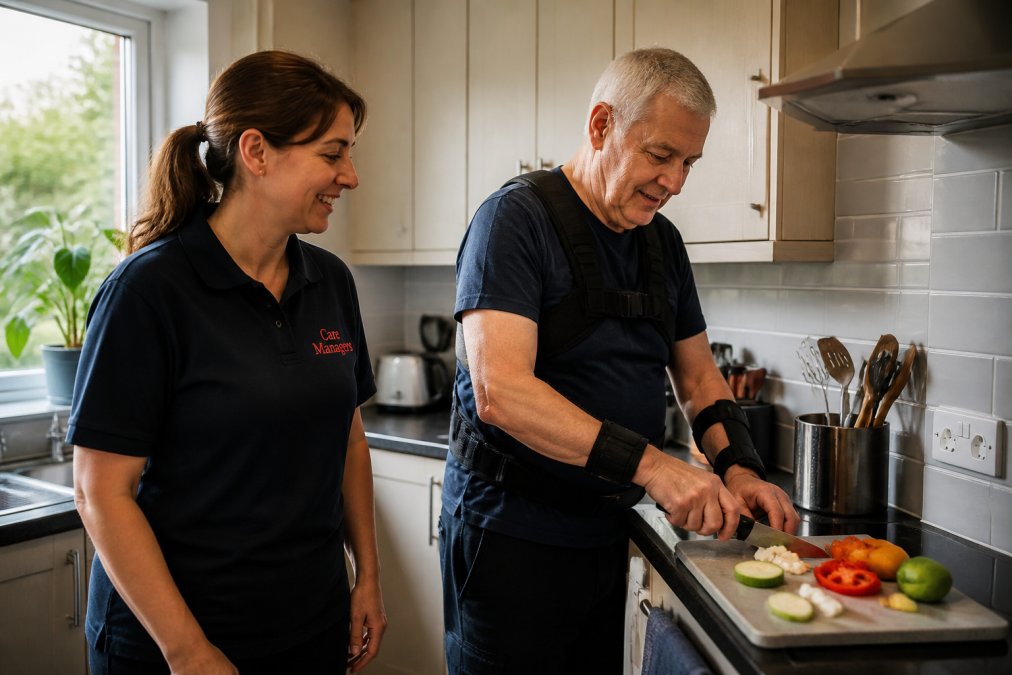
When individuals remain in their own homes with supported living services, they retain agency over daily decisions: what to eat, when to wake, how to spend their time, whom to see. This is fundamentally different from institutional settings where routines are standardised and choices constrained by facility protocols.
Supported living allows people to maintain their pre-injury identity and preferences. A person who was always an early riser can continue that pattern. Someone who values privacy can maintain it. These seemingly small choices accumulate into a life that feels authentically theirs, not a life imposed by institutional necessity.
Loss of autonomy during recovery can trigger depression, learned helplessness, and reduced engagement with rehabilitation. Protecting choice and control, even in small matters, directly supports psychological recovery.
The psychological impact of maintaining independence cannot be overstated. Research into disability and recovery consistently shows that individuals who retain control over their own lives report higher life satisfaction, better mental health, and stronger motivation for ongoing rehabilitation. This is not sentiment, it is a documented feature of successful long-term recovery.
Independent Living Skills Training for Brain Injury Recovery
Regaining practical independence requires structured, person-centred training tailored to each individual’s specific deficits and goals. Independent living skills training addresses the concrete tasks necessary for daily life: personal care, meal preparation, medication management, household tasks, and community access.
Brain injury affects different people differently. Cognitive impairment may affect memory and planning whilst leaving physical ability intact. Alternatively, physical disability may require adaptive techniques for tasks that cognitive function remains unaffected. Effective skills training must be individualised, building on preserved abilities whilst compensating for deficits.
Common areas of independent living skills training include:
- Personal care: Adapted techniques for washing, dressing, and toileting
- Meal preparation: Simplified cooking methods, food safety awareness, nutrition planning
- Medication management: Reminder systems, organisation techniques, adherence tracking
- Household management: Cleaning, laundry, basic maintenance adapted to physical and cognitive capacity
- Money management: Budgeting, bill payment, financial decision-making support
- Community access: Using public transport, accessing local services, managing appointments
The pace and intensity of training must match the individual’s recovery trajectory. Early recovery requires intensive, frequent sessions.
Call us for Free Assessment Today →
Individuals 2-12 months post-injury who have completed acute rehabilitation and are ready to translate clinical progress into real-world functioning.
Supported Living Services for Brain Injury: Personalised Care and Rehabilitation
Supported living represents a fundamental shift from institutional care to person-centred support within the community. Rather than fitting individuals into pre-existing facility routines, supported living adapts services around each person’s specific needs, goals, and preferences.
The structure of supported living typically includes:
- Personal independence payment and funding: Statutory assessment to determine care needs and available funding
- Care coordination: A designated professional managing the overall care pathway and liaising between services
- One-to-one support: Consistent workers providing practical help and therapeutic engagement
- Rehabilitation focus: Ongoing work toward specific functional and cognitive goals
- Person-centred planning: Regular review and adjustment based on progress and changing needs
Occupational Therapy and Physiotherapy Support
Occupational therapy addresses the practical skills and adaptations necessary for independent daily living. An occupational therapist assesses the physical environment, identifies barriers to independence, and recommends adaptive equipment or environmental modifications. They also train individuals in compensatory techniques, alternative methods of accomplishing tasks when standard approaches are no longer possible.
Speech and Language Support
Speech and language therapy addresses communication, swallowing, and cognitive-communication difficulties common after brain injury. Many people with ABI experience dysarthria (slurred speech), aphasia (language difficulty), or cognitive-communication disorders affecting memory, attention, or processing speed.
Care Quality Commission Standards for Supported Living
The Care Quality Commission (CQC) regulates and inspects social care services in England, including supported living arrangements. Registered supported living services must meet specific standards of safety, quality, and person-centred care.
Financial Support and Funding Options for Independent Living
Funding for supported living typically combines several sources. Personal Independence Payment (PIP) is the main disability benefit available to working-age adults with long-term health conditions or disabilities. Local authority social services conduct needs assessments and may provide funding through direct payments or commissioned services.
Transitioning from Hospital to Home: Building Your Care Pathway
Key elements of transition planning include:
- Comprehensive needs assessment: Detailed evaluation of physical, cognitive, psychological, and social needs
- Home assessment: Evaluation of the physical environment and identification of adaptations or equipment needed
- Service coordination: Arrangement of all required services with clear timelines and communication protocols
- Carer training: Preparation of family members or support workers for specific care tasks
- Goal-setting: Establishment of specific, measurable rehabilitation targets for the first 3-6 months at home
- Communication plan: Clear protocols for ongoing communication between all parties involved in care
Plan for psychological support from the outset. Many people benefit from counselling or peer support groups during the transition period. Addressing emotional wellbeing alongside physical recovery improves overall outcomes.
Supported living services should commence with intensive support, gradually reducing as independence increases. This graduated approach prevents both dependency and premature withdrawal of necessary assistance. Regular review meetings ensure that the care pathway remains responsive to changing needs and emerging capabilities.
Frequently Asked Questions
What are the main benefits of independent living for someone with a brain injury?
Independent living after brain injury supports psychological recovery, restores autonomy, and improves quality of life through community integration. It enables individuals to maintain daily living skills, rebuild confidence, and participate in social activities. With appropriate supported living services and rehabilitation support, people can achieve functional independence and long-term social reintegration, reducing isolation and promoting better overall wellbeing.
How does independent living skills training for brain injury help with recovery?
Independent living skills training focuses on rebuilding practical abilities in daily tasks: cooking, personal hygiene, medication management, and household maintenance. Occupational therapy and physiotherapy support cognitive and physical recovery, whilst speech and language support addresses communication challenges. This structured training, combined with one-to-one support, helps individuals regain confidence, reduce dependency, and transition successfully to living independently or in supported living arrangements.
What types of supported living services for brain injury are available?
Supported living services range from live-in care providing 24/7 assistance to part-time home care visits tailored to individual needs. Services include person-centred care planning, assistance with daily living activities, medication management, and therapeutic support. Care coordination ensures consistency and quality, whilst environmental adaptations make homes safer and more accessible. Professional staffing solutions work around your routines and preferences to maintain independence whilst providing essential support.
How do Care Quality Commission standards for supported living protect quality of care?
Care Quality Commission standards ensure supported living providers maintain consistent, dignified, and person-centred care. These standards require regular quality assurance, proper staff training, safe safeguarding practices, and responsive communication with families. Providers must demonstrate ongoing improvement and respect for autonomy. When selecting a supported living provider, verify their CQC registration and ratings to ensure they meet these essential standards for safety, effectiveness, and compassion.
What financial support is available for independent living after brain injury?
Support includes Personal Independence Payment (PIP) for eligible individuals, NHS Continuing Healthcare for complex health needs, and local authority funding through needs assessments. The Disabled Facilities Grant can fund home adaptations. Direct payments allow individuals to purchase their own care services. Citizens Advice and local social services can guide you through eligibility and applications. Contact your local authority social services to discuss your specific circumstances and available funding options.