Table of Contents
- 1. Empathy and Compassion: The Heart of Person-Centered Care
- 2. Reliability and Punctuality: Building a Foundation of Trust
- 3. Patience and Emotional Resilience in Challenging Moments
- 4. Communication and Active Listening for Better Health Monitoring
- 5. Professionalism and Respect for Autonomy and Dignity
- 6. Observational Skills and Safeguarding in a Supportive Environment
- 7. How to Choose a Home Care Agency: CQC Standards for Home Care
- Conclusion: Finding Exceptional Care
- Frequently Asked Questions
Last Updated: September 23, 2026
1. Empathy and Compassion: The Heart of Person-Centered Care
Ask any family what they value most in a home carer and empathy tops the list. It is the ability to understand what someone is feeling and respond with genuine warmth, not routine.
At Care Managers, we see this quality separate adequate care from truly good care every day. A compassionate carer notices when someone is quieter than usual and takes the time to ask why. They treat personal care as a moment of dignity, not a task to tick off.
Person-centered care means building support around the individual’s history, preferences and routines. That approach sits at the core of what a good home carer does.
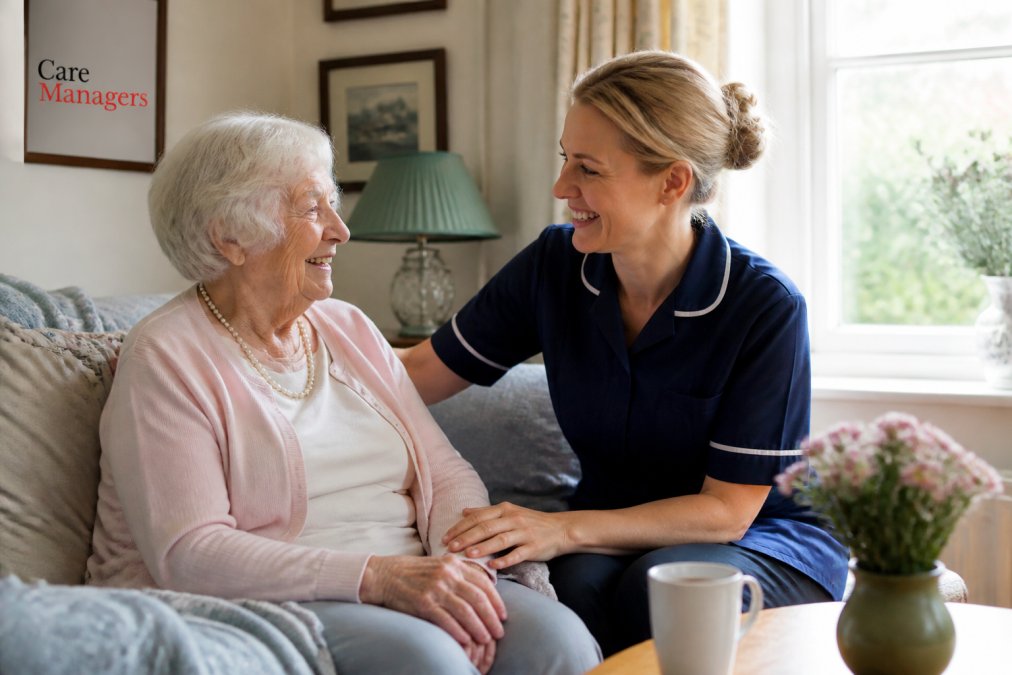
Empathy is not softness. It is a practical skill that shapes how a carer reads a room, adjusts their approach and preserves someone’s sense of self.
2. Reliability and Punctuality: Building a Foundation of Trust
Reliability is the quality families notice first, because a carer who arrives on time and follows through removes a daily source of worry. It is also the quality that quietly holds the rest of the care plan together.
Punctuality matters for more than politeness. Many people receiving care rely on a predictable routine for medication, meals, prayer times and rest. A late visit disrupts all of it. Consistency also builds trust: seeing the same familiar face, rather than a rotating cast of strangers, helps someone feel safe.
What reliability actually looks like in practice
Reliability is not just turning up. It is a set of small, repeatable behaviours:
- Arriving within the agreed window, not “sometime this morning”.
- Reading the care plan before the visit, so the person does not have to explain their needs again.
- Logging what happened, food eaten, medication taken, mood observed, so the next carer is not starting from zero.
- Flagging changes early, by phone or through the agency’s reporting system, rather than waiting for the next review.
- Handing over properly at the end of a shift, especially where two carers share a rota.
The hidden cost of high turnover
A common pattern in home care is that reliability breaks down when staff turnover is high. When carers change every few weeks, the person receiving care has to rebuild trust repeatedly, and small changes in health get missed. Continuity of carer is one of the strongest predictors of a good experience, which is why it is worth asking any provider how they retain staff and how they cover sickness and holidays.
A good home carer keeps their commitments, communicates early when something changes, and understands that dependability is a form of respect.
Reliability is not a personality trait, it is a system. The best agencies build rotas, handover notes and cover arrangements that make dependable care the default, not a lucky accident.
3. Patience and Emotional Resilience in Challenging Moments
Patience is what allows a carer to stay calm when a task takes longer than expected, or when someone is confused, frightened or frustrated.
Dementia and long-term conditions can bring difficult mornings, repeated questions and moments of distress. Emotional resilience does not mean suppressing feelings. It means managing your own reactions so the person in your care is never made to feel like a burden.
The best carers pause, breathe and respond with steadiness. That calm is contagious, and it often defuses a situation faster than any technique.
When a visit runs longer than planned, resist the urge to rush the person. Rushing personal care raises the risk of falls and skin problems and erodes trust. Build a small buffer into your schedule instead.
4. Communication and Active Listening for Better Health Monitoring
Active listening is the practice of giving someone your full attention, then reflecting back what you heard to confirm you understood it.
This skill underpins health monitoring. A carer who listens properly picks up on changes a hurried visitor would miss: a new hesitation in speech, a complaint about a sore hip, a reluctance to eat.
5. Professionalism and Respect for Autonomy and Dignity
Professionalism covers a lot of ground: confidentiality, safeguarding, professional boundaries and a positive attitude even on hard days.
Call us for Free Assessment Today →
6. Observational Skills and Safeguarding in a Supportive Environment
Observational skills turn everyday visits into a safety net. A carer who notices a bruise, an unsteady gait or a change in mood may be the first person to spot a safeguarding concern.
The legal and ethical framework behind safeguarding
Safeguarding is not just good practice, it is a legal duty. In England, the Care Act 2014 sets out the framework for protecting adults at risk, and the Care Quality Commission (CQC) inspects home care providers against it. The Act introduced the principle of well-being and six key safeguarding principles: empowerment, prevention, proportionality, protection, partnership and accountability.
What to observe, and what to do about it
A skilled carer watches for changes across several domains:
- Physical: new bruises, pressure sores, unexplained weight loss, poor hygiene, unsteady walking.
- Emotional: withdrawal, anxiety, tearfulness, sudden reluctance to be alone with a particular person.
- Environmental: a cold home, empty cupboards, unopened medication, signs of hoarding.
- Financial: unusual bank statements, missing valuables, pressure from a third party.
When something is noticed, the response matters as much as the observation. Concerns should be recorded factually, reported to the agency’s safeguarding lead, and, where there is immediate risk, raised with the local authority. Carers should never investigate a concern themselves or promise confidentiality they cannot keep.
Building a supportive environment
A safeguarding concern is not the same as a complaint. Complaints are about service quality; safeguarding concerns are about risk of harm. Both should be taken seriously, but only one triggers a formal legal process, and carers need to know the difference.
For families, the practical takeaway is simple: ask any provider how their carers are trained in safeguarding and the Mental Capacity Act, and how concerns are escalated. A provider that can answer clearly is one that takes duty of care seriously.
7. How to Choose a Home Care Agency: CQC Standards for Home Care
Choosing a home care agency comes down to three things: regulatory standing, transparency and how well the agency matches a carer to your loved one’s needs.
| What to Check | Why It Matters | Where to Look |
|---|---|---|
| CQC rating | Shows safety and quality | CQC provider search |
| Carer training | Indicates competence | Care Certificate standards |
| Staff retention | Means consistent faces | Ask the agency directly |
| Communication | Keeps families informed | Ask about update routines |
| Care plan process | Confirms personalisation | Request a sample plan |
Essential Home Care Interview Questions for Families
These questions reveal how an agency actually operates, not just what its brochure claims:
- How do you match a carer to my relative’s personality and routine?
- What happens if our regular carer is unwell or on holiday?
- How do you keep family members updated on changes?
- Can you accommodate faith-based needs such as prayer times and dietary requirements?
- What training do carers receive for dementia or challenging behaviour?
- How do you handle a concern or complaint?
A low hourly rate often hides high staff turnover. If carers change every few weeks, the person receiving care has to rebuild trust repeatedly, and small changes in health get missed.
Conclusion: Finding Exceptional Care
The qualities that matter most in a home carer are rarely the ones listed on a job advert. Empathy, reliability, patience and respect for dignity are what families remember long after the visit ends.
Frequently Asked Questions
What are the most important qualities to look for in a home carer?
The most important qualities include empathy, reliability, patience, and respect for dignity. A good home carer will also have strong communication skills and be observant of changes in health or mood. Look for someone who treats your loved one as an individual and involves them in decisions. Professional boundaries and a commitment to safeguarding are also essential. When interviewing, ask for examples of how they have demonstrated these qualities in previous roles.
How do CQC standards influence the qualities of a good carer?
The Care Quality Commission (CQC) sets fundamental standards that all registered home care providers must meet. These standards cover safety, effectiveness, caring, responsiveness, and leadership. A good carer working for a CQC-registered agency will be trained to deliver person-centered care, respect confidentiality, and follow safeguarding procedures. When choosing an agency, check its CQC rating and inspection reports to see how well it meets these standards.
What are the core responsibilities of a home carer?
Core responsibilities include personal care such as bathing and dressing, medication management, meal preparation, and light housekeeping. Carers also provide companionship, monitor health, and assist with appointments. They must observe and report changes in condition to family or healthcare professionals. Importantly, they support the individual’s independence and dignity, helping them remain in their own home safely. The exact duties depend on the care plan agreed with the family.
How can you assess the empathy and patience of a potential home carer?
During the interview, ask open-ended questions about how they have supported someone through a difficult time. Listen for specific examples that show understanding and a calm approach. You can also ask how they would handle a situation where a person is upset or refuses care. A good carer will describe strategies that respect the person’s feelings and autonomy. Trust your instincts and consider a trial visit to see how they interact with your loved one.
Why is reliability a critical trait for home care services?
Reliability ensures that your loved one receives consistent care at the agreed times, which is vital for their safety and well-being. When a carer is punctual and dependable, it builds trust and reduces anxiety for both the individual and their family. Frequent changes in carers can be distressing, especially for those with dementia. A reliable agency will have contingency plans and communicate any changes promptly, giving you peace of mind.