
Imagine it’s late on a Friday afternoon and you’ve just received word that a relative is being discharged from hospital without a clear support plan. You’re likely feeling a heavy mix of fear, confusion, and exhaustion as you wonder how they’ll manage alone. Finding reliable emergency home care during such a crisis shouldn’t feel like an impossible task. You need a solution that is swift, safe, and dignified to ensure your loved one isn’t left vulnerable or unprotected.
We understand that the pressure of providing round-the-clock care is draining, and the guilt of not being able to cope can be paralysing. You deserve a partner that offers clinical reliability, human warmth, and steady guidance. This guide shows you how to secure professional, compassionate, and rapid-response care that keeps your relative safe while preserving their independence. It’s about moving from a state of panic to one of structured, expert support.
We’ll examine the current 2026 standards for CQC-regulated providers and explain how to build a clear plan of action within hours. You’ll learn how to navigate the system effectively to ensure your family receives a service that is reliable, personalised, and respectful. By the end of this article, you’ll have the tools to restore a sense of calm, security, and confidence to your home.
Key Takeaways
- Identify the primary triggers, such as hospital discharge or carer breakdown, that require an immediate and professional response.
- Understand the 24-hour transition process that moves your relative from a state of crisis to one of clinical safety, comfort, and stability.
- Compare the benefits of hourly visiting versus live-in options to find the most secure, cost-effective, and appropriate level of support for your situation.
- Follow our practical preparation checklist to ensure a smooth, organised, and respectful start for both the family and the professional carer.
- Discover how emergency home care acts as a vital bridge to a sustainable, personalised, and dignified long-term care plan.
Understanding Emergency Home Care: Rapid Support When Life Changes Suddenly
Life rarely offers a warning before a crisis. One moment, a relative is managing well; the next, an unexpected fall or a sudden infection changes everything. Emergency home care is a specialised, rapid-response service designed for these precise situations. It’s not a long-term commitment made after weeks of planning. Instead, it’s a vital bridge that provides immediate support when unforeseen circumstances threaten a loved one’s safety. By securing emergency home care, you ensure that professional standards are met from the very first hour. The primary goal is simple: to maintain safety, comfort, and independence within the home, even when the world feels chaotic.
Choosing professional intervention over untrained family support is often the most compassionate decision you can make. While relatives bring love and dedication, they often lack the clinical training required to manage complex health needs during a crisis. Professional carers provide a level of expertise that prevents avoidable accidents and ensures that all Activities of daily living are managed with dignity and precision. This approach doesn’t just protect the individual; it protects the family from the overwhelming pressure of a situation they aren’t equipped to handle.
When Does Home Support Become an Emergency?
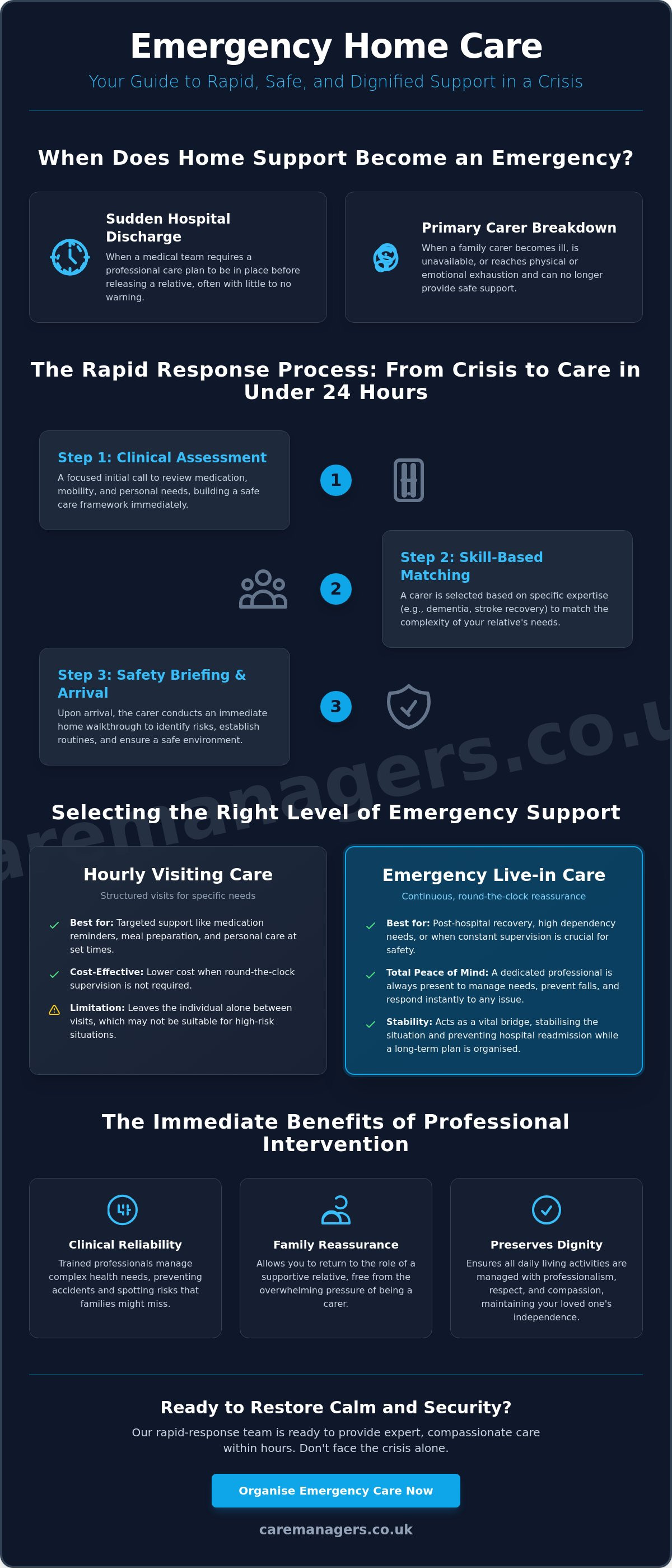
A crisis point usually occurs when the current support structure fails. This might happen through a sudden hospital discharge where the medical team requires a care plan before release. It also occurs during a carer breakdown, where a primary family carer becomes ill or reaches the point of physical exhaustion. Rapid assessment is crucial here. By introducing professional help quickly, families can prevent the further health decline that leads to unnecessary hospital readmissions. It’s about acting within hours to stabilise the situation.
The Immediate Benefits of Professional Intervention
Professional care offers a sophisticated balance of clinical reliability and emotional reassurance. It allows family members to step back from the role of an exhausted carer and return to being a supportive son, daughter, or spouse. Our home care services are designed to be safe, supportive, and reliable, providing the expertise needed to spot subtle risks that others might miss. Whether it’s identifying a potential trip hazard or noticing a change in health, a professional eye ensures the environment remains secure. This intervention restores order, preserves dignity, and provides the steady guidance families need.
The Rapid Response Process: How Professional Care is Organised Within 24 Hours
When a crisis occurs, the speed of intervention determines the safety of your loved one. Professional emergency home care isn’t just about filling a gap; it’s about mobilising a structured, clinical, and compassionate response within hours. In the UK, this rapid process is governed by the Care Quality Commission (CQC) or Care Inspectorate Wales (CIW). These regulatory bodies ensure that service remains safe, effective, and well-led, even under extreme time pressure. A dedicated Care Manager takes the lead, acting as the central coordinator between hospital discharge teams, local GPs, and the family to ensure every clinical requirement is met.
From Initial Enquiry to Caregiver Arrival
The transition from crisis to stability follows a methodical three-step sequence:
- Step 1: The Clinical Assessment. This initial call moves beyond basic logistics. It’s a focused review of medication schedules, mobility needs, and personal preferences to build a safe framework immediately.
- Step 2: Skill-Based Matching. We don’t just send the nearest available person. We select a carer with specific expertise in areas such as stroke recovery or dementia care to match the complexity of the crisis.
- Step 3: The Safety Briefing. Upon arrival at the residence, the carer conducts an immediate walkthrough. They identify risks, establish routines, and provide the family with a clear plan of action.
This rapid deployment is often the first step in Understanding Respite Care and its role in preventing family burnout. By following this structured approach, we ensure that the care provided is personalised, respectful, and reliable from the moment the carer crosses the threshold. It’s a process designed to replace panic with a sense of quiet confidence.
Ensuring Safety and Clinical Reliability During a Crisis
Speed must never compromise safety. Every emergency placement is underpinned by rigorous protocols, including medication management, risk assessments, and moving/handling checks. These systems are designed to protect the individual from falls or medical errors during the initial period of upheaval. Registered managers provide constant oversight, ensuring that care plans are adapted on-the-fly as the individual’s condition stabilises or changes. This professional rigour offers families a form of respite care that restores order and peace of mind whilst ensuring dignity is maintained. If you need immediate support, you can enquire about our rapid-response services to see how we can help stabilise your situation today.
Selecting the Right Level of Support: Hourly Visiting vs Emergency Live-in Care
Deciding on the correct level of emergency home care depends entirely on the stability and complexity of your loved one’s condition. Hourly visiting care is an excellent solution for bridging small gaps in support, such as help with morning routines or medication management. It allows for a targeted response that fits around existing family schedules. However, if the risk of falls or overnight confusion is high, emergency live-in care often becomes the safer, more cost-effective option. This model provides a continuous, reassuring presence that ensures no one is left alone during vulnerable moments.
We understand that a crisis doesn’t pause a person’s identity, culture, or beliefs. Our approach integrates faith-based home care into emergency planning to ensure that religious observances and cultural preferences are honoured. Whether it’s respecting specific dietary needs or facilitating daily prayer, we believe care must remain deeply personal. This culturally sensitive framework provides a level of comfort that goes beyond clinical tasks. It ensures the individual feels seen, respected, and valued throughout the intervention.
Assessing the Complexity of Individual Needs
Choosing between visiting and live-in care requires a clear framework. If your relative experiences “sundowning” – a state of increased confusion and distress in the late afternoon – hourly visits may not be enough to ensure safety. In these instances, 24/7 support becomes vital to manage behaviour and prevent accidents. For families dealing with these specific challenges, our specialised dementia care services provide the expert techniques needed to de-escalate distress. It’s about matching the intensity of the support to the reality of the situation.
Specialist Support for Complex Conditions
Emergency care often involves managing serious health events like stroke recovery or providing palliative support. These situations require more than just companionship; they demand a compassionate, expert, and steady presence in the home. We coordinate the delivery of specialist equipment, such as hoists or hospital beds, to ensure the environment is fit for purpose. By integrating clinical reliability with human warmth, we help manage end-of-life care or complex recovery with the highest level of dignity. Our role is to act as a knowledgeable guide, ensuring that every medical and personal need is met with quiet confidence.
Preparing for Emergency Care: Practical Steps for Families in Cardiff and Bristol
Securing emergency home care is a significant step toward stability, but the first few hours are most effective when the household is prepared. Having a clear, organised, and accessible set of information ready for the carer’s arrival ensures they can focus on the immediate needs of your loved one. This preparation bridges the gap between clinical requirements and personal comfort, creating an environment that is safe, supportive, and respectful. By taking a few practical steps now, you can transform a period of crisis into a managed and predictable transition.
We recommend preparing a “care folder” that contains a current list of medications, GP contact details, and any known allergies. Beyond medical facts, include a brief summary of daily routines, such as preferred meal times or evening habits. These small details help a new carer provide a service that feels familiar and dignified from the start. It’s also vital to address the emotional weight of this change. Speak with your relative about the support they’ll receive, framing the carer as a dedicated partner who is there to help them maintain their independence rather than a replacement for family care.
Practical Logistics and Home Access
In busy urban areas like Cardiff or Bristol, logistics require careful thought. If you live in residential zones such as Cathays or Clifton, please consider parking availability for the visiting carer. Providing a temporary permit or clear instructions on driveway access prevents unnecessary delays. We also recommend installing a secure key safe. This provides a reliable, safe, and discreet way for carers to enter the home without requiring the individual to move if they’re unwell or resting. Just as professional sites might utilise Jobcam for remote surveillance, ensuring there’s a clean, safe, and well-lit space for the caregiver to work is equally important for maintaining high standards of clinical reliability at home.
Financial Planning and Funding Support
While the focus is on immediate safety, understanding the financial framework is essential for peace of mind. In 2026, many families utilise the Attendance Allowance, which provides up to £114.60 per week for those needing help both day and night. Local authority funding may also be an option if assets fall below the £23,250 threshold, though many choose private care for its speed and transparency. Our private fee structures are designed to be clear and predictable during an emergency period. This initial support often serves as a foundation for exploring respite care options as you look toward long-term stability. If you’re ready to arrange support, you can contact us to discuss your specific needs today.
Beyond the Crisis: Transitioning to Sustainable Long-Term Home Support
The first 72 hours of emergency home care provide more than just immediate safety; they offer a vital window into the reality of a loved one’s daily needs. During this period, professional carers observe mobility patterns, cognitive fluctuations, and social preferences in a real-world setting. This data is far more valuable than a snapshot assessment taken during a stressful hospital discharge. It allows for the creation of a care plan that is proactive rather than reactive. The ultimate goal is to move beyond mere crisis management and toward a lifestyle that prioritises quality of life, comfort, and joy.
Relationships take time to flourish, and the “settling-in” period is where the client and carer find their rhythm. It’s a phase defined by mutual discovery, respect, and trust. As the initial panic of the crisis subsides, the focus shifts to emotional well-being and long-term stability. Continuous monitoring ensures that the support remains relevant as the individual’s health stabilises or improves. Regular care plan reviews allow us to adjust the level of intervention, ensuring it always feels safe, supportive, and reliable.
Reviewing the Care Plan for Permanent Stability
Once the immediate crisis has passed, families often transition from emergency models to tailored long-term care. This shift typically involves moving from emergency response rates to more sustainable, permanent care structures. Care Managers Ltd supports families through every step of this transition, providing the clinical evidence and emotional guidance needed to make informed decisions. Sustainable long-term care ensures that individuals maintain their independence, dignity, and personal autonomy within the familiar surroundings of their own home. However, for those who determine that a residential community is a safer long-term choice, Senior Housing Locator offers expert assistance in finding the most suitable senior living options.
Why Families Choose Care Managers for Peace of Mind
Families across Cardiff, Bristol, and the wider South West choose us because we combine deep local expertise with a compassionate, professional, and empathetic approach. We understand the specific health landscapes of South Wales and the South West, allowing us to provide a service that is both authoritative and accessible. Our role is to act as a dedicated partner, a knowledgeable guide, and a steady presence for your family. We prioritise the needs of the individual, ensuring they feel secure, valued, and respected at every stage of their care journey.
If you’re currently navigating a care crisis or looking to move toward a more permanent support solution, our specialists are here to provide the clarity you need. We can help you move from a state of uncertainty to a clear, managed plan of action. Speak with a specialist today to secure the professional support and peace of mind your family deserves.
Restoring Order and Stability to Your Home
Navigating a care crisis is one of the most challenging experiences a family can face. By understanding the rapid-response process and preparing your home for a professional arrival, you’ve already taken the most important steps toward safety. Whether you require hourly support or round-the-clock intervention, the right choice ensures your loved one remains safe, comfortable, and dignified. This journey moves you from a state of uncertainty to one of structured, expert support.
As a CQC and CIW regulated provider, we specialise in dementia and complex care across Cardiff, Bristol, and Southampton. We understand that emergency home care is more than just a temporary fix; it’s a dedicated partnership that prioritises individual value. Our expert teams are ready to provide the clinical reliability and warm, human-centric support you need to move from panic to peace of mind. We focus on preserving autonomy, well-being, and quality of life at every stage.
You don’t have to manage this weight alone. Our knowledgeable guides are standing by to offer immediate reassurance, clinical expertise, and a clear plan of action. Contact our expert team for immediate emergency care support to ensure your relative receives the respectful, professional care they deserve. Together, we can build a future defined by stability, security, and hope.
Frequently Asked Questions
How quickly can emergency home care start in Cardiff or Bristol?
We aim to begin support within as little as 24 hours of your initial enquiry. Our local teams in Cardiff and Bristol are organised to respond swiftly to sudden changes in circumstances. This rapid deployment ensures your loved one is safe, supported, and respected without delay. A Care Manager will coordinate the logistics immediately to replace uncertainty with a structured plan of action.
What is the cost of emergency home care compared to standard care?
Emergency support typically involves a higher rate than planned, long-term care because of the immediate mobilisation required. This reflects the administrative intensity of organising clinical assessments and caregiver matching at short notice. We maintain full transparency regarding all fees during the initial consultation. This ensures you can make informed decisions that prioritise safety, reliability, and peace of mind during a stressful period.
Do I need a doctor’s referral to arrange emergency support?
You don’t need a doctor’s referral to secure professional support for your relative. Whilst we often work alongside GPs and hospital discharge teams, families can contact us directly to initiate an assessment. This direct access allows you to bypass potential delays and secure immediate assistance. We will coordinate with relevant healthcare professionals once the service has commenced to ensure clinical continuity and safety.
Can you provide emergency care for someone with advanced dementia?
Yes, we provide specialised support for individuals living with advanced dementia during a crisis. Our carers are trained to manage complex behaviours, including the distress often associated with “sundowning” or changes in environment. We focus on maintaining a calm, dignified, and secure atmosphere. This personalised approach ensures that even those with significant cognitive challenges receive care that is compassionate, expert, and steady.
What happens if my regular carer is unwell or unavailable at short notice?
If a regular carer becomes unavailable, emergency home care acts as a vital safety net to prevent a breakdown in support. We can step in quickly to provide respite care, ensuring there is no gap in your relative’s daily routine. This reliable intervention protects the individual from being left alone or unsafe. It also allows the primary carer the time they need to recover or manage their own emergency.
Is emergency home care available 24 hours a day, 7 days a week?
Professional support is designed to be accessible whenever a crisis hits, including weekends and overnight periods. We offer various models, such as 24-hour live-in care, to ensure continuous safety and clinical reliability. Our service is organised to provide a consistent, methodical, and thoughtful presence at any hour. This round-the-clock availability ensures that help is always at hand, providing families with a sense of security and individual value.
What is included in an emergency care assessment?
An emergency assessment is a focused review of an individual’s clinical, personal, and environmental needs. We examine medication requirements, mobility risks, and essential activities of daily living. The process also captures personal preferences to ensure the care remains person-centred. This thorough, methodical, and professional approach ensures that the resulting care plan is safe, effective, and well-led from the very first visit.
Can emergency care be provided following a hospital discharge?
Yes, hospital discharge care is a core part of our emergency response service. We work closely with hospital teams to ensure a smooth, safe, and dignified transition back to the home environment. By having support in place before the patient arrives, we prevent readmissions and ensure all medical instructions are followed correctly. This proactive intervention provides the immediate reassurance families need during the critical first few days after leaving hospital.

Article by
Emmanuel Alli
Emmanuel Alli is a Data Analytics Specialist, entrepreneur, and healthcare business leader with extensive experience in data analytics, business intelligence, digital transformation, and strategic management. He has worked across both the public and private sectors, delivering data-driven insights and performance improvements for large organisations in the United Kingdom.
Beyond his analytics career, Emmanuel is the Co-Founder and Director of Care Managers Ltd, a UK-based provider of domiciliary care, supported living, live-in care, and healthcare staffing services. Under his leadership, the organisation has expanded its operations across England and Wales, supporting local authorities, NHS organisations, and private clients with person-centred care services.
Emmanuel is passionate about combining technology, innovation, and compassionate care to improve outcomes for vulnerable individuals and communities. His interests include explainable artificial intelligence, business modelling, strategic growth, healthcare innovation, and social entrepreneurship.
He holds BSc, MBA, and MMP degrees, completed his Master's degree in Computer Science and Big Data Analytics, and remains actively involved in community development, mentoring, Christian leadership, and charitable initiatives. Through his professional and community work, Emmanuel is committed to creating sustainable organisations, empowering people, and delivering meaningful social impact.
Disclaimer
The information provided on this website is for general informational and educational purposes only. Whilst every effort is made to ensure the accuracy and reliability of the information published, no representations or warranties of any kind, express or implied, are made regarding the completeness, accuracy, reliability, suitability, or availability of any information, products, services, or related graphics contained on this website.
Any reliance you place on such information is strictly at your own risk. Under no circumstances shall we be liable for any loss or damage, including without limitation indirect or consequential loss or damage, arising from the use of this website or reliance on any information contained herein.
The content on this website does not constitute professional, legal, financial, medical, or other specialist advice. Users should seek appropriate professional advice before making any decisions based on the information provided.
Links to external websites are provided for convenience and informational purposes only. We have no control over the nature, content, and availability of those sites and do not endorse any views expressed within them.
We reserve the right to modify, update, or remove content on this website at any time without prior notice.
By using this website, you acknowledge and agree to this disclaimer and our applicable terms and conditions.