
Did you know that Chronic Obstructive Pulmonary Disease (COPD) was the third leading cause of death globally in 2023? Despite its prevalence, many people dismiss the early signs as a simple cough or a natural part of ageing. You might feel a tightening in your chest during a walk to the shops or worry as a loved one becomes increasingly frail. It is natural to feel confused, anxious, or overwhelmed when trying to identify copd symptoms and how they differ from asthma.
We believe that every individual deserves a life defined by independence, comfort, and dignity. This article provides the clarity you need to recognise warning signs and prepare for a productive GP consultation. You’ll learn practical strategies for managing care at home, ensuring your environment remains safe, supportive, and restorative. By understanding the latest 2025 clinical guidelines, you can take proactive steps to preserve your quality of life with quiet confidence.
Key Takeaways
- Gain a clear understanding of Chronic Obstructive Pulmonary Disease and its impact on your long-term respiratory health.
- Learn to identify early copd symptoms, such as a persistent cough and breathlessness, to seek professional medical advice sooner.
- Discover how to manage flare-ups and advanced signs like fatigue or swelling through an organised, thoughtful approach to daily living.
- Implement a practical triad of home management-environment, nutrition, and pacing-to preserve your independence, safety, and well-being.
- Evaluate the differences between hourly visits and live-in care to secure a steady, knowledgeable, and compassionate support system at home.
What is COPD? Understanding the Condition and Its Impact
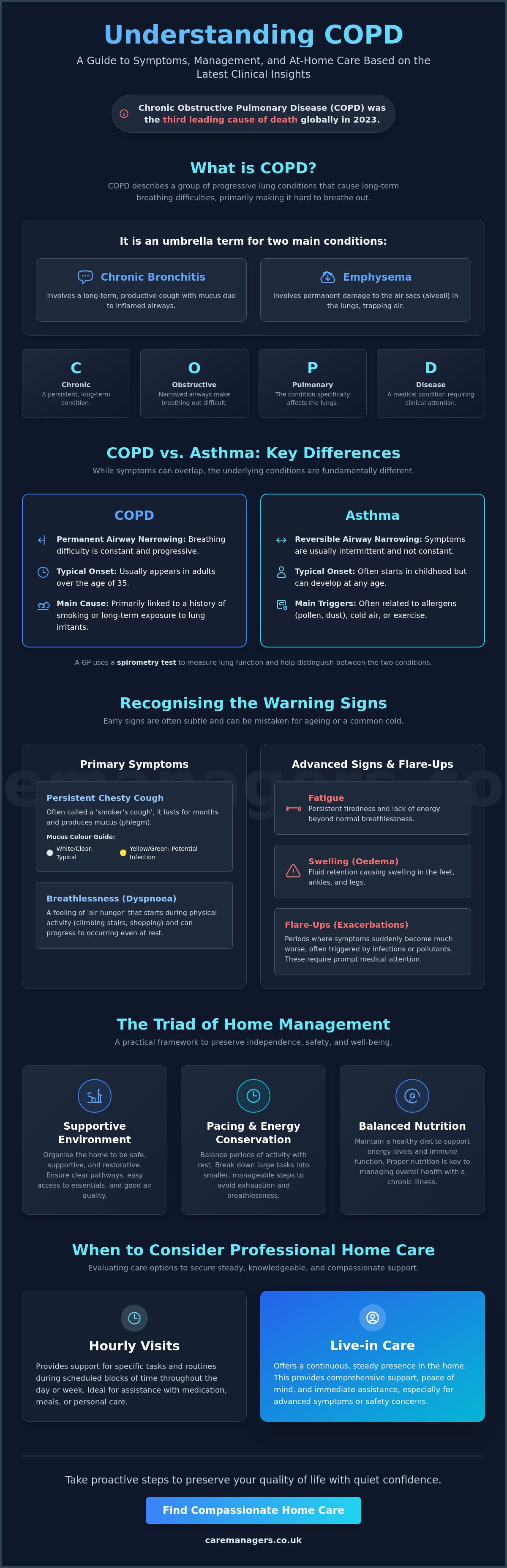
Chronic obstructive pulmonary disease, commonly known as COPD, describes a group of lung conditions that cause long-term breathing difficulties. It serves as an authoritative umbrella term for chronic bronchitis and emphysema. Chronic bronchitis involves a long-term cough with mucus, whilst emphysema involves permanent damage to the air sacs in the lungs. To understand the impact, it helps to break down the acronym into simple terms. Chronic means it’s a persistent, long-term condition. Obstructive refers to the narrowed airways that make it difficult to breathe out. Pulmonary means it specifically affects the lungs. Disease indicates it’s a recognised medical condition requiring clinical attention.
Whilst the condition is progressive, meaning it tends to worsen over time, it’s both treatable and manageable. Recognising copd symptoms early is vital for long-term health. Early intervention helps prevent severe lung damage and allows for a more effective care plan. With the right support, individuals can maintain a high quality of life for many years. Modern treatments focus on reducing flare-ups, improving exercise tolerance, and ensuring daily comfort. It’s not a reason to lose hope; it’s a reason to take action. Knowledge provides the foundation for a life that remains active, dignified, and fulfilling.
The Difference Between COPD and Asthma
Many people confuse these two conditions because they both cause breathlessness and wheezing. However, the nature of the airway narrowing is fundamentally different. Asthma is usually intermittent, with symptoms triggered by specific allergens, cold air, or exercise. COPD involves permanent airway narrowing that doesn’t fully reverse. It typically appears in adults over the age of 35 who have a history of smoking or long-term exposure to air pollution. A GP will usually use a spirometry test to distinguish between the two. This test measures how much air you can breathe out in one second and how much you can breathe out in total. It’s a simple, non-invasive way to gain clarity and start the correct treatment path.
Why Symptom Awareness Matters for Families
Noticing a loved one struggling for breath carries a significant emotional weight. It can lead to feelings of helplessness, worry, and fear amongst family members. Awareness is the first step toward reclaiming control. Our approach focuses on a triad of essential goals: safety, comfort, and independence. By identifying copd symptoms early, families in Cardiff, Bristol, and the surrounding areas can take a proactive approach to medical consultations. Seeking professional home care services early ensures that support is steady, knowledgeable, and respectful. This allows your loved one to remain in the familiar surroundings they value most, supported by a partner who understands the weight of their role.
Primary COPD Symptoms: Recognising the Early Warning Signals
Identifying copd symptoms requires a vigilant but calm approach. These signs are often subtle in the beginning. They might be mistaken for the natural effects of ageing or a lingering winter cold. Recognising these signals early allows for better management and a higher quality of life. It’s about maintaining safety, comfort, and dignity in your own home. When you understand what to look for, you can act with quiet confidence to secure the support you need.
The Persistent Chesty Cough
The body increases mucus production as a protective response to lung irritants. In a healthy person, this mucus is cleared easily. For someone with COPD, the cough becomes persistent, productive, and disruptive. It often feels like a ‘smoker’s cough’ that never truly resolves. Unlike a standard cold, which typically clears within a fortnight, this cough lasts for months. It’s important to monitor the colour and consistency of phlegm. Whilst white or clear mucus is typical, yellow or green phlegm often signals a bacterial infection. If you are concerned about these changes, you may wish to enquire about supportive home care to help manage your daily routine safely.
Breathlessness in Daily Life
Shortness of breath usually starts during physical activity. You might notice a new difficulty whilst climbing the stairs, gardening, or carrying heavy shopping bags. Over time, this progression can lead to breathlessness even whilst sitting still. This sensation of ‘air hunger’ is often frightening. It can lead to a cycle of anxiety, social withdrawal, and reduced physical activity. Dyspnoea is the clinical term for difficult or laboured breathing. Understanding these common symptoms of COPD helps you prepare for productive conversations with your GP.
Wheezing and Frequent Infections
A whistling sound during breathing is another primary indicator. This wheezing occurs as air is forced through narrowed or inflamed airways. It’s a clear sign that the lungs are working harder than they should. This noise is often most noticeable when you are exhaling. It can be a source of frustration, making it difficult to rest or engage in quiet conversation. Frequent chest infections also serve as a vital secondary indicator. If you find yourself requiring multiple courses of antibiotics or steroids each year, your respiratory system is likely under significant strain. These infections can be exhausting, painful, and isolating. Identifying these signs early ensures that you can implement a care plan that prioritises your well-being and long-term health.
Advanced Signs and the Reality of COPD Flare-ups
As the condition progresses, the body faces new challenges that extend beyond the lungs. These advanced copd symptoms require a heightened level of awareness from both the individual and their family. Whilst the persistent cough and breathlessness remain, you may notice less common signs such as unintended weight loss, profound fatigue, and swollen ankles, known clinically as oedema. Identifying these shifts is crucial for maintaining stability at home. It allows for a more tailored approach to daily support, ensuring that comfort remains a priority even as needs become more complex.
A significant part of living with this condition is managing ‘exacerbations’ or flare-ups. These periods of worsening symptoms are particularly common during the cold, damp winter months in the UK. During these times, the physical and emotional burden on family caregivers often increases significantly. Accessing respite care provides a vital support system, allowing primary caregivers a necessary break whilst ensuring the individual receives professional, empathetic monitoring. This proactive approach helps prevent the exhaustion that often accompanies long-term caregiving.
It is essential to recognise when a situation moves from manageable to urgent. Chest pain, a sudden blue tinge to the lips, or coughing up blood are critical red flags. These indicators require immediate medical attention from emergency services. Prompt action in these moments is the most effective way to protect your loved one’s health and safety.
Recognising a Flare-up (Exacerbation)
A flare-up is more than just a bad day. You might notice your breathlessness becomes far more intense, or your phlegm changes to a darker yellow or green colour. Many people feel generally unwell, experiencing a fever or increased confusion. Without intervention, these episodes can lead to a ‘vicious cycle’ of frequent hospital admissions. Most local NHS trusts provide ‘rescue packs’ containing antibiotics and steroids to be kept at home. This allows for immediate treatment at the first sign of trouble, helping to preserve health and independence. Understanding these COPD symptoms helps you act quickly to stop a flare-up from becoming a crisis.
The Physical Toll of Advanced COPD
The body eventually uses a tremendous amount of energy just to perform the basic act of breathing. This often leads to unintended weight loss, even if your diet remains unchanged. Additionally, the strain placed on the heart by damaged lungs can cause fluid to pool in the lower legs and ankles. This fluid retention is a sign that the body is struggling to maintain its internal balance. The impact isn’t purely physical. Limited mobility often leads to feelings of depression or isolation amongst those who value their autonomy. Providing a steady, knowledgeable presence at home helps combat these emotional challenges, ensuring that dignity and quality of life remain the central focus of care. Organisations like Elleson Care exemplify this approach, offering person-centred services that support both the physical and emotional well-being of those living with chronic conditions.
Managing COPD Symptoms at Home: Practical Guidance
Managing copd symptoms within the home requires an organised, thoughtful, and methodical approach. It isn’t just about following a clinical prescription; it’s about creating a supportive ecosystem that prioritises your comfort. We focus on a triad of home management: environment, nutrition, and pacing. These three pillars work together to preserve your independence, safety, and well-being. By making small, purposeful adjustments to your surroundings—such as ensuring your bed provides the support needed for restorative rest—you can significantly reduce the physical strain on your lungs and heart. To explore high-quality furniture options, learn more about Belfast Bed Superstore.
A well-ventilated living space is essential for respiratory health. Ensure your home remains smoke-free, dust-free, and well-ventilated to avoid triggering sudden breathlessness. Simple changes, such as moving frequently used items to waist height, prevent the need for reaching or bending. This reduces the energy required for basic daily tasks. In some cases, respiratory issues coexist with other conditions. If you or a loved one are experiencing cognitive decline, specialised dementia care can provide the additional structure and expertise needed to maintain a safe environment.
Pacing and Energy Conservation
The ‘Three Ps’-Planning, Pacing, and Prioritising-are vital tools for daily living. Plan your day to include rest periods after any exertion. Pace yourself by moving slowly and using ‘pursed-lip’ breathing techniques. Prioritise essential tasks and delegate or delay the rest. Using aids such as perching stools in the kitchen or grab rails in the bathroom helps you maintain autonomy without exhaustion. A consistent routine reduces the anxiety that often triggers a worsening of symptoms. To learn more about how we can support these adjustments, you can book a home care assessment today.
Nutrition and Hydration for Lung Health
Eating smaller, more frequent meals is often more comfortable than three large ones. A full stomach can press against the diaphragm, making it harder to breathe. If you’ve experienced unintended weight loss, focus on high-protein and high-calorie foods to maintain your strength and muscle mass. Hydration is equally important for managing copd symptoms effectively. Drinking plenty of water helps thin mucus, making it easier to clear from your chest. This simple habit can reduce the discomfort of a persistent cough and help prevent secondary chest infections.
When to Consider Professional Home Care for COPD Support
Professional home care provides a steady, knowledgeable, and reliable presence for those navigating the complexities of respiratory disease. It serves as a vital bridge between clinical medical requirements and the personal comfort of your own home. At Care Managers Ltd, we act as a dedicated partner in maintaining dignity and autonomy across South Wales and the South West. Our approach is designed to provide immediate reassurance, ensuring that you feel safe, supported, and valued throughout your care journey.
Choosing the right level of support depends on your individual needs and the progression of your condition. Hourly visiting care offers targeted assistance during the most challenging parts of the day, such as morning routines or meal preparation. For those with more advanced copd symptoms, live-in care provides comprehensive, round-the-clock support. This ensures a consistent and methodical approach to care, allowing you to remain in the familiar surroundings you love whilst receiving the professional attention you require. Families in the Welsh capital who are beginning this search may find it helpful to read our guide to finding the best care agencies in Cardiff, which covers everything from Care Inspectorate Wales ratings to understanding your funding options. We invite you to explore our full range of home care services to find the right fit for your family.
Support with Medication and Monitoring
Effective management of respiratory health often relies on the correct use of medical equipment and prescriptions. Our trained carers provide essential assistance with inhaler techniques and the proper use of nebulisers. This technical support ensures that medication is delivered effectively, reducing the risk of sudden breathlessness. Beyond physical tasks, a professional carer acts as an expert set of eyes. They monitor for the subtle, early signs of a flare-up, such as changes in phlegm colour or increased fatigue. This regular healthcare oversight provides a sense of security and individual value that is difficult to achieve alone.
Reducing the Burden on Family Carers
The emotional and physical toll of supporting a loved one with chronic illness is significant. We often see families in Cardiff, Bristol, and Southampton who are reaching the point of exhaustion. Professional support isn’t just for the individual with the condition; it’s a lifeline for the entire family. By introducing a knowledgeable and steady presence into the home, we allow family members to step back from the role of a primary caregiver. This transition enables you to return to being a daughter, son, or spouse. It restores the quality of your relationships and ensures that your home remains a place of rest rather than a place of constant stress. Taking this first step toward professional support creates a safer, more harmonious environment for everyone involved.
Take Control of Your Respiratory Health and Well-being
Understanding the progression of your health is the first step toward a more stable and comfortable future. By learning to identify early copd symptoms, you can make informed decisions that protect your long-term independence. Whether you’re adapting your living space or preparing for a clinical consultation, a proactive approach ensures your needs are met with dignity and respect. Knowledge is your most valuable tool in maintaining a life of comfort and autonomy.
Care Managers Ltd is a dedicated partner in this journey. We’re fully regulated by the Care Quality Commission and Care Inspectorate Wales, providing immediate reassurance through high healthcare standards. Our expert carers are specifically trained in respiratory support and dignity-led care, offering a steady, knowledgeable, and compassionate presence in your home. We provide specialised support across Cardiff, Bristol, Newport, and Southampton, ensuring reliable care is always within reach.
You don’t have to manage these challenges alone. A safer and more restorative home environment is possible for you and your family. Enquire about compassionate COPD home care today to discover how we can support your quality of life. Together, we can ensure your home remains a place of security, value, and peace.
Frequently Asked Questions
What are the three most common symptoms of COPD?
The three most common symptoms are breathlessness, a persistent chesty cough, and frequent chest infections. These signs often appear gradually and are sometimes dismissed as a natural part of ageing. Identifying them early is the best way to secure a treatment plan that focuses on stability, comfort, and independence. If you notice these signs, it is vital to seek a professional clinical assessment.
Can COPD symptoms appear suddenly, or do they develop slowly?
COPD symptoms develop slowly over many years and are rarely sudden. Most individuals begin to notice changes in their breathing during their late 40s or 50s. Because the progression is so gradual, the body often adapts, which can lead to a delay in seeking medical advice. This is why a steady, vigilant, and proactive approach to your health is so important.
Is a persistent cough always a sign of COPD?
A persistent cough is not always a sign of COPD, as it can be linked to asthma, acid reflux, or post-nasal drip. However, a cough that produces phlegm and does not clear after several weeks is a significant indicator. It’s essential to consult a GP to receive an accurate, professional, and reliable diagnosis to rule out other underlying respiratory conditions.
How can I tell the difference between a flare-up and a common cold?
A flare-up is distinguished by a sudden, severe increase in breathlessness and a change in mucus colour to yellow or green. Whilst a common cold typically involves a runny nose or sore throat, copd symptoms during an exacerbation focus specifically on the chest and lungs. These episodes often require immediate use of a rescue pack to prevent a hospital admission.
What should I do if my loved one refuses to see a GP about their breathing?
If a loved one is hesitant, frame the GP visit as a way to improve their daily energy and comfort. Focus on specific tasks they find difficult, such as gardening or walking, rather than the condition itself. Offering to attend the appointment as a supportive, calm, and steady companion can often reduce their anxiety and encourage them to seek the help they need.
Does home care help with COPD symptom management?
Professional home care provides essential support by monitoring health markers and assisting with daily routines. Carers help with medication adherence, nebuliser use, and the implementation of energy-saving techniques like pacing. This expert oversight ensures a safe, supportive, and restorative environment that reduces the burden on family members whilst prioritising the individual’s dignity and well-being.
What lifestyle changes can help reduce COPD symptoms at home?
Key lifestyle changes include smoking cessation, regular light exercise, and maintaining a dust-free home environment. Improving indoor air quality and staying hydrated are also vital for thinning mucus and making it easier to clear. These small, purposeful, and effective adjustments help reduce the physical strain on your respiratory system and improve your overall comfort levels during daily activities.
Is it possible to live a full life with advanced COPD symptoms?
It is entirely possible to live a full and meaningful life by managing copd symptoms with the right professional support. With a tailored care plan and appropriate mobility aids, individuals can continue to enjoy their favourite activities and family time. We focus on preserving your quality of life through a steady, organised, and thoughtful approach to care that respects your autonomy.

Article by
Emmanuel Alli
Emmanuel Alli is a Data Analytics Specialist, entrepreneur, and healthcare business leader with extensive experience in data analytics, business intelligence, digital transformation, and strategic management. He has worked across both the public and private sectors, delivering data-driven insights and performance improvements for large organisations in the United Kingdom.
Beyond his analytics career, Emmanuel is the Co-Founder and Director of Care Managers Ltd, a UK-based provider of domiciliary care, supported living, live-in care, and healthcare staffing services. Under his leadership, the organisation has expanded its operations across England and Wales, supporting local authorities, NHS organisations, and private clients with person-centred care services.
Emmanuel is passionate about combining technology, innovation, and compassionate care to improve outcomes for vulnerable individuals and communities. His interests include explainable artificial intelligence, business modelling, strategic growth, healthcare innovation, and social entrepreneurship.
He holds BSc, MBA, and MMP degrees, completed his Master's degree in Computer Science and Big Data Analytics, and remains actively involved in community development, mentoring, Christian leadership, and charitable initiatives. Through his professional and community work, Emmanuel is committed to creating sustainable organisations, empowering people, and delivering meaningful social impact.
Disclaimer
The information provided on this website is for general informational and educational purposes only. Whilst every effort is made to ensure the accuracy and reliability of the information published, no representations or warranties of any kind, express or implied, are made regarding the completeness, accuracy, reliability, suitability, or availability of any information, products, services, or related graphics contained on this website.
Any reliance you place on such information is strictly at your own risk. Under no circumstances shall we be liable for any loss or damage, including without limitation indirect or consequential loss or damage, arising from the use of this website or reliance on any information contained herein.
The content on this website does not constitute professional, legal, financial, medical, or other specialist advice. Users should seek appropriate professional advice before making any decisions based on the information provided.
Links to external websites are provided for convenience and informational purposes only. We have no control over the nature, content, and availability of those sites and do not endorse any views expressed within them.
We reserve the right to modify, update, or remove content on this website at any time without prior notice.
By using this website, you acknowledge and agree to this disclaimer and our applicable terms and conditions.