
A care agency is an organisation that employs trained care workers to deliver personal and practical support to people in their own homes. In the UK, home care agencies arrange visits from qualified carers to help with tasks like washing, dressing, medication management, and companionship. The term covers a broad range of support, from a few hours a week to full-time live-in care.
There are two main types to understand:
- Regulated agencies employ carers directly, hold legal responsibility for their training and conduct, and must register with the CQC in England before providing personal care.
- Introductory agencies simply connect you with self-employed carers. They are exempt from CQC registration, and you take on employer responsibilities yourself.
People who use care agencies include older adults, disabled individuals, those living with dementia, and people recovering at home after a hospital stay.
How are care agencies regulated in England?
Regulated home care agencies operate under a clear legal framework, and understanding it helps you hold any provider to account.
The Health and Social Care Act 2008 and its 2014 Regulated Activities Regulations set out the standards every registered agency must meet. These cover safe recruitment, staff training, supervision, and continuity of care. Agencies must carry out Disclosure and Barring Service (DBS) checks on all carers and provide Care Certificate training, which covers the 15 fundamental standards of care expected in England.
The Care Quality Commission inspects agencies against five domains: safe, effective, caring, responsive, and well-led. Crucially, agencies must also arrange cover for staff absences to protect continuity. An introductory agency carries none of these obligations, so if your carer is ill, arranging a replacement falls to you.
Under the Care Act 2014, local authorities have a duty to promote wellbeing and provide information to everyone, including self-funders, not only those receiving council-funded care.
Pro Tip: Ask any agency you contact whether they are CQC-registered and request their registration number. You can verify it instantly on the CQC website at no cost.
What services do care agencies provide, and how do they coordinate care?
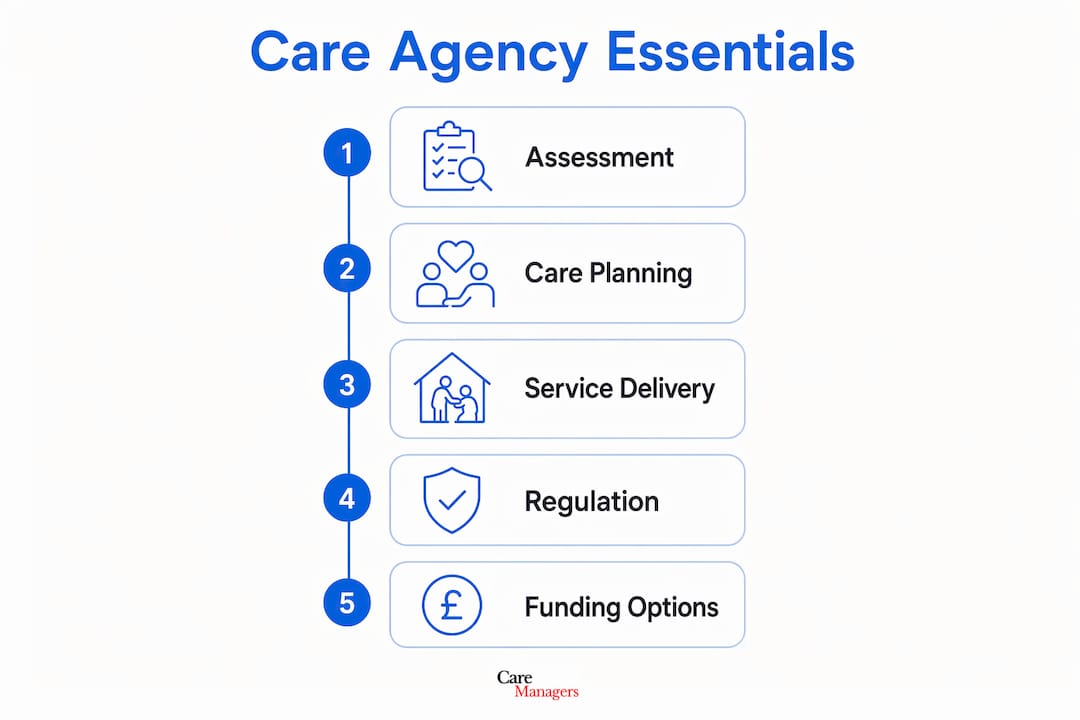
Care agency services span personal care, practical support, and health-related assistance, all shaped around a formal care plan.

Personal care covers washing, dressing, toileting, and medication prompts or administration. Practical support includes meal preparation, light domestic tasks, and companionship, which matters enormously for people at risk of isolation. Some agencies also offer specialist support for conditions like dementia or post-surgical recovery.
Care planning follows a needs assessment, which your local council provides free of charge to anyone, regardless of whether they self-fund. The written care plan records exactly what support will be provided and when. NICE guidance emphasises that a named care coordinator should liaise regularly with GPs, district nurses, and social workers to prevent fragmented care.
Costs for home care typically range from £15 to £30 per hour, depending on region and complexity. Funding options include local authority support, NHS Continuing Healthcare, and personal budgets, alongside self-funding.
How do you find and choose a reliable care agency?
Start with the CQC website, your local council’s directory, and the Homecare Association’s member search. Each gives you a shortlist of registered providers in your area.
When reviewing agencies, pay particular attention to the “well-led” domain in CQC inspection reports. This section reveals staff retention, management culture, and how the agency handles complaints, far more telling than a headline rating alone. Local authorities have a duty under the Care Act 2014 to provide guidance on care options to all residents, so your council’s adult social care team is a free starting point.
| What to check | Why it matters |
|---|---|
| CQC registration status | Confirms the agency meets legal standards for personal care |
| “Well-led” inspection rating | Indicates staff stability and management quality |
| Statement of purpose | Sets out the agency’s scope of services and client group |
| Staff continuity policy | Tells you how absences and handovers are managed |
| Contract and notice period | Protects you if your needs change or the service disappoints |
| Costs and funding options | Helps you plan and access any entitlements (hourly rates are typically £15–£30 depending on region and needs) |
Ask directly about carer continuity. Frequent changes in who visits can be unsettling, particularly for someone living with dementia. A good agency will try to match you with a consistent carer and explain their process for cover. For families exploring personalised care planning, understanding how a care plan is built and reviewed is equally worth discussing before you sign anything.
Caremanagers: an example of high-quality home care in practice
Caremanagers provides personalised home care and live-in support across South Wales and England, with a focus on dignity, consistency, and genuine partnership with families.
Their home care services cover the full range of needs, including hospital discharge care, dementia support, and respite care for family carers who need a break. Every carer is DBS-checked and Care Certificate trained, so the regulatory baseline is met from day one. Caremanagers also works closely with GPs, community nurses, and social workers, reflecting the multidisciplinary model that NICE recommends.
What families often value most is the consistency. Caremanagers aims to match each client with a regular carer and builds care plans around individual preferences, not just clinical needs. For families navigating a hospital discharge, having a trusted agency already in place can make the transition home far less stressful.
If you are looking for dependable home care for a loved one, speak to Caremanagers today about how their team can support your family.
Key takeaways
A care agency employs trained, regulated carers to deliver personal and practical support at home, with CQC registration confirming legal compliance and quality standards.
| Point | Details |
|---|---|
| CQC registration is mandatory | Regulated agencies providing personal care must register with the CQC in England. |
| Two types of agency exist | Regulated agencies employ carers directly; introductory agencies do not and carry no CQC obligations. |
| Free needs assessment available | Your local council provides a care needs assessment to everyone, including self-funders. |
| Costs vary by region and need | Hourly home care rates typically range from £15 to £30, with funding options available. |
| “Well-led” rating is the key indicator | The CQC’s well-led domain reveals staff stability and management quality more reliably than a headline score. |
FAQ
What does a care agency mean in the UK?
A care agency employs trained carers and arranges for them to visit people in their own homes, providing personal care, practical support, and companionship. Regulated agencies must register with the CQC in England before delivering personal care.
What is the difference between a regulated and an introductory care agency?
A regulated agency employs carers directly and holds legal responsibility for their training, supervision, and cover. An introductory agency connects you with self-employed carers, leaving employer responsibilities with you.
How much does a care agency cost in the UK?
Hourly rates for home care typically range from £15 to £30, depending on location and the level of support required. Funding may be available through your local authority, NHS Continuing Healthcare, or a personal budget.
How do you find a trustworthy care agency?
Search the CQC website, your local council’s directory, or the Homecare Association’s member list. Review the “well-led” domain in CQC inspection reports and ask about staff continuity and contract terms before committing.
Can I get a care needs assessment even if I pay for my own care?
Yes. Your local council provides a free care needs assessment to everyone, regardless of financial circumstances, to help identify what support you need and inform your care plan.