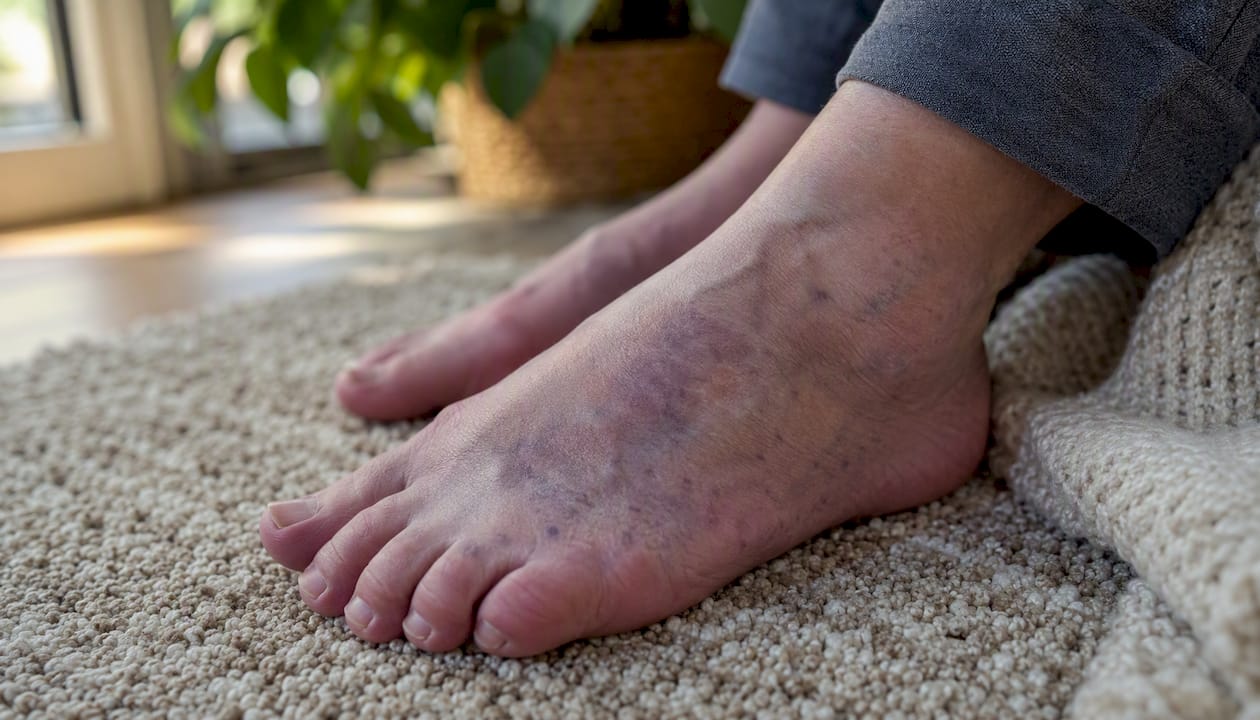
Purple or blue-purple feet usually mean that the skin is receiving less oxygen than it needs, either because blood flow is reduced or because oxygen levels in the blood itself are low. This is medically known as cyanosis, and it can range from a harmless response to cold all the way to a vascular emergency. If your feet have turned purple suddenly and are also severely painful, cold, numb, or if you have breathlessness or chest pain, call 999 or go to A&E immediately. On the other hand, if the colour change comes and goes with cold weather and your feet feel normal in between, the cause is far more likely to be something manageable like Raynaud’s phenomenon or surface staining from socks or shoes.
Key takeaways
Purple or blue-purple feet most often signal reduced oxygen or impaired circulation, and the urgency depends on whether the colour change is transient and cold-triggered or persistent, painful, and accompanied by numbness or wounds.
| Point | Details |
|---|---|
| Most common causes | Raynaud’s phenomenon, PAD, acrocyanosis, DVT, frostbite, vasculitis, and diabetic foot are the leading causes of purple discolouration. |
| Call 999 immediately | Sudden severe pain, cold numb limb, signs of gangrene, or breathlessness alongside discolouration all require emergency care. |
| Blanch test at home | Press the discoloured skin for three seconds; true cyanosis briefly blanches then returns to purple, while dye staining does not change at all. |
| Higher risk in older adults and diabetes | People with diabetes or vascular disease should contact their GP or diabetic foot clinic the same day for any new colour change or wound. |
| Caremanagers supports recovery | Caremanagers provides hospital discharge support, wound monitoring, medication reminders, and mobility assistance across South Wales and England. |
Table of Contents
- What does it mean when your feet turn purple?
- Common causes of purple feet
- What other symptoms tell you about urgency
- When should you seek help for purple feet?
- How do doctors diagnose the cause?
- Treatment options for purple feet, mapped to cause
- Why older adults and people with diabetes face higher risks
- What to expect from the NHS
- When purple feet lead to a need for home care
- A note on perspective
- Home care support during recovery from foot problems
- Sources
- FAQ
What does it mean when your feet turn purple?
The colour change itself is a signal from your circulation. When blood carries enough oxygen, it stays bright red and skin looks its normal tone. When oxygen drops or flow slows, blood darkens and the skin above it takes on a blue, purple, or mottled appearance. The medical term for this is peripheral cyanosis when it affects the limbs, and it can stem from a wide range of causes, from the entirely benign to the genuinely urgent.
Understanding which category you are in comes down to a few key questions: Did it come on suddenly or gradually? Is the foot painful, cold, or numb? Does the colour return to normal with warmth? Are there any open sores? Your answers to those questions will guide everything that follows in this article.
Common causes of purple feet
Purple discolouration of the feet has many possible origins. The list below covers the most frequent, with a one-line clue for each to help you narrow things down before speaking to a clinician.
- Raynaud’s phenomenon: Triggered by cold or stress; feet (and often hands) turn white, then blue-purple, then red as blood returns. Episodes last minutes to hours and resolve with warmth.
- Peripheral arterial disease (PAD) / ischaemic foot: Narrowed arteries reduce blood flow persistently; colour change is accompanied by rest pain, cold skin, absent pulses, hair loss on the lower leg, and slow-healing wounds.
- Peripheral ischaemia: A more severe form of arterial insufficiency where the foot may be persistently discoloured, painful at rest, and at risk of ulceration or gangrene.
- Acrocyanosis: Persistent, painless blue-purple discolouration of the hands and feet, usually symmetrical, caused by small-vessel spasm; not typically dangerous but worth confirming with a GP.
- Frostbite: Follows prolonged cold exposure; skin is initially pale and numb, then turns blue-purple and may blister. Requires urgent rewarming and specialist care.
- Deep vein thrombosis (DVT): A clot in a deep leg vein causes swelling, pain, warmth, and discolouration, usually in one leg. Urgent if breathlessness or chest pain develops.
- Vasculitis: Inflammation of blood vessel walls can cause patchy purple or red-purple skin, sometimes with ulcers; often accompanied by systemic symptoms such as fatigue or joint pain.
- Diabetes-related circulation problems (diabetic foot): Reduced circulation and nerve damage mean colour changes can appear with little pain; ulcers can develop quickly and carry a high risk of infection.
- Bruising or haematoma: Localised purple discolouration after trauma; the area is usually tender and the colour fades over days.
- Medication effects or external staining: Some medicines affect peripheral circulation; sock or shoe dye can temporarily stain skin. Staining does not change skin temperature or sensation.
- Liver disease (cirrhosis): Systemic circulatory changes from liver disease can contribute to skin discolouration, particularly when other liver symptoms are present.
Pro Tip: To tell surface staining from true cyanosis, press firmly on the discoloured area for three seconds and release. True cyanosis blanches briefly then returns to purple; dye staining does not change colour at all. Also check whether the foot feels cold or numb — staining never affects temperature or sensation.
What other symptoms tell you about urgency
Colour alone does not determine how serious the situation is. The symptoms that accompany the discolouration are what change the clinical picture.
Cold and numb with severe pain
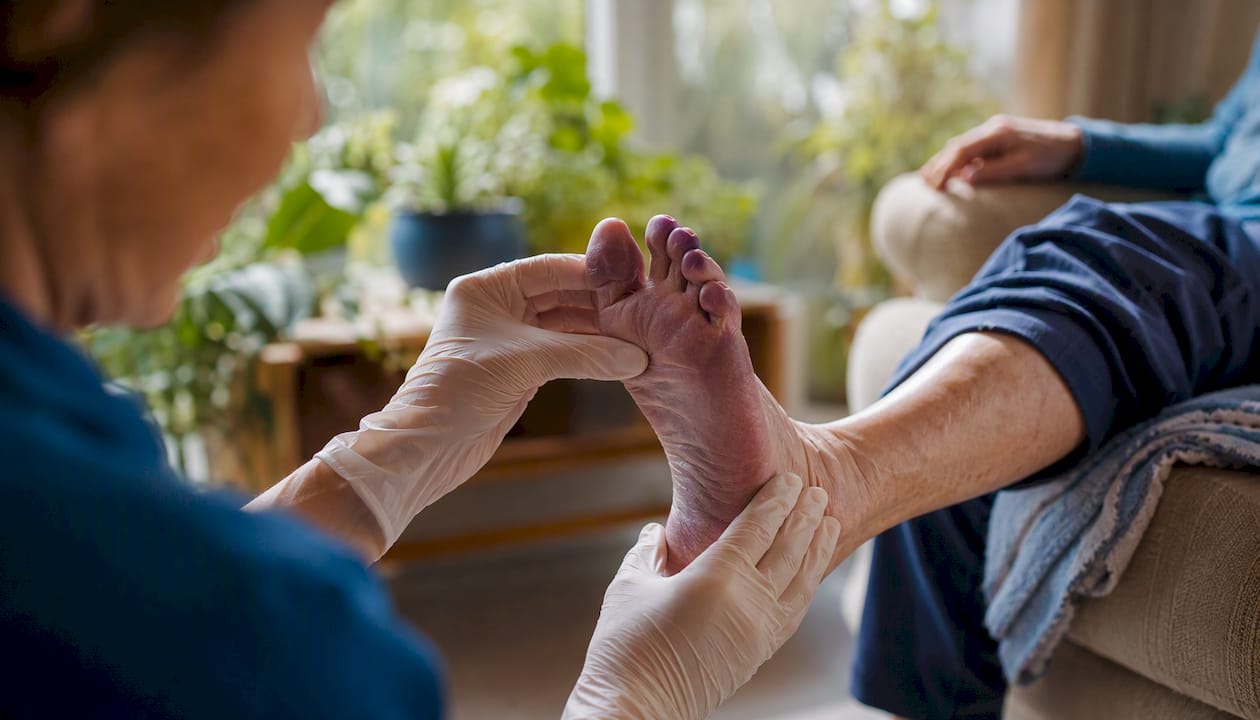
A foot that is purple, cold to the touch, numb, and severely painful at rest is the most urgent combination. This pattern suggests acute arterial occlusion, where blood supply to the foot has been cut off suddenly. Reduced or absent pulses at the ankle confirm the picture. This is a vascular emergency requiring immediate hospital assessment.
Purple with swelling and warmth
Swelling in one leg alongside discolouration and warmth points toward a venous cause, most commonly DVT. The foot may feel heavy or ache rather than burn. If breathlessness or chest pain develops alongside these signs, a clot may have moved to the lungs, which is life-threatening.
Patchy bruising after trauma
Localised purple patches that appear hours after an injury are usually bruising from small broken blood vessels beneath the skin. The area is tender to touch, the surrounding skin looks and feels normal, and the discolouration fades over a week or two. No urgent action is needed unless the injury was severe or the bruising is expanding rapidly.
Features that raise concern
Certain signs should always prompt medical contact, regardless of the underlying cause:
- Persistent discolouration that does not blanch or does not improve with warmth
- Severe pain in the foot at rest, especially at night
- Open sores or ulcers that are not healing
- Spreading redness, warmth, or pus around a wound
- Fever alongside foot discolouration
- Breathlessness or chest pain at any point
On darker skin tones, colour change can be harder to spot. Clinicians are trained to check temperature, capillary refill, skin texture (shiny or hairless skin), and the presence of ulcers rather than relying on colour alone, and you can apply the same logic at home.
When should you seek help for purple feet?
Most people with purple feet do not need an ambulance, but some do. Here is how to triage your situation in the UK context.
Call 999 or go to A&E immediately if you have:
- Sudden severe pain in the foot or leg with purple or white discolouration
- Loss of sensation or movement in the foot
- A cold, pulseless limb
- Signs of gangrene (black or very dark tissue, foul smell)
- Breathlessness or chest pain alongside leg swelling or discolouration
Contact NHS 111 or request an urgent same-day GP appointment if:
- The discolouration has appeared or worsened over hours to days and is accompanied by pain or swelling, but you have no breathlessness
- You have diabetes or known vascular disease and notice any new colour change or wound
- You are on anticoagulants and notice unusual discolouration or bruising
Book a routine GP appointment if:
- Colour changes are intermittent, triggered by cold, and resolve fully with warmth (likely Raynaud’s)
- You have noticed gradual colour changes with no pain, ulcers, or swelling
- You suspect staining from footwear but want to rule out a medical cause
When you contact NHS 111, your GP, or A&E, tell them: when the colour change started, whether it is one foot or both, whether the foot is painful, cold, or numb, whether you have diabetes or known heart or vascular disease, and any medications you take, particularly anticoagulants or blood pressure drugs. This information helps clinicians fast-track the right assessment.
The NHS provides clear guidance on urgent vascular and diabetic foot pathways. People with suspected acute limb ischaemia are typically seen within hours; those with diabetic foot ulcers are referred to a specialist diabetic foot clinic, often within 24 hours for infected wounds.
How do doctors diagnose the cause?
Clinicians combine a focused physical examination with targeted tests to separate benign vasospasm from arterial occlusion, venous thrombosis, or inflammatory disease. Here is what to expect.
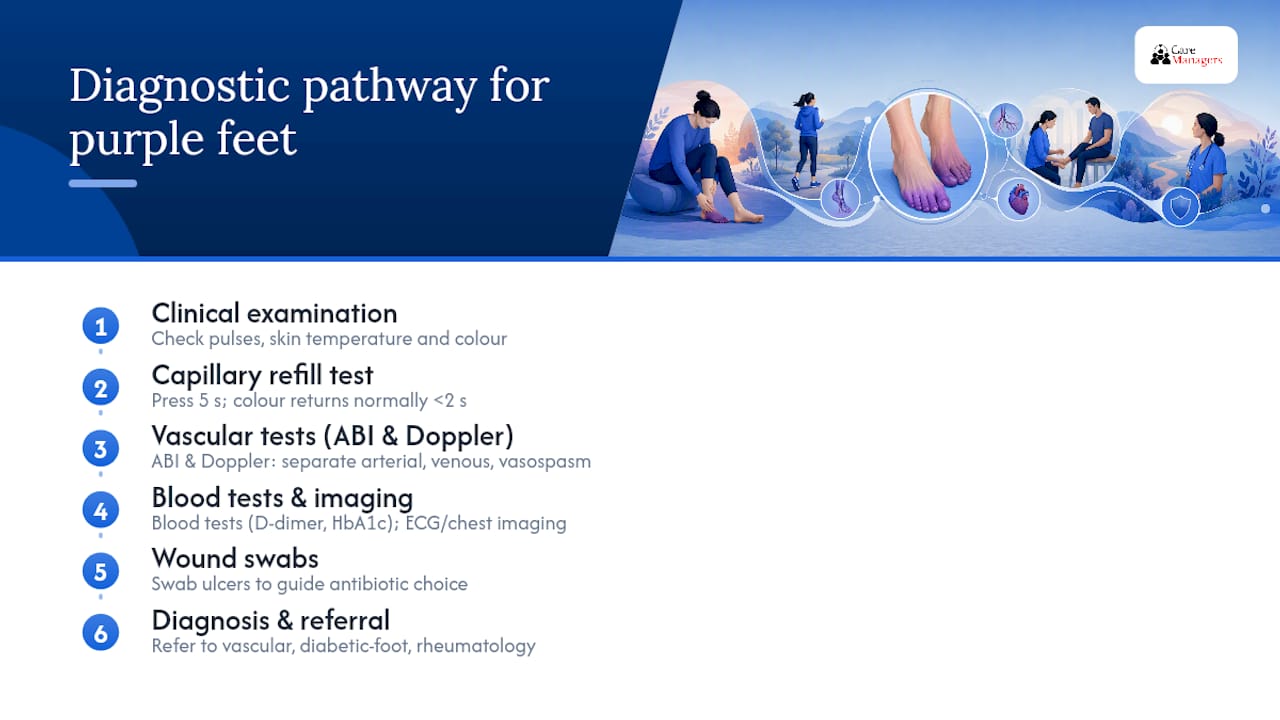
Clinical examination and pulse check: The clinician will feel for pulses at the ankle and foot, check skin temperature and colour, assess capillary refill, and look for ulcers, hair loss, or shiny skin. Absent pulses are a strong indicator of arterial disease.
Capillary refill and blanch test: Pressing the nail bed or skin for five seconds and timing how quickly colour returns (normally under two seconds) gives a quick bedside measure of peripheral perfusion.
Ankle-brachial pressure index (ABI): A simple, non-invasive test comparing blood pressure at the ankle to the arm. A low ABI reading indicates arterial narrowing and guides the urgency of vascular referral.
Doppler ultrasound / duplex scan: Uses sound waves to visualise blood flow in the arteries and veins of the leg. It can confirm PAD, identify the site of arterial narrowing, and detect DVT. Clinicians prioritise ABI and Doppler studies to separate arterial occlusion from venous or vasospastic causes, since this determines whether urgent revascularisation or anticoagulation is needed.
Blood tests: D-dimer (raised in DVT or pulmonary embolism), full blood count, inflammatory markers (CRP, ESR), clotting screen, HbA1c (for diabetes), and liver function tests if systemic disease is suspected.
ECG and chest imaging: Ordered when breathlessness or chest pain accompanies the foot symptoms, to rule out cardiac or pulmonary causes of cyanosis.
Wound swabs and cultures: Taken when there is an open ulcer or signs of infection to guide antibiotic choice.
Depending on the findings, you may be referred to a vascular surgeon (for arterial or venous disease), a diabetologist or diabetic foot clinic (for diabetes-related problems), or a rheumatologist (for suspected vasculitis or connective tissue disease). Each referral aims to confirm the diagnosis and start the most effective treatment before irreversible tissue damage occurs.
Treatment options for purple feet, mapped to cause
Treatment depends entirely on the underlying cause and ranges from simple warming measures to anticoagulation, revascularisation, or specialist wound care.
| Cause | Immediate first aid | Medical treatment | Prevention |
|---|---|---|---|
| Raynaud’s phenomenon | Move to a warm environment; warm the feet gradually with warm (not hot) water | Vasodilators (e.g. nifedipine) for frequent or severe episodes | Keep feet warm; avoid cold triggers; stop smoking; manage stress |
| PAD / peripheral ischaemia | Do not elevate the leg (reduces arterial flow); keep warm | Antiplatelet therapy; angioplasty or bypass surgery for critical ischaemia | Smoking cessation; blood pressure and cholesterol control; regular foot checks |
| DVT | Rest; do not massage the limb | Anticoagulation (e.g. apixaban, rivaroxaban, or heparin); compression hosiery after acute phase | Stay hydrated; move regularly on long journeys; anticoagulation for high-risk periods |
| Frostbite | Move indoors; remove wet clothing; rewarm in warm (not hot) water; do not rub | Specialist wound care; blister management; possible surgery for severe cases | Wear insulating, waterproof footwear in cold conditions |
| Diabetic foot | Clean any wound gently; cover with a clean dressing; contact GP or diabetic foot clinic promptly | Offloading (specialist footwear or casting); antibiotics for infection; vascular assessment | Daily foot inspection; well-fitted footwear; tight blood glucose control |
| Acrocyanosis | Keep feet warm; avoid prolonged cold | Usually no specific medication needed; treat any underlying cause | Warm socks and footwear; avoid cold environments |
| Vasculitis | Seek medical advice; do not self-treat | Immunosuppressants or corticosteroids depending on type | Regular monitoring; rheumatology follow-up |
Practical steps while you wait for care
- Keep the foot warm but avoid direct heat sources such as hot water bottles, which can burn numb skin
- If you suspect DVT, rest and avoid massaging the leg
- For Raynaud’s episodes, warm the foot gradually and move to a heated room
- Avoid nicotine in any form, as it causes vasoconstriction and worsens all circulatory conditions
- If there is a wound, cover it loosely with a clean, dry dressing and do not apply antiseptic creams unless advised by a clinician
- Raise the leg only if swelling is the main problem and there is no suspected arterial disease
Pro Tip: To safely check warmth and sensation at home, use the back of your hand (more sensitive to temperature than the palm) to compare the affected foot to the other one. If you cannot feel a light touch with a finger on the sole of your foot, or if one foot is noticeably colder, contact your GP or NHS 111 the same day. Do not attempt self-care if you suspect infection, have an open wound, or cannot feel the foot at all.
Why older adults and people with diabetes face higher risks
Age and diabetes both reduce the body’s ability to maintain healthy circulation and repair damaged tissue, which means purple discolouration in these groups carries a higher chance of serious complications.
Older adults tend to have stiffer, narrower arteries, reduced nerve sensitivity, and slower wound healing. A colour change that might be a minor inconvenience in a younger person can progress to ulceration or infection within days in someone over 70. People with diabetes face an additional layer of risk: peripheral neuropathy means they may not feel pain even when tissue damage is already advanced, and high blood glucose impairs the immune response, making infections harder to clear.
Healthcare providers stress that people with chronic conditions such as diabetes, high blood pressure, or high cholesterol should monitor foot health closely, because small breaks or subtle changes in temperature and colour can progress rapidly.
Red flags that are especially important in older adults and people with diabetes:
- Any new wound, blister, or break in the skin on the foot, however small
- A foot that feels warmer or cooler than usual, even without visible discolouration
- Swelling that appears overnight or worsens over a day
- Any discolouration that does not resolve within an hour of warming
- Confusion or reduced mobility alongside foot changes (may indicate systemic infection)
For people with diabetes, the NHS diabetic foot pathway involves a multidisciplinary team including podiatry, diabetology, and vascular surgery. Early offloading and infection control markedly reduce the risk of amputation. If you or a family member has diabetes and notices any foot colour change, contact your GP or diabetic foot clinic the same day rather than waiting for a routine appointment.
Families arranging care for older relatives with foot problems may also find it helpful to read about choosing home care services for elderly loved ones, particularly when mobility or wound monitoring is a concern.
What to expect from the NHS
Most people start by contacting NHS 111 or their GP. Suspected acute limb ischaemia is fast-tracked to A&E or an urgent vascular assessment, often the same day.
NHS pathway at a glance:
- 999 / A&E: Immediate stabilisation, vascular imaging (CT angiography or Doppler), and surgical assessment if arterial occlusion is confirmed. Expect to be seen within minutes to hours.
- NHS 111 / urgent GP: Same-day telephone advice; urgent referral to a vascular clinic or diabetic foot clinic if needed. For infected diabetic foot wounds, NHS guidance recommends specialist review within 24 hours.
- Routine GP: Outpatient referral for ABI measurement, Doppler ultrasound, and onward vascular or rheumatology clinic appointment. Routine referral timelines vary by trust but are typically within a few weeks for non-urgent cases.
Tell healthcare staff the following to speed up your assessment:
- Exactly when the colour change started and whether it is getting worse
- Whether one foot or both feet are affected
- Whether the foot is painful, cold, or numb
- Your diabetes status and most recent HbA1c if known
- Any history of heart disease, stroke, or vascular surgery
- Current medications, particularly anticoagulants, antiplatelets, or blood pressure drugs
- Whether you have any open wounds or ulcers
Being prepared with this information can make a real difference to how quickly you receive the right care.
When purple feet lead to a need for home care
Not every consequence of purple feet is managed in hospital. Many people return home after vascular surgery, a DVT diagnosis, or a diabetic foot episode and need practical, non-clinical support to recover safely.
Home care can be genuinely valuable in these situations. Reduced mobility after vascular surgery makes daily tasks difficult and increases fall risk, particularly when feet are painful or numb. Wound dressings need to be changed regularly and monitored for signs of infection. Anticoagulants and antibiotics require consistent timing, and missing doses can have serious consequences. Getting to outpatient appointments can be a challenge when walking is painful.
Practical home-care tasks that support recovery:
- Monitoring wounds and reporting changes in colour, smell, or discharge to the clinical team
- Assisting with dressing changes under guidance from district nurses
- Medication reminders for anticoagulants, antibiotics, and other prescribed drugs
- Arranging and accompanying to GP, vascular clinic, or diabetic foot clinic appointments
- Safe transfers and mobility support to reduce fall risk
- Nutritional support to aid tissue healing, including meal preparation
- Temperature and circulation checks as part of a daily routine
A home-care provider does not replace the clinical team; they work alongside it. For families managing a loved one’s recovery after a hospital stay, understanding how hospital discharge care works at home can help you plan the right level of support from day one.
A note on perspective
Purple feet are one of those symptoms that sit at a wide spectrum. At one end, you have Raynaud’s phenomenon, which affects a significant proportion of the population, is usually harmless, and responds well to simple warmth measures. At the other end, you have acute limb ischaemia, which is a genuine emergency where hours matter. The challenge is that both can look similar at first glance.
What I find most striking, having reviewed the clinical evidence, is how often the serious causes are delayed because people assume the colour change will pass on its own. Peripheral arterial disease, in particular, tends to creep up gradually, and by the time rest pain or ulcers appear, the window for straightforward treatment may have narrowed. The NHS vascular pathway exists precisely to catch these cases early, and using it promptly, whether through NHS 111, a GP, or A&E, is always the right call when you are uncertain.
Reassurance is warranted for the majority of people whose feet turn purple in the cold and return to normal with warmth. But if the colour persists, if there is pain at rest, or if you have diabetes or known vascular disease, please do not wait. Contact NHS services today.
Home care support during recovery from foot problems
Recovering from a vascular procedure, a DVT, or a diabetic foot infection is rarely straightforward at home. The clinical treatment happens in hospital or clinic, but the day-to-day support that keeps recovery on track happens at home, and that is where Caremanagers can help.

Caremanagers provides practical, non-clinical in-home support across South Wales and England for people recovering from vascular or foot-related conditions. Rather than managing the medical side, the focus is on the things that make recovery safer and less stressful: wound monitoring and reporting, medication reminders for anticoagulants and antibiotics, help with mobility and fall prevention, transport to outpatient appointments, and nutritional support to aid healing. For those returning home after a hospital stay, Caremanagers’s hospital-to-home care service provides structured support from the day of discharge, so nothing falls through the gaps. To arrange an assessment or find out what level of support is right for your situation, visit the Caremanagers home care services page and get in touch with the team directly.
Sources
The following NHS and specialist pages provide reliable, UK-specific guidance on the conditions discussed in this article. You are welcome to share these links with your GP or specialist to support your consultation.
- Blue skin or lips (cyanosis) – NHS
- Raynaud’s – NHS
- Peripheral Ischaemia – The Dudley Group NHS Foundation Trust
- Peripheral arterial disease (PAD) – NHS
- Frostbite – NHS
- Deep vein thrombosis (DVT) – NHS
- Cirrhosis – NHS
This article is general information, not a substitute for advice from a qualified doctor. Consult a qualified healthcare professional about your own circumstances before acting on anything here.
FAQ
When should I worry about purple feet?
Worry immediately if the foot is also cold, severely painful, numb, or if you have breathlessness or chest pain alongside the discolouration. If the colour change is intermittent, triggered by cold, and resolves fully with warmth, it is more likely to be Raynaud’s phenomenon and can be assessed by your GP at a routine appointment.
Can heart problems cause purple feet?
Yes. Reduced cardiac output or heart failure can lower oxygen delivery to the extremities, causing peripheral cyanosis. If purple feet appear alongside breathlessness, chest pain, or ankle swelling, seek urgent medical attention.
What deficiency causes purple feet?
Iron deficiency anaemia can reduce the oxygen-carrying capacity of the blood and contribute to peripheral cyanosis, though it is rarely the sole cause of purple feet. A GP can check for anaemia with a simple blood test alongside other investigations.
Why do older people’s feet turn purple?
Older adults are more likely to have narrowed arteries, reduced circulation, and thinner skin, all of which make feet more susceptible to discolouration. Conditions such as PAD and peripheral ischaemia become more common with age, and the consequences of delayed treatment are more serious, so any persistent colour change in an older person warrants prompt GP review.