Table of Contents
- What Is a Supported Living Assessment?
- Supported Living Eligibility Criteria: Who Qualifies?
- How to Book a Professional Supported Living Assessment
- Care Assessment Preparation Checklist: What to Gather Beforehand
- Private Care Needs Assessment Providers: A Practical Guide
- Advocacy Support During Your Assessment
- After the Assessment: Your Care and Support Plan
- Conclusion
Last Updated: August 11, 2026
What Is a Supported Living Assessment?
A supported living assessment is a formal evaluation by a qualified practitioner to determine what care and support a person needs to live independently in their own home or supported living setting. The assessment examines how a person manages daily living activities, identifies gaps in current support, and forms the foundation for a personalised care and support plan.
The assessment is distinct from a financial assessment, which determines what a person can contribute towards care costs. The care needs assessment focuses entirely on the individual’s needs, goals, and circumstances; means-testing comes only after eligibility is established.
A common mistake is treating the assessment as a one-off formality. In practice, it is the starting point for an ongoing care pathway, and the quality of preparation directly shapes the support received.
Supported Living Eligibility Criteria: Who Qualifies?
Eligibility for a funded supported living assessment is determined by statutory guidance and local authority thresholds.
Eligibility Under the Care Act 2014
The Care Act 2014 statutory guidance sets out the legal framework for adult care and support in England. Any adult who appears to have care and support needs is entitled to a needs assessment, regardless of whether the local authority ultimately funds their care.
To qualify for publicly funded support, a person’s needs must meet the national eligibility threshold. Needs must arise from a physical or mental condition, affect the person’s ability to achieve at least two specified outcomes related to daily living activities, and have a significant impact on wellbeing. If needs meet this threshold, the local authority has a duty to meet them.
Local authorities must also carry out a financial assessment to determine funding eligibility. For current financial thresholds, the NHS guidance on care funding provides up-to-date information.
Supported Living vs. Residential Care: Which Applies to You?
Supported living means a person lives in their own tenancy or shared property and receives support from a care provider separately, retaining tenancy rights and choosing support independently.
Residential care means a person moves into a care home where accommodation and care are provided together.
The assessment should be needs-led, with recommendations driven by what the individual actually needs. Many people steered towards residential care are better suited to supported living, particularly those with learning disabilities, acquired brain injuries, or moderate physical disabilities who wish to maintain independence.
| Factor | Supported Living | Residential Care |
|---|---|---|
| Tenancy rights | Retained by the individual | No separate tenancy |
| Care provider | Chosen independently | Provided by the home |
| Level of independence | Higher | More structured |
| Best suited to | Those able to manage daily routines with support | Those needing 24-hour intensive care |
| Community involvement | Encouraged | Varies by setting |
How to Book a Professional Supported Living Assessment
Requesting an Assessment Through Your Local Authority
Contact your local authority’s adult social services department by telephone, in writing, or through the council’s website. You do not need a GP referral. The person themselves, a family member, a carer, or any professional involved in their care can make the request.
Once received, the local authority has a duty to carry out an assessment within a reasonable timeframe. If the waiting list is lengthy or you want a more detailed assessment, you can request a private care needs assessment without affecting your statutory assessment right.

What to Expect During the Assessment Process
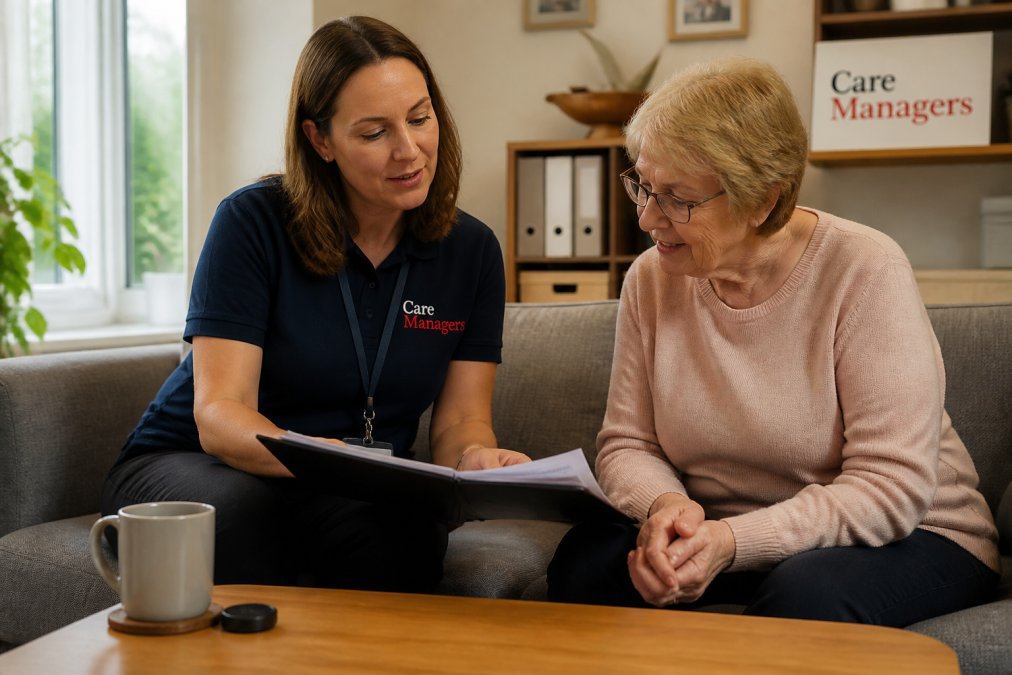
The assessment is typically conducted by a social worker or qualified practitioner, ideally face-to-face. The assessor will explore how the person manages personal care, mobility, and daily living activities; their social connections and community involvement; mental and emotional wellbeing; safety risks; and their goals and preferences.
The assessment should be a conversation. The individual has the right to be heard, bring a family member or advocate, and challenge any disagreement. The assessor must consider the person’s wishes and feelings throughout.
Care Assessment Preparation Checklist: What to Gather Beforehand
Preparation is the single biggest factor most families overlook. Before the assessment, gather:
- A written summary of daily routines and tasks the person struggles with
- Details of current medication and medical conditions
- Names and contact details of professionals already involved
- A list of informal support from family or friends and its limits
- Notes on recent incidents: falls, hospital admissions, episodes of confusion
- Information about housing and any adaptations in place
- The person’s own views on what they want their daily life to look like
- Any previous care and support plans or assessment reports
- Details of any relevant diagnosis
- Questions about supported living options, funding, or the care pathway

Ask the social worker in advance whether the assessment will be face-to-face and how long it will take. This ensures the person is rested and comfortable, which genuinely affects how they present during the meeting.
Be specific and honest during the assessment. Describe difficult days, not just good ones, to ensure the care and support plan reflects actual needs.
Private Care Needs Assessment Providers: A Practical Guide
Private care needs assessment providers offer an independent route for families wanting a thorough, impartial evaluation outside the local authority system. This is useful when disputing a local authority decision, needing urgent assessment, or wanting a second opinion before agreeing to a care and support plan.
Private assessments are typically carried out by independent social workers, occupational therapists, or specialist care consultants. The British Association of Social Workers guidance on independent practice outlines professional standards for independent practitioners.
Call us for Free Assessment Today →
A private assessment does not replace the local authority’s statutory assessment but can be submitted as evidence to challenge decisions or support an appeal.
When choosing a provider, look for:
- Registration with Social Work England or the relevant professional body
- Experience with the specific condition or care need involved
- Clear written reports referencing statutory guidance
- Transparent fees discussed in advance
Self-Funding Implications and What They Mean for Your Care Plan
If a financial assessment concludes that a person’s assets exceed the statutory threshold, they will be classified as a self-funder and expected to meet the full cost of their care. Self-funders still have the right to a care needs assessment and care and support plan, but the local authority has no duty to arrange or fund care.
Self-funders often pay more for the same care than those whose care is arranged by the local authority. Many families are unaware they can ask the local authority to arrange care on their behalf even as a self-funder, which may provide access to better-negotiated rates.
Do not assume that selling a family home is the only way to fund care. The rules around property, deprivation of assets, and deferred payment agreements are complex. Seek independent financial advice from a specialist in care funding. The [Money and Pensions Service guidance on paying for care](https://moneyandpensionsservice.org.uk/category/press-releases/) is a useful starting point.
Self-funders should ensure their care and support plan is reviewed regularly, as needs change over time.
Advocacy Support During Your Assessment
The Care Act 2014 places a duty on local authorities to arrange an independent advocate for a person who has substantial difficulty being involved in the assessment and who has no appropriate person to support them.
An independent advocate is a trained professional whose sole role is to represent the interests and wishes of the person being assessed. This is particularly important for people with dementia, learning disabilities, or communication difficulties.
Even where the legal duty does not apply, anyone can bring a trusted person to their assessment. Having someone present who knows the person well often produces a more accurate assessment.
Advocacy support can help the person communicate their needs clearly, challenge confusing questions, ensure information is recorded correctly, and support understanding of rights and options.
After the Assessment: Your Care and Support Plan
The outcome of a supported living assessment is a care and support plan, which sets out eligible needs, desired outcomes, and how those needs will be met. Where the local authority has a duty to fund care, the plan includes a personal budget.
The care and support plan should be developed with the person, not simply presented to them. They have the right to request a direct payment, giving greater choice and control over who provides care and how.
Once the plan is in place:
- The plan should be reviewed at least annually, or sooner if circumstances change
- If needs change significantly, a reassessment can be requested at any time
- Disagreements can be raised through the local authority’s formal complaints process
- Independent advocacy can be requested again at the review stage
The care and support plan is a living document. If it stops reflecting a person’s actual needs, request a care review. You are entitled to one, and it can significantly improve the quality of daily support.
Navigating a supported living assessment is rarely straightforward, particularly when needs are complex or the local authority process feels slow. Care Managers provides professional supported living services tailored to each individual’s needs and routines, with a commitment to helping people maintain independence and dignity in their own homes. Our team can help families understand the assessment process, prepare effectively, and ensure the resulting care plan reflects what matters most. To find out how our supported living and home care services can support your family, book a call with the Care Managers team today.
Frequently Asked Questions
How do I request a care needs assessment from my local authority?
Contact your local authority's adult social services department directly by phone or via their website. You can self-refer, or a GP, social worker, or family member can refer on your behalf. The local authority has a legal duty under the Care Act 2014 to carry out a needs assessment for any adult who appears to have care and support needs, regardless of whether they are likely to be eligible for funded support.
Who is eligible for a supported living assessment?
Any adult with a physical disability, learning disability, mental health condition, or acquired brain injury who needs support to live independently may be eligible for a supported living assessment. Eligibility for publicly funded support is determined by the national eligibility threshold set out in the Care Act 2014, which focuses on whether your needs affect your ability to achieve daily living activities and your wellbeing. A qualified practitioner will assess your individual circumstances.
Can I pay for a private care needs assessment?
Yes. If you prefer not to wait for a local authority assessment, or if you are self-funding your care, you can commission an independent assessment from a private care needs assessment provider. A qualified practitioner will conduct a thorough, needs-led assessment and produce a care and support plan. This can be particularly useful when arranging supported living services quickly or when the local authority assessment timeline does not meet your needs.
What is the difference between a care needs assessment and a financial assessment?
A care needs assessment, carried out by a social worker or qualified practitioner, determines what support you need to maintain your daily living activities and independence. A financial assessment, sometimes called a means test, is a separate process conducted by the local authority to determine how much, if anything, you will contribute towards the cost of your care. Both are distinct steps in the care pathway, and a care needs assessment must be completed before any financial assessment takes place.
This article was written using GrandRanker