
The single most important thing to check when you choose a home care provider is whether they will produce a personalised, written care plan co-produced with you and your loved one, backed by a current regulator inspection and clear, contracted pricing. Get those three things confirmed before you shortlist anyone.
Three steps you can take today:
- Search the Care Quality Commission (CQC) website for any agency you are considering and check their latest inspection rating (Outstanding, Good, Requires Improvement, or Inadequate).
- Ask each agency to show you a sample care plan. A good one names personal goals, daily routines, and medical needs — not a generic template.
- Request a written pricing schedule and a copy of their standard contract before agreeing to anything.
At first contact, demand two non-negotiable trust signals: confirmation that all carers hold a valid DBS (Disclosure and Barring Service) check, and the name of a specific person you can call in an emergency outside office hours.
Key takeaways
Choosing a home care provider well comes down to three things: a co-produced written care plan, a current regulator inspection rating, and a clear contract with transparent pricing.
| Point | Details |
|---|---|
| Start with the regulator | Check the CQC (or devolved equivalent) rating and read the full inspection report before contacting any agency. |
| Insist on a co-produced care plan | The plan must name personal goals, routines, and medical needs — not a generic template. CQC expects this as standard. |
| Verify DBS and staffing cover | Confirm all carers hold current DBS checks and ask who covers sickness and holidays before signing. |
| Understand the costs | Private hourly rates range from roughly £15 to £34 depending on region and service type; always get pricing in writing. |
| Caremanagers | Provides personalised home care across South Wales and England, with a co-produced care plan and trial period built into every arrangement. |
Table of Contents
- What types of home care are available in the UK?
- Who pays for home care and what does it cost?
- Where to find and verify home care providers in the UK
- Questions to ask every agency and a checklist for your first contact
- Agency or employing your own carer: which suits your family?
- How to check quality and spot red flags before you commit
- What a good personalised care plan actually looks like
- A decision plan: from shortlist to signed agreement
- Legal rights of the care recipient
- Understanding contracts and service agreements
- What families often miss when arranging home care
- Caremanagers offers personalised home care across South Wales and England
- Sources
- FAQ
What types of home care are available in the UK?
Home care, also called domiciliary care, means paid support delivered in a person’s own home. It differs from residential care (where someone moves into a care home) and from NHS nursing care (which is clinically led and separately funded). Understanding the main types helps you match the right service to your situation before you start comparing agencies.
You can read a fuller breakdown of what home care covers in the UK on the Caremanagers website, but the core types are:
- Personal care: Help with washing, dressing, toileting, and medication prompts. Suitable when someone can no longer manage daily self-care safely alone.
- Dementia support: Specialist carers trained in cognitive conditions who provide structured routines, safe supervision, and emotional reassurance. Families seeking this should ask specifically about specialist dementia home care.
- Companionship care: Social visits, light domestic help, and outings. Appropriate when isolation or low mood is the primary concern rather than physical need.
- Respite care: Short-term cover so that a family carer can rest, travel, or recover. Can be arranged for a few hours or several weeks.
- Live-in care: A carer lives in the home and provides round-the-clock support. Often a direct alternative to a care home for people with complex or high-frequency needs.
- Nursing at home: Registered nurses deliver clinical procedures (wound care, catheter management, medication administration) in the home setting.
- Hospital discharge care: Intensive short-term support arranged around a return from hospital, covering medication management, mobility, and recovery tasks.
A formal needs assessment, carried out by your local council, is the structured way to identify which type of service is appropriate. Independent Age recommends discussing the person’s daily routines, goals, and preferences before approaching any provider, so you arrive at that conversation with a clear picture of what you actually need.
Who pays for home care and what does it cost?
Cost is one of the first practical filters when selecting home care services, and the answer depends on how care is funded.
Self-funding means paying privately from savings, pension income, or property. Private hourly rates vary considerably by region and service type: NHS guidance cites a range of roughly £15–£30 per hour, while market data from Homecare suggests rates nearer £23–£34 per hour in many areas. Live-in care commands a weekly rate rather than an hourly one and is generally higher. Neither figure is universal; London and the South East tend to sit at the top of any range.
Council-arranged care follows a needs assessment and a financial means test. If you qualify, the council either arranges care directly or gives you a personal budget to manage yourself. A personal budget (sometimes called a direct payment) lets you choose your own provider and pay them directly, which gives more control over who comes into the home.
Direct payments are particularly useful when you want a specific agency or carer. You receive the funding and manage the arrangement yourself, including the contract and invoicing.
For a detailed guide to all funding routes, the Caremanagers funding guide for elderly home care covers self-funding, council support, and direct payment options in plain language.
Pricing questions to ask every provider:
- What is the hourly rate, and does it change at weekends, bank holidays, or for specialist care?
- What is included in the visit — and what counts as an extra charge?
- How often will you invoice, and what payment methods do you accept?
- What notice period is required to cancel or reduce visits?
- Is there a minimum visit length, and is that billed even if the visit runs short?
Where to find and verify home care providers in the UK
Starting your search in the right places saves time and filters out unregistered providers before you make a single phone call.
- CQC (England): The Care Quality Commission publishes inspection reports for every registered home care agency in England. Search by postcode, filter by rating, and read the full report — not just the headline score. The “Well-led” and “Safe” sections reveal the most about day-to-day management.
- Care Inspectorate (Scotland) and Care Inspectorate Wales (CIW): The equivalent regulators for Scotland and Wales respectively. Both publish searchable inspection reports online.
- RQIA (Northern Ireland): The Regulation and Quality Improvement Authority covers Northern Ireland.
- NHS provider search: The NHS website lists local home care services and links directly to CQC reports, making it a convenient starting point.
- Local council directories: Most councils maintain a list of approved providers. Agencies on this list have already passed a procurement check, which is a useful baseline.
- Homecare Association member list: The Homecare Association (formerly UKHCA) publishes a directory of member agencies. Membership signals a commitment to their code of practice.
- Carechoices: Carechoices publishes regional care directories and a printable home care agency checklist that covers DBS checks, visit lengths, staff matching, and complaints handling — useful to print before your first calls.
When reading a CQC report, pay particular attention to the “Responsive” and “Well-led” ratings. Agencies rated “Requires Improvement” in either of those areas often have problems with care planning, staffing continuity, or complaint handling — the exact issues that affect daily life most.
Questions to ask every agency and a checklist for your first contact
Consistency is what makes a shortlist useful. Ask every agency the same questions so you can compare answers directly rather than impressions.
Care planning and staff:
- Will you produce a written, personalised care plan co-produced with us before care starts?
- How often is the care plan reviewed, and who initiates a review if needs change?
- Do all carers hold a current DBS check? Can we see evidence?
- What training do carers receive, and is there a minimum standard before they visit independently?
- Will the same carer visit regularly, or does a rota change frequently?
Contracts, pricing, and emergencies:
- Can we see the standard contract before signing?
- How much notice is required to end the arrangement?
- Who do we call if a carer does not arrive, and what is the response time?
- Is there a named out-of-hours contact for emergencies?
- What is the formal complaints process, and how long does a response take?
The Carechoices checklist is a practical printed resource you can use on calls and at meetings to record answers side by side.
Pro Tip: Ask to meet the carer who will actually be assigned before care begins. Agencies that facilitate this are demonstrating confidence in their staff and respect for the person receiving care. An agency that resists this request is worth questioning.
Agency or employing your own carer: which suits your family?
Most families use a registered agency, but employing a private carer directly is a legitimate option that suits some situations well. The right choice depends on how much administrative responsibility you want to take on.
Using an agency means the agency handles recruitment, DBS checks, payroll, holiday cover, and sickness replacement. You pay a higher hourly rate, but the agency absorbs the compliance burden. If a carer is unwell, the agency sends a replacement — you do not have to find one yourself. Agencies are also regulated by the CQC (or equivalent), which gives you a formal complaints route and inspection oversight.

Employing a private carer gives you more control over who comes into the home and can sometimes reduce the hourly cost. The trade-off is significant: as the employer, you become responsible for payroll, National Insurance contributions, statutory sick pay, holiday pay, and arranging cover when the carer is unavailable. You also need to arrange a DBS check yourself and carry employer’s liability insurance. NHS guidance is clear that these employer responsibilities sit entirely with you, not with any agency.
Direct employment works best when you have found a specific person through a trusted referral, the person receiving care has strong preferences about continuity, and you or another family member has the time and confidence to manage the administrative side. For most families, particularly those arranging care for the first time or managing complex needs, an agency provides a safer and more practical starting point.
How to check quality and spot red flags before you commit
A CQC inspection report is the most reliable single document you can read before selecting a provider. The regulator assesses every registered service against five questions: is it safe, effective, caring, responsive, and well-led? Each question receives one of four ratings: Outstanding, Good, Requires Improvement, or Inadequate. A service rated Good or Outstanding across all five is a strong starting point, but the detail inside the report matters as much as the headline.
Look specifically at what inspectors found about care planning, medication management, and how the agency responds to complaints. A service rated Good overall but with a note about inconsistent care records or unresolved complaints warrants further questioning.
Operational checks to make directly with the agency:
- Ask for confirmation that all carers have current DBS certificates and ask how often these are renewed.
- Request information on staff training: what induction covers, whether carers receive specialist training for conditions like dementia, and how supervision is conducted.
- Ask about staff turnover. High turnover is one of the clearest indicators of poor management and directly affects the continuity of care your loved one receives.
- Find out how rotas are managed and who covers when a carer is sick or on holiday.
Red flags that should stop you proceeding:
- A care plan that is clearly generic, with no reference to the individual’s personal goals, routines, or preferences.
- Unanswered or dismissed complaints in the CQC report or in online reviews.
- An agency that cannot name a specific out-of-hours contact.
- Unexplained gaps in staffing or vague answers about who covers sickness.
- Pricing that is not provided in writing or that changes without notice.
Inspection reports and user reviews serve different purposes. Reports show compliance and governance; genuine reviews from previous service users reveal day-to-day reliability and how carers actually behave in the home. Use both.
What a good personalised care plan actually looks like
CQC guidance is explicit: a good home care agency should produce a personalised, written care plan co-produced with the individual and their family, and keep it updated as needs change. A plan that was written at the start of care and never reviewed is not a live document — it is a filing exercise.
A well-constructed plan covers the following components:
| Plan component | What it should contain |
|---|---|
| Personal goals and preferences | What matters to the person: hobbies, routines, cultural or faith preferences, who they want to assist with personal care |
| Medical needs and medication | Diagnosed conditions, medication schedule, administration method, and any clinical alerts |
| Daily tasks and support schedule | Specific tasks at each visit, visit times, and the sequence that suits the person |
| Emergency arrangements | Named contacts, GP details, what to do if the person falls or deteriorates |
| Review schedule | Agreed date for the next formal review and the trigger conditions for an unscheduled review |
A worked example: a plan for an 82-year-old woman recovering from a hip replacement should name her physiotherapy exercises, her preference for a female carer for personal care, her medication times, and the specific mobility aids she uses. A plan that simply states “assist with personal care and medication” is generic and tells a carer almost nothing useful.
Pro Tip: Ask the agency to show you a redacted sample plan from a current client. A genuinely personalised plan will be several pages long and specific to the individual. A one-page template with blank fields filled in is a warning sign.
A decision plan: from shortlist to signed agreement
Moving from research to a confirmed arrangement does not need to be complicated. A structured short timeline keeps the process manageable.
- Narrow to three providers. Use CQC ratings, the questions above, and your initial phone calls to reduce your list to three agencies that meet your minimum standards on care planning, DBS, and pricing transparency.
- Arrange trial visits. Ask each shortlisted agency to arrange two or three trial visits before you commit. Most reputable agencies will agree to this.
- Evaluate over two to four weeks. During trial visits, record punctuality, whether the carer follows the agreed plan, how they interact with your loved one, and whether they communicate proactively with the family. These soft indicators reliably predict long-term quality.
- Agree contractual terms. Before signing, confirm the notice period, the review schedule, the complaints process, and the pricing structure in writing.
- Set a formal review date. Agree a date — typically four to six weeks after care starts — for a formal review of the care plan with the agency coordinator.
If care falls short during or after the trial period, raise a formal complaint with the agency first. If the response is unsatisfactory, contact the CQC (in England) or the relevant devolved regulator. Your local council’s adult social care team can also intervene if the care was council-arranged or funded through a direct payment.
Legal rights of the care recipient
The person receiving care has clear legal protections in the UK. The Care Act 2014 (in England) places a duty on local authorities to promote wellbeing and to involve the individual in decisions about their care. The Human Rights Act 1998 underpins the right to dignity, privacy, and autonomy in care settings.
In practical terms, this means the care recipient has the right to be involved in writing their care plan, to refuse a specific carer, and to make a formal complaint without fear of their care being withdrawn. If the person lacks mental capacity to make certain decisions, the Mental Capacity Act 2005 requires that decisions are made in their best interests, with family involvement wherever possible.
If care is unsatisfactory and the agency does not resolve the complaint, you can escalate to the Local Government and Social Care Ombudsman (for England), who investigates complaints about adult social care. The CQC can also receive concerns about a registered provider, though it does not adjudicate individual complaints — it uses concerns to inform future inspections.
Understanding contracts and service agreements
A home care contract is a legally binding document, and you should read it carefully before signing. Key clauses to check include the notice period required by both parties, what happens if a visit is missed, how price increases are communicated, and the process for varying the care plan.
Watch for contracts that give the agency the right to change carers without notice, increase fees with minimal warning, or limit your right to complain. A reputable agency will have a clear, plain-language contract and will welcome questions about it. If a contract is vague about any of these points, ask for clarification in writing before you proceed.
Service agreements should also specify what the agency’s insurance covers, including public liability and employer’s liability (relevant if the carer is injured in your home). Confirm that the agency holds current insurance and ask for written confirmation if needed.
What families often miss when arranging home care
The paperwork tends to get most of the attention when families are selecting a provider, and rightly so. But the transition period, particularly the first two weeks after care starts, is where arrangements most often go wrong.
A care plan agreed in an office looks very different once a carer is actually in the home. Routines that seemed straightforward on paper turn out to need adjustment. The person receiving care may respond differently to a new face than anyone anticipated. Medication timings may clash with existing habits. None of this means the agency is failing — it means the plan needs to be treated as a working document from day one, not a signed-off formality.
The families who navigate this best are those who stay closely involved in the first few weeks: checking in after visits, asking the carer direct questions, and raising small concerns early rather than letting them accumulate. An agency that welcomes this involvement, rather than treating it as interference, is one worth keeping.
Caremanagers offers personalised home care across South Wales and England
Caremanagers provides in-home care services built around a co-produced care plan from the very first assessment. Every arrangement starts with a detailed conversation about the individual’s goals, routines, and preferences, not a generic template. Services include personal and live-in care, dementia support, respite care, and hospital discharge care for families managing the transition from hospital to home.
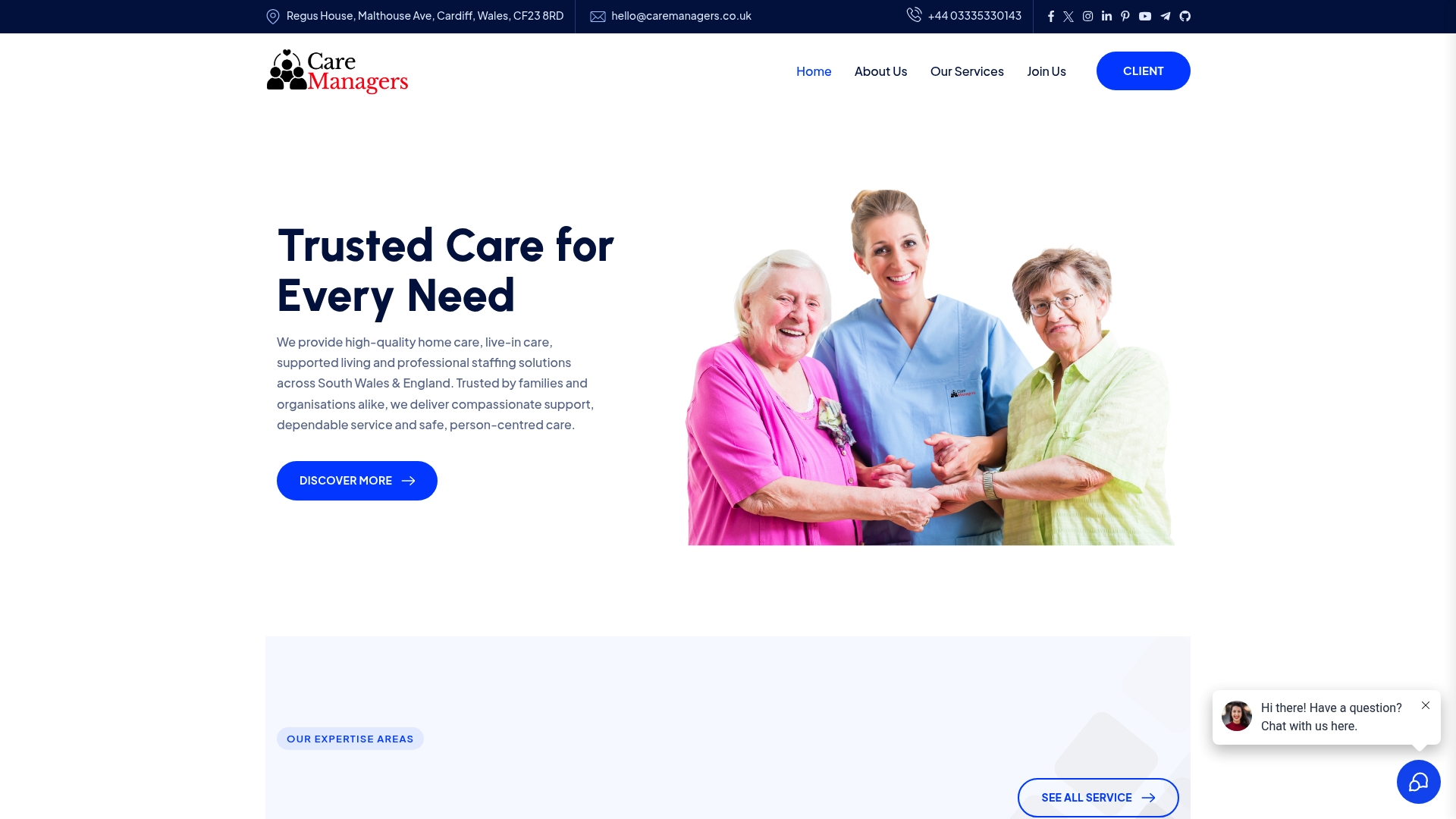
When you contact Caremanagers, a care coordinator arranges a needs assessment, produces a written care plan with you, and agrees a trial period before any long-term commitment is made. Regular reviews are built into every arrangement. Families across South Wales and England trust Caremanagers because the care plan is genuinely specific to the person, and the team is reachable when something needs to change. To arrange a no-obligation assessment, visit the Caremanagers home care services page.
Sources
The sources below cover the main tasks: finding providers, checking inspection reports, requesting a needs assessment, and using a printed checklist.
- Choosing social care – Care Quality Commission
- Help at home from a paid carer – Social care and support guide – NHS
- Home care agency checklist © 2022 Care Choices Ltd
- Homecare
This article is general information, not a substitute for advice from a qualified doctor. Consult a qualified healthcare professional about your own circumstances before acting on anything here.
FAQ
What is the first step when choosing a home care provider?
Check the agency’s CQC inspection report before making contact. A current rating of Good or Outstanding across all five inspection questions (safe, effective, caring, responsive, well-led) is the most reliable starting filter.
How much does home care cost in the UK?
Private hourly rates vary by region and service type. NHS guidance cites a range of roughly £15–£30 per hour; market data suggests rates of £23–£34 per hour in many areas. Always request a written pricing schedule before agreeing to any arrangement.
Do home care agencies have to carry out DBS checks on their staff?
Yes. Registered agencies are required to carry out DBS checks on all carers before they work with vulnerable adults. Ask for written confirmation that checks are current, and ask how often they are renewed.
What should a home care plan include?
A good care plan names the person’s personal goals, daily routines, medical needs, medication schedule, emergency contacts, and a scheduled review date. CQC guidance states it should be co-produced with the individual and their family and updated whenever needs change.
Can Caremanagers help with hospital discharge care?
Yes. Caremanagers provides hospital discharge care across South Wales and England, including a co-produced care plan arranged before or immediately after discharge to support a safe return home.