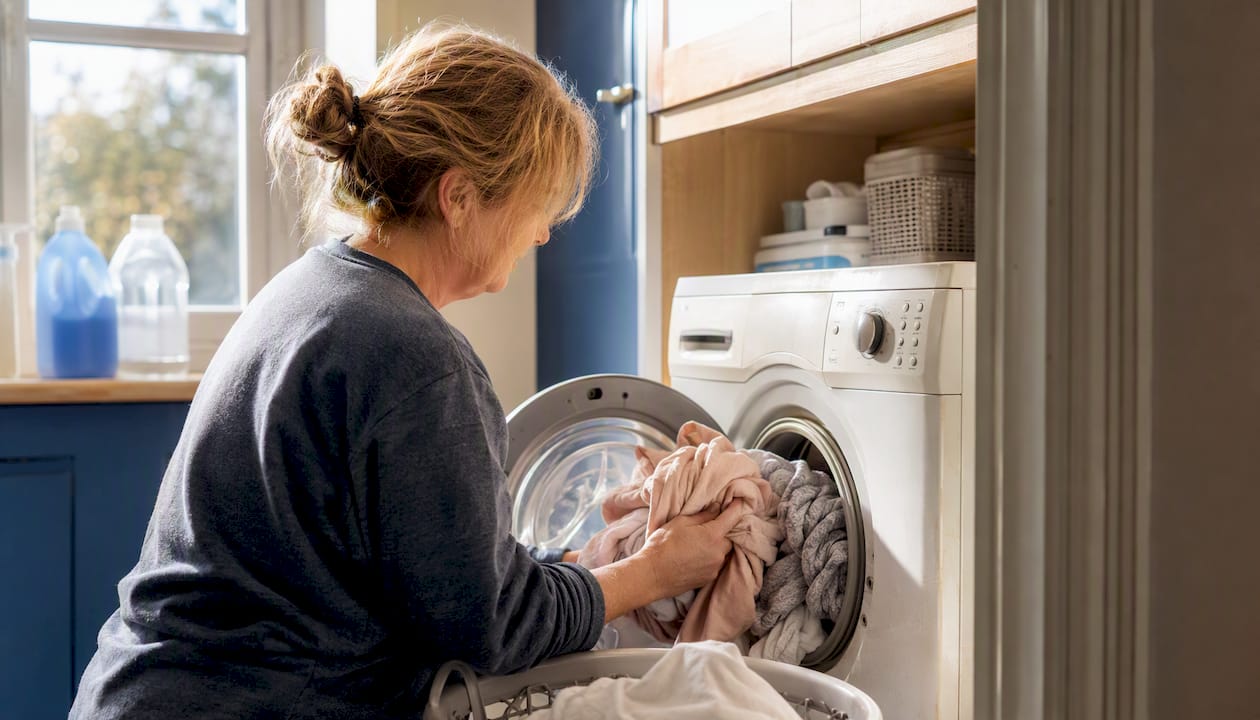
You can arrange paid in-home care that includes laundry support right now. Contact your local council adult social services to request a care needs assessment, or get in touch with Caremanagers for an immediate assessment and quote. Both routes can result in a documented care plan that covers washing, drying, folding, ironing, and bed linen changes as part of a regular visit.
Three steps to take today:
- Contact your local council adult social services and ask for a care needs assessment.
- Use the NHS service search to find regulated providers near you.
- Prepare basic health details, a rough idea of clothing and linen volumes, and any funding information you already have.
Pro Tip: Before the assessment call, write down the person’s daily routine, any skin sensitivities or allergies to detergents, and whether they have continence items or delicate clothing that needs special handling. Assessors use this detail to build a more accurate care plan.
Key takeaways
Arranging laundry and home care in the UK starts with a free care needs assessment from your local council, and regulated agencies can begin visits within days once funding is confirmed.
| Point | Details |
|---|---|
| Start with a needs assessment | Contact local council adult social services; the assessment is free and opens access to funding. |
| Laundry is standard in home care | Washing, drying, folding, ironing, and linen changes are all within scope per NHS guidance. |
| Costs range from £15 to £30 per hour | Private hourly rates vary by location and specialist need; council funding may cover all or part. |
| Check CQC registration and care plan | Confirm the provider is registered, holds DBS certificates, and names laundry tasks explicitly in the written care plan. |
| Caremanagers accepts direct payments | Families using council direct payments can choose Caremanagers across South Wales and England. |
Table of Contents
- What does laundry support in a home-care package actually cover?
- How to arrange home care with laundry support in the UK
- What does home care with laundry support cost?
- How to choose a provider that handles laundry well
- What a typical visit looks like when laundry is included
- When live-in care, respite, or discharge packages make more sense
- How Caremanagers can help you arrange care that includes laundry
- Recommended providers for home care with laundry support
- Who provides home care and what is the difference?
- What families get wrong about arranging laundry and home care
- Caremanagers: home care with laundry support across South Wales and England
- Key Takeaways
- Sources
- FAQ
What does laundry support in a home-care package actually cover?
Home care services that include laundry go well beyond putting a load in the machine. According to NHS guidance on paid home care, laundry tasks within domiciliary care typically include:
- Sorting clothes by colour and fabric type
- Machine washing and hand washing delicates
- Drying on a line or in a tumble dryer
- Ironing, folding, and putting clothes away in wardrobes and drawers
- Changing and laundering bed linen
Clothing management goes further still. A good care plan records the client’s preferences about detergent brands, wash temperatures, and how items should be stored. Carers should also handle specialist items, such as continence pads or adaptive clothing with zips and velcro, with appropriate infection control procedures. These requirements belong in the written care plan and should be reviewed regularly.
What agencies and councils will generally not cover includes professional dry cleaning, large household items such as curtains, or laundry for other members of the household. If specialist laundering is needed (for wound dressings, for example), the care plan should specify this and may require clinical oversight.
Pro Tip: Ask for a care diary to be kept in the home and updated at every visit. Per NICE’s quick guide to better home care, this diary is the primary communication tool between carers, families, and the wider care team. Note any detergent allergies or fabric preferences on the first page.
NICE guideline NG21 defines person-centred home care as covering personal care, activities of daily living, and essential domestic tasks. High-quality providers tailor laundry and clothing management to religious, cultural, or skin-sensitivity preferences — a distinguishing mark of genuinely person-centred practice.
How to arrange home care with laundry support in the UK
The process follows a clear sequence. Knowing the steps in advance saves time and reduces the chance of delays.
- Request a care needs assessment. Contact your local council adult social services. The assessment is free and available to anyone who appears to need care, regardless of finances.
- Attend the needs assessment. A social worker or occupational therapist visits and documents what support is needed, including domestic tasks such as laundry.
- Financial assessment. If the council finds eligible needs, they carry out a means test to determine how much, if anything, you contribute. In England and Wales, this is means-tested; in Scotland, personal and nursing care is free regardless of income.
- Receive a care plan and funding decision. The council may fund care directly or offer direct payments, which are paid into a bank or prepaid card account so you can choose your own provider.
- Choose a provider and start care. Use the Care Quality Commission (CQC) in England, or the Care Inspectorate in Scotland and Wales, to check provider inspection reports before signing any agreement.
Realistic timelines vary. An initial assessment can sometimes be arranged within days, but the full process from first contact to care starting often takes two to six weeks, depending on council workload and the urgency of need. If the situation is urgent, say so clearly when you call.
Independent Age’s home care factsheet also explains the option to employ a carer directly. You gain more control over scheduling and preferences, but you take on employer responsibilities including payroll, tax, and HR obligations. Most families choose a regulated agency to avoid this complexity.
Pro Tip: If you use direct payments, keep receipts and records of how the money is spent. Councils audit direct payment accounts and unexplained gaps can cause funding to be paused.
What does home care with laundry support cost?
Costs depend on the route you take and the level of support needed.
- Council-funded care: After a successful needs and financial assessment, the council covers some or all costs. You may pay a contribution based on your income and savings.
- Direct payments: The council pays an agreed amount into your account; you top up privately if your chosen provider charges more.
- Private pay: You fund care entirely yourself, giving you maximum choice of provider and schedule.
- Benefits: Attendance Allowance, Personal Independence Payment (PIP), and Carer’s Allowance can all contribute to care costs. Families where a carer’s pension position is affected by their caring role should also check whether they are missing pension credits — a detail many overlook. The Ask Rose guide on pension credits for caregivers explains this clearly.
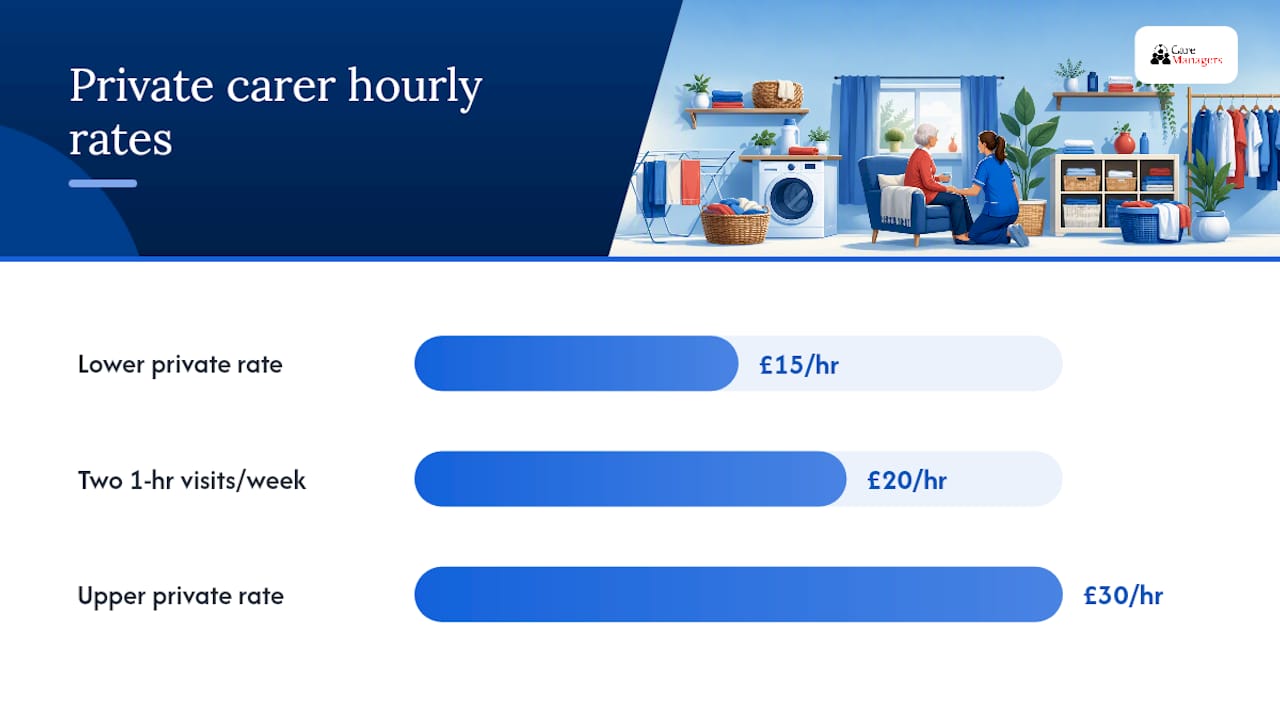
NHS guidance indicates that private hourly rates for a home carer typically range from £15 to £30 per hour, with specialist nursing care costing more. Weekend and overnight visits usually attract a premium.
A typical weekly pattern might look like this: two one-hour visits per week covering personal care and laundry at £20 per hour. This works out to roughly £160 per month at the lower end of private rates. Live-in care, which includes continuous laundry management, costs considerably more but replaces the need for multiple daily visits.
Age UK advises that councils generally fund care that meets eligible needs, but tasks such as general housework may not always qualify. A needs assessment is still worth requesting even if you expect to self-fund, as it documents needs formally and may unlock benefits you were unaware of. For a detailed breakdown of funding routes, the Caremanagers funding guide for families covers the options in plain language.
How to choose a provider that handles laundry well
Not all providers treat laundry with the same care. These checks help you separate reliable agencies from those that treat domestic tasks as an afterthought.
Checklist before signing:
- CQC or Care Inspectorate registration confirmed and inspection report reviewed
- All staff hold current DBS (Disclosure and Barring Service) certificates
- Written care plan that names laundry tasks and client preferences explicitly
- Staff training records available on request
- Written contract with insurance details
- References from current or recent clients
Questions to ask specifically about laundry:
- How do you label and store clothing to prevent items going missing?
- How do you handle delicate fabrics or items that cannot be machine washed?
- What infection control procedures apply to continence items or soiled linen?
- Can I specify which detergent or fabric conditioner you use?
- Do you accept direct payments?
Red flags: rotating rosters with no consistent carer, no written laundry procedure, inability to show staff training records, or a care plan that lists “domestic tasks” without any specifics.
NICE guidance is clear that the same workers should visit regularly and that new workers must be introduced before visiting alone. Consistency is not a luxury; it directly improves safety and wellbeing. When you speak to a prospective provider, ask how they manage staff continuity and what happens when a regular carer is absent.
What a typical visit looks like when laundry is included
A well-run visit follows a predictable shape. The carer arrives, confirms their identity, and briefly reviews the care diary before starting. Laundry tasks are usually completed early in the visit so a wash cycle can run while other care is delivered. At the end, the carer updates the care diary, notes any concerns, and confirms the next visit time.
For families, a few practical points:
- Store laundry supplies (detergent, fabric conditioner) in an agreed, accessible place.
- Respect the client’s privacy during personal care tasks that may coincide with laundry.
- Check the care diary after each visit and flag anything that seems incomplete.
If a visit is missed, contact the agency immediately. If laundry is lost or damaged, raise it in writing with the agency and note it in the care diary. Persistent concerns about infection control or dignity should be escalated to the local council or reported to the CQC.
When live-in care, respite, or discharge packages make more sense
Visit-based care works well for moderate needs, but some situations call for a different model.
- Visit-based care suits people who need support two to four times a week and have manageable laundry volumes. Laundry is scheduled as part of each visit.
- Live-in care is better when laundry volumes are high, clinical needs are complex, or 24-hour presence is needed. The live-in carer manages clothing and linen as part of daily household routines. See the Caremanagers live-in care guide for how this works in practice.
- Hospital discharge packages are short-term, intensive packages that begin the day someone leaves hospital. Laundry and linen management are typically included from day one, alongside personal care and medication support. Caremanagers’ hospital discharge care service is designed to start within 24 hours of a referral.
- Respite care gives family carers a planned break. A respite carer steps in and maintains all existing routines, including laundry preferences, so the transition is as smooth as possible.
NICE NG21 notes that services such as hospital discharge packages and live-in care commonly include clothing and linen handling as a standard part of the package, not an add-on.
How Caremanagers can help you arrange care that includes laundry
Caremanagers provides visit-based home care, live-in care, hospital discharge packages, dementia care, and respite care across South Wales and England. Every care plan is written to include the client’s specific laundry and clothing preferences, from detergent choice to how delicate items are stored. Direct payments are accepted, so families using council funding can choose Caremanagers as their provider without additional complexity.
Trust signals:
- Care plans documented and reviewed regularly, aligned with NICE NG21 person-centred standards
- Staff hold current DBS certificates with training records available
- Care diary maintained at every visit
- Consistent carer allocation with formal introductions for new workers
- Hospital discharge care available within 24 hours of referral
To arrange an assessment, contact Caremanagers with the person’s name, address, a brief description of their needs, and any existing funding information. A member of the team will respond promptly to discuss options and next steps.
Recommended providers for home care with laundry support
For families searching nationally, several routes lead to regulated providers:
- Caremanagers covers South Wales and England, offering the full range of home care services including laundry support within every visit type.
- Your local council’s approved provider list contains agencies that have been vetted and contracted by the authority. Ask adult social services for this list directly.
- The Home Care Association directory lists member agencies by postcode and includes information on the services each offers.
- CQC’s online search tool allows you to filter by location and service type and read the most recent inspection reports before making contact.
When comparing providers, prioritise those with a “Good” or “Outstanding” CQC rating, a clear written procedure for laundry and clothing management, and evidence of consistent carer allocation.
Who provides home care and what is the difference?
Four main routes exist, each with different implications for cost, control, and accountability.
Local council: Arranges care after a needs and financial assessment. The council contracts with regulated agencies on your behalf or offers direct payments. You have less direct choice of provider but benefit from council oversight.
Home care agencies: Regulated by the CQC (England), Care Inspectorate (Scotland), or Care Inspectorate Wales. They employ and train carers, handle payroll and insurance, and are accountable to the regulator. This is the most common route for families who want professional oversight without taking on employer responsibilities.
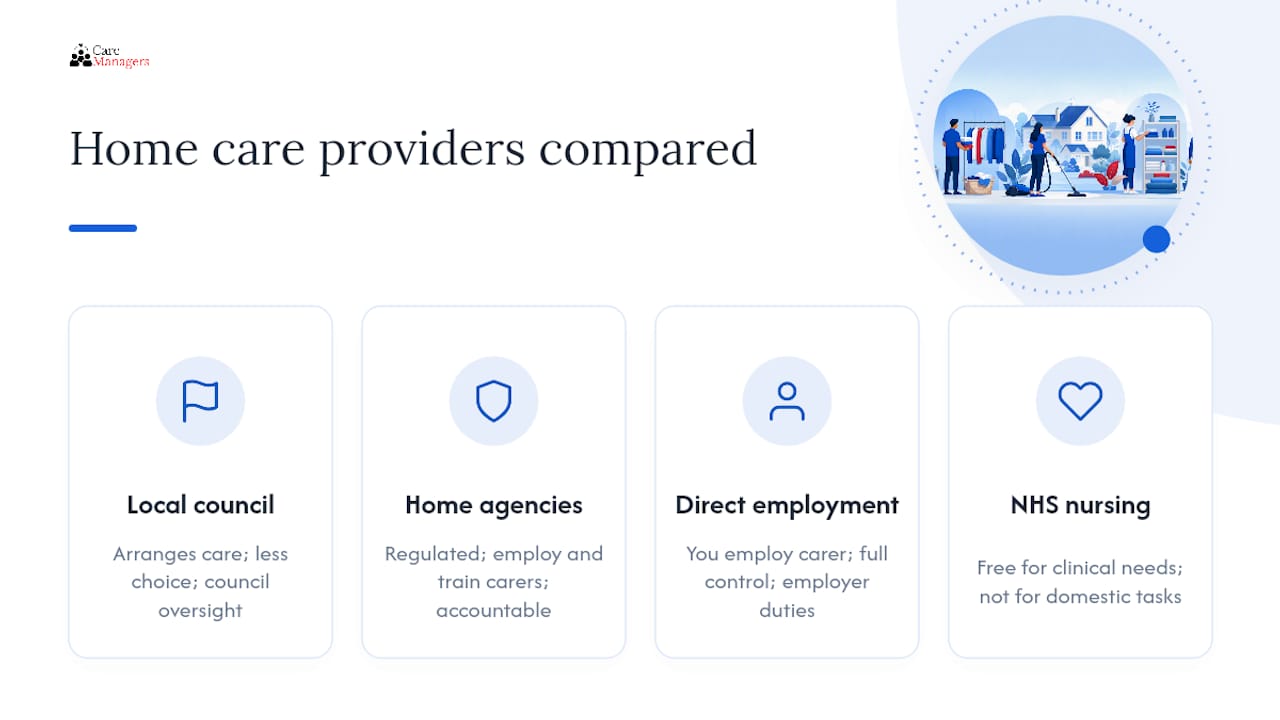
Direct employment: You recruit and employ a carer yourself. You control scheduling and preferences entirely, but you become an employer with legal obligations around tax, National Insurance, and employment law. Independent Age’s factsheet covers this option in detail.
NHS community nursing: Provided free at the point of use for clinical needs such as wound care or medication administration. NHS community nurses do not typically carry out domestic tasks such as laundry, but they work alongside home care agencies when both types of support are needed.
What families get wrong about arranging laundry and home care
Most guides tell families to “shop around” and “compare providers.” That advice is not wrong, but it misses the more important step: getting the care plan right before you compare anyone.
The care plan is where laundry preferences, detergent sensitivities, clothing storage habits, and infection control requirements are recorded. A provider who offers a competitive hourly rate but uses a generic care plan will deliver generic care. The family who spent twenty minutes specifying their mother’s preference for non-biological detergent and her habit of keeping her best blouses separate gets a fundamentally different service from the family who just signed the first available contract.
The other thing families consistently underestimate is the value of carer consistency. NICE is explicit on this point, and the evidence behind it is straightforward: a carer who knows where the laundry basket is, which items are delicate, and how the client likes their clothes folded is not just more efficient. They notice when something changes. That relationship is where safety actually lives.
Caremanagers: home care with laundry support across South Wales and England
Caremanagers offers something specific to families who have read this far and are ready to act: a care package where laundry preferences are written into the plan from day one, not treated as an afterthought. Whether you need two visits a week or full live-in support, the team builds around what the person actually needs, including how their clothing is handled, stored, and cared for.
Direct payments are accepted, so council-funded families can choose Caremanagers without losing their funding. Hospital discharge packages can begin within 24 hours. Dementia care, respite care, and supported living are all available across South Wales and England. To take the next step, visit the Caremanagers home care services page and request an assessment. A member of the team will be in touch to discuss your situation and confirm what is possible.
Key Takeaways
Arranging laundry and home care in the UK starts with a free care needs assessment from your local council, and regulated agencies can begin visits within days once funding is confirmed.
This article is general information, not a substitute for advice from a qualified doctor. Consult a qualified healthcare professional about your own circumstances before acting on anything here.
Sources
- Help at home from a paid carer – Social care and support guide – NHS
- Gov
- Arranging home care (Independent Age factsheet)
- Home care: delivering personal care and practical support to older people living in their own homes (NICE guideline NG21)
FAQ
What does laundry support in home care include?
Laundry support within domiciliary care covers sorting, machine and hand washing, drying, ironing, folding, putting clothes away, and changing bed linen. Specialist items such as continence pads should be specified in the care plan with appropriate infection control procedures.
How do I get laundry included in a funded care package?
Request a care needs assessment from your local council adult social services. If the assessment identifies eligible needs, the council may fund care directly or offer direct payments, which you can use with a provider such as Caremanagers.
How much does home care with laundry support cost privately?
Two one-hour visits per week at a moderate rate would sum to a typical monthly cost in the lower range
What should I check before choosing a home care provider?
Confirm CQC or Care Inspectorate registration, current DBS certificates for all staff, a written care plan that names laundry tasks explicitly, and evidence of consistent carer allocation. NICE guidance recommends that the same workers visit regularly and that new workers are introduced before visiting alone.
Can Caremanagers start care quickly after a hospital discharge?
Yes. Caremanagers’ hospital discharge packages are designed to begin within 24 hours of a referral and include laundry and linen management as part of the package from the first visit.