
Table of Contents
- What Dementia Care Training for Carers Actually Covers
- Dementia Care Training Modules: What Each One Teaches
- How Long Does Dementia Care Training Take?
- Best Practices for Dementia Care at Home
- Legal, Financial, and Advanced Care Planning
- Managing Carer Wellbeing and Avoiding Burnout
- Accessing Training and Support Services in the UK
- Conclusion
Last Updated: August 9, 2026
What Dementia Care Training for Carers Actually Covers
Dementia care training for carers is structured education that equips individuals, whether family members or professional care workers, with the knowledge, skills, and confidence to support someone living with dementia safely and compassionately. The gap between good intentions and effective dementia care is real. Training bridges that gap by preparing carers for situations they weren’t prepared for: a loved one who refuses to eat, becomes distressed at night, or no longer recognises familiar faces.
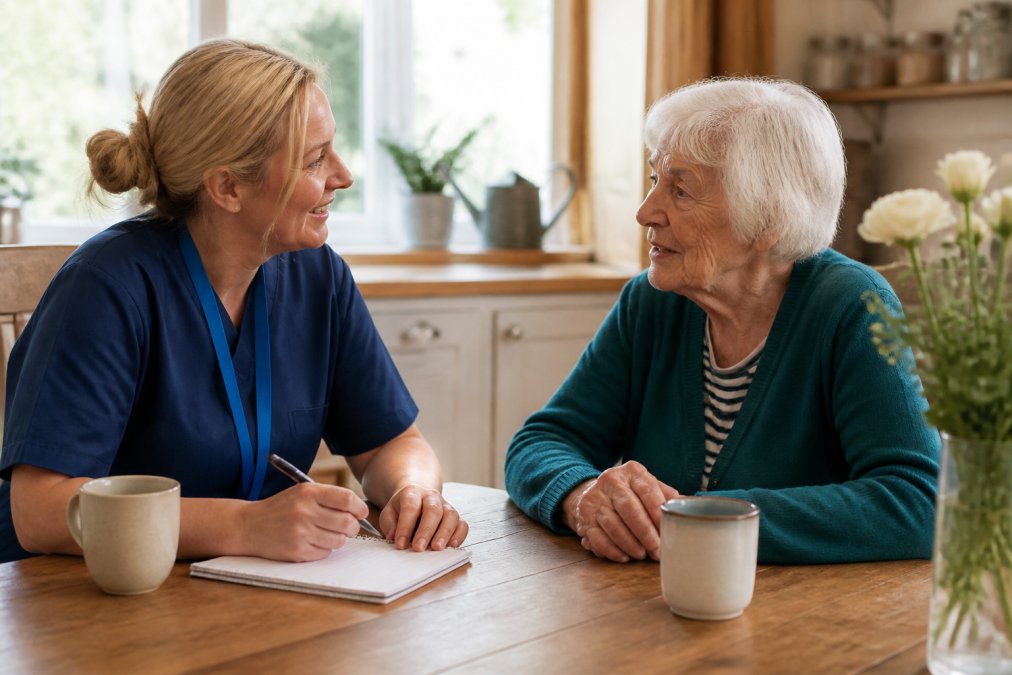
Below, we cover what dementia care training actually teaches, how long it takes, what best practices look like in the home, and how to access support across the UK.
Understanding Dementia Progression and Stages
Dementia is an umbrella term for a group of symptoms caused by diseases affecting the brain, most commonly Alzheimer’s disease, vascular dementia, and Lewy body dementia. Training begins here because understanding the underlying condition shapes every care decision that follows.
Carers learn to distinguish the early, middle, and later stages of dementia progression. Early-stage dementia typically involves mild memory loss and occasional confusion. As the condition advances, cognitive impairment deepens: orientation to time and place deteriorates, language becomes harder, and personality changes can emerge. In later stages, the person may require full support with all activities of daily living. Understanding progression allows carers to anticipate changes rather than simply react to them, which reduces distress for both parties.
Recognising Behavioural and Psychological Symptoms
The behavioural and psychological symptoms of dementia (BPSD) include agitation, aggression, anxiety, depression, sleep disturbances, and wandering. Training teaches carers to read these behaviours as communication. When someone with advanced dementia becomes agitated, there is usually a reason: pain, hunger, an unfamiliar face, or a change in routine. Identifying the trigger is far more effective than managing the behaviour after it escalates.
According to Alzheimer’s Society guidance on BPSD, behavioural symptoms are often a response to unmet needs. Good dementia care training teaches carers to ask "what is this person trying to tell me?" before reaching for any other response.
Dementia Care Training Modules: What Each One Teaches
A well-designed dementia care training programme builds knowledge progressively, with each module adding a layer of practical skill.
Communication Techniques and Validation Therapy
Communication is where most carers feel least confident. Dementia changes how a person processes language, context, and emotion. Training teaches carers to slow down, use simple sentences, maintain eye contact, and rely on non-verbal cues such as tone of voice and touch.
Validation therapy is a specific approach developed for people with dementia that involves acknowledging and respecting the feelings and reality of the person, rather than correcting or arguing. If someone believes they need to collect their children from school, validation therapy meets the person where they are emotionally. This reduces distress significantly and builds trust. Training also covers how to use life history and reminiscence work as a communication tool, with sensory stimulation through familiar music, scents, or objects opening channels of connection.
Medication Management and Activities of Daily Living
Many carers are involved in medication management. Training covers safe administration, record-keeping, prescribed schedules, and recognising side effects that may affect cognition or behaviour.
Activities of daily living (ADLs) include washing, dressing, eating, mobility, and continence. Training teaches carers to support ADLs in ways that preserve dignity and maintain independence where possible. Prompting and enabling are skills that take practice.
The most effective ADL support follows the “hand-under-hand” principle: guide rather than do. This preserves the person’s sense of agency and reduces resistance, particularly during personal care tasks.
How Long Does Dementia Care Training Take?
Dementia care training takes anywhere from a few hours for introductory awareness sessions to several weeks for comprehensive professional qualifications, depending on the level and learner’s goals.
| Training Level | Format | Approximate Duration | Best For |
|---|---|---|---|
| Dementia awareness | Online or in-person | 2-4 hours | Family carers, new staff |
| Foundation certificate | Blended learning | 1-2 days | Home carers, care assistants |
| Level 2/3 Award (RQF) | Accredited programme | 4-12 weeks | Care workers seeking qualifications |
| Specialist dementia care | In-person workshops | 2-5 days | Senior carers, care coordinators |
| Advanced care planning | Specialist training | 1-2 days | Care managers, nurses |
For family carers, a dementia awareness course is a practical starting point. For professional carers working in home care or supported living, an accredited qualification aligned with the Care Certificate or the Regulated Qualifications Framework (RQF) provides a thorough foundation. The Social Care Institute for Excellence (SCIE) offers guidance on recognised pathways in England and Wales.
The right level of training depends on your role, your relationship to the person with dementia, and how much hands-on care you provide.
Best Practices for Dementia Care at Home
The home environment is where most people with dementia spend the majority of their time, and it is where the quality of daily care matters most.
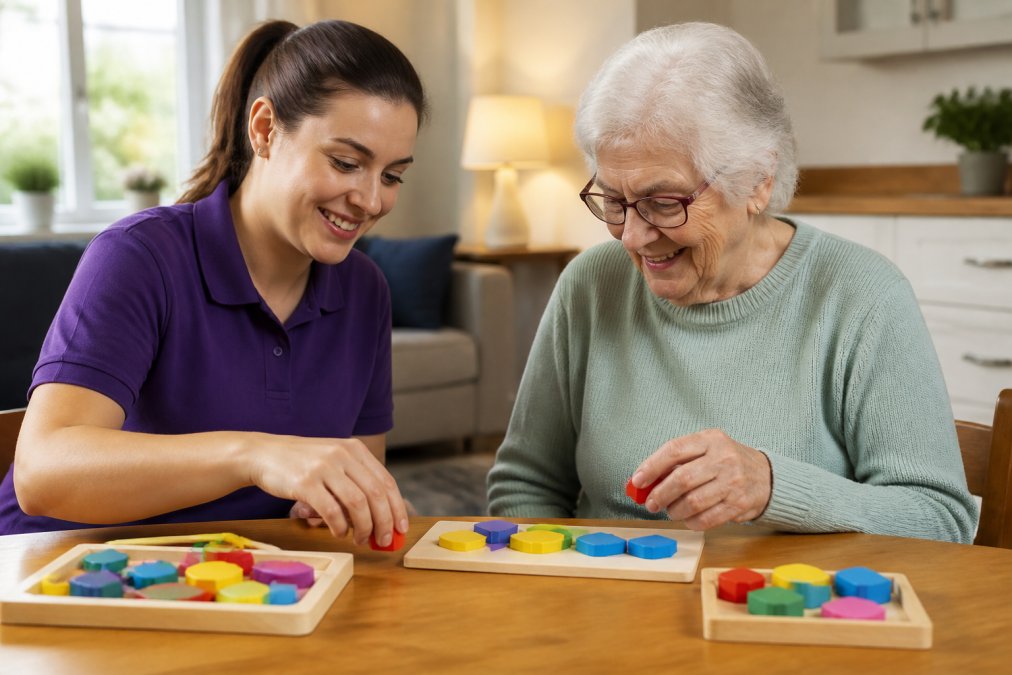
(/services/dementia-care/) at Home]
Best practices for dementia care at home are built around three principles: consistency, safety, and meaningful engagement. Carers who follow these principles report fewer incidents, less carer burnout, and better outcomes for the person they support.
Creating a Dementia-Friendly Environment
A dementia-friendly environment reduces confusion, prevents accidents, and supports the person’s remaining independence. A home safety assessment is a useful first step: identifying trip hazards, improving lighting, adding clear signage on doors, and removing mirrors that may cause distress are all practical changes that make a measurable difference.
Key adjustments to consider include using contrasting colours for crockery and tablecloths to help with eating, removing or securing items that pose a risk, keeping familiar objects visible and in consistent locations, reducing noise and clutter, and installing door sensors or GPS monitoring where wandering is a risk. According to NHS guidance on dementia home adaptations, simple environmental changes can significantly reduce falls and distress for people living with dementia at home.
Sensory Stimulation and Therapeutic Activities
Therapeutic activities are core to good dementia care because they maintain cognitive function for longer, reduce anxiety, and provide moments of genuine connection. Sensory stimulation can include music therapy, aromatherapy, textured objects, or gentle movement. The key is tailoring activities to the individual’s life history, preferences, and current abilities. Someone who loved gardening may respond well to handling soil and plants; someone with a musical background may light up when familiar songs are played.
Legal, Financial, and Advanced Care Planning
This is the area most carers delay addressing, often until a crisis forces the issue. Getting ahead of it is one of the most protective things a family can do.
Call us for Free Assessment Today →
Power of attorney is a legal arrangement that allows a person to appoint someone to make decisions on their behalf if they lose mental capacity. In England and Wales, this is a Lasting Power of Attorney (LPA), which covers either property and financial affairs or health and welfare. LPAs must be set up whilst the person with dementia still has mental capacity to consent.
Advanced care planning involves recording the person’s wishes about future care, treatment preferences, and end-of-life decisions. This is particularly important in palliative care contexts, where having a documented care plan means those wishes are more likely to be honoured.
Social care funding in England is means-tested. Families navigating local authority care assessments often find the process complex. The Care Act 2014 guidance from the Department of Health and Social Care sets out the legal framework for care assessments and local authority responsibilities. In Wales, the Social Services and Well-being (Wales) Act 2014 governs the equivalent process. Families should request a formal care needs assessment from their local authority and a financial assessment to understand what funding may be available.
Failing to set up an LPA before cognitive decline progresses can result in a far more costly and time-consuming Court of Protection application. Do not delay this step.
Managing Carer Wellbeing and Avoiding Burnout
Caregiver burnout is not a sign of weakness. It is a predictable consequence of sustained, high-intensity caregiving without adequate support. The signs include persistent fatigue, emotional numbness, irritability, resentment, and physical health problems.
Mental health support for carers is a clinical necessity. Carers who attend caregiver support groups, access respite care regularly, and maintain their own health appointments are better carers for longer.
Practical steps to protect carer wellbeing include scheduling regular breaks as non-negotiable, joining a local or online carer support group, asking your GP about a carer’s assessment (which you are entitled to under the Care Act 2014), being honest with healthcare professionals about stress levels, and accepting help when offered.
Accessing Training and Support Services in the UK
Dementia awareness and training resources in the UK are more accessible than many carers realise. The challenge is knowing where to look and which options match your specific circumstances.
Online vs In-Person Dementia Training Options
Online dementia care training suits carers who need flexibility. Many online courses are free or low-cost and can be completed in short sessions. Organisations such as Alzheimer’s Society and Dementia UK offer online learning resources designed for both family carers and professionals.
In-person training offers the opportunity to practise skills in real time, ask questions, and connect with other carers facing similar challenges. For professional carers, employer-funded training through Skills for Care pathways in England, or equivalent provision in Wales, provides accredited qualifications recognised across the sector. The Skills for Care dementia training guidance outlines the recommended learning outcomes for care workers supporting people with dementia.
Cultural, Linguistic, and Faith Considerations in Training
A person’s cultural background, language, and faith are central to their identity. For someone with dementia, familiar cultural references, prayer routines, food, music, and language can be powerful anchors when other memories are fading. Carers who understand this provide significantly better person-centred care.
Training that incorporates cultural and linguistic considerations helps carers communicate effectively with people whose first language is not English, respect religious observances such as prayer times and dietary requirements, use culturally relevant reminiscence materials, and avoid inadvertent distress caused by cultural misunderstanding. For families from Muslim, Jewish, Hindu, Sikh, or other faith communities, finding a care provider who genuinely understands these needs is a meaningful differentiator.
Post-Training: Putting It Into Practice
Training is only as useful as its application. A simple post-training implementation plan helps: identify two or three specific changes you will make immediately after training, review your care environment within one week, share key learning with other household members or co-carers, book a follow-up with a dementia adviser or occupational therapist, and set a date to revisit the training in six months.
Consistency across all carers is one of the strongest predictors of positive outcomes in dementia care. If one carer uses validation therapy whilst another corrects and argues, the person with dementia experiences confusion and distress regardless of the best intentions involved.
Families supporting a loved one with dementia often face an exhausting combination of practical challenges, emotional strain, and navigating a complex healthcare system. Care Managers provides professional home care and live-in care across South Wales and England, with tailored care plans built around your loved one’s individual routines, preferences, and needs. Our faith-based home care options ensure that cultural and religious identity remains at the heart of the care we provide. If you are looking for consistent, dignified, and knowledgeable support, book a call with the Care Managers team today.
Frequently Asked Questions
What are the mandatory dementia training requirements for UK care workers?
There is no single piece of legislation that mandates a specific dementia qualification for all care workers in the UK. However, the Care Quality Commission in England and the Care Inspectorate Wales both expect registered providers to demonstrate that staff have the knowledge and skills to support people living with dementia safely. The Care Certificate, which most care workers complete at induction, includes dementia awareness as a core element. Many employers go further by requiring staff to complete additional dementia care training modules aligned with the Social Care Induction Framework.
How can I access free dementia care training in the UK?
Several organisations offer free or low-cost dementia care training in the UK. The Alzheimer's Society provides free online dementia awareness courses through its website. Health Education England has produced free e-learning resources accessible via the NHS Learning Hub. Skills for Care also signposts funded training routes for social care workers in England. In Wales, Social Care Wales oversees workforce development and can direct carers to funded training opportunities. Family carers who are not employed in care can often access courses through local carer support groups or their GP surgery.
What key skills are covered in dementia care training?
Dementia care training for carers typically covers understanding dementia stages and progression, person-centred care approaches, communication strategies including validation therapy, recognising behavioural and psychological symptoms of dementia, medication management, home safety assessment, and supporting activities of daily living. More advanced modules address advanced care planning, legal topics such as power of attorney, emotional resilience for carers, and how to access respite care. Training increasingly includes sections on creating dementia-friendly environments and using assistive technology to support independence.
How does dementia training improve the quality of care provided?
Trained carers are better equipped to interpret changes in behaviour, reducing distress for the person living with dementia and the carer alike. Understanding dementia progression helps carers anticipate needs before a crisis occurs, which supports more consistent and dignified daily routines. Communication techniques learned during dementia care training, such as validation therapy and non-verbal cues, reduce confusion and agitation. Research consistently shows that person-centred, well-trained care is linked to fewer incidents, lower rates of carer burnout, and better overall wellbeing for the person receiving support.
This article was written using GrandRanker