TL;DR:
- Person-centred dementia care focuses on the individual’s identity, preferences, and relationships rather than just symptoms. It relies on five pillars—comfort, attachment, inclusion, occupation, and identity—to guide daily care practices. Families and providers can support this approach by maintaining routines, using respectful communication, and involving professionals to ensure genuine, personalized care.
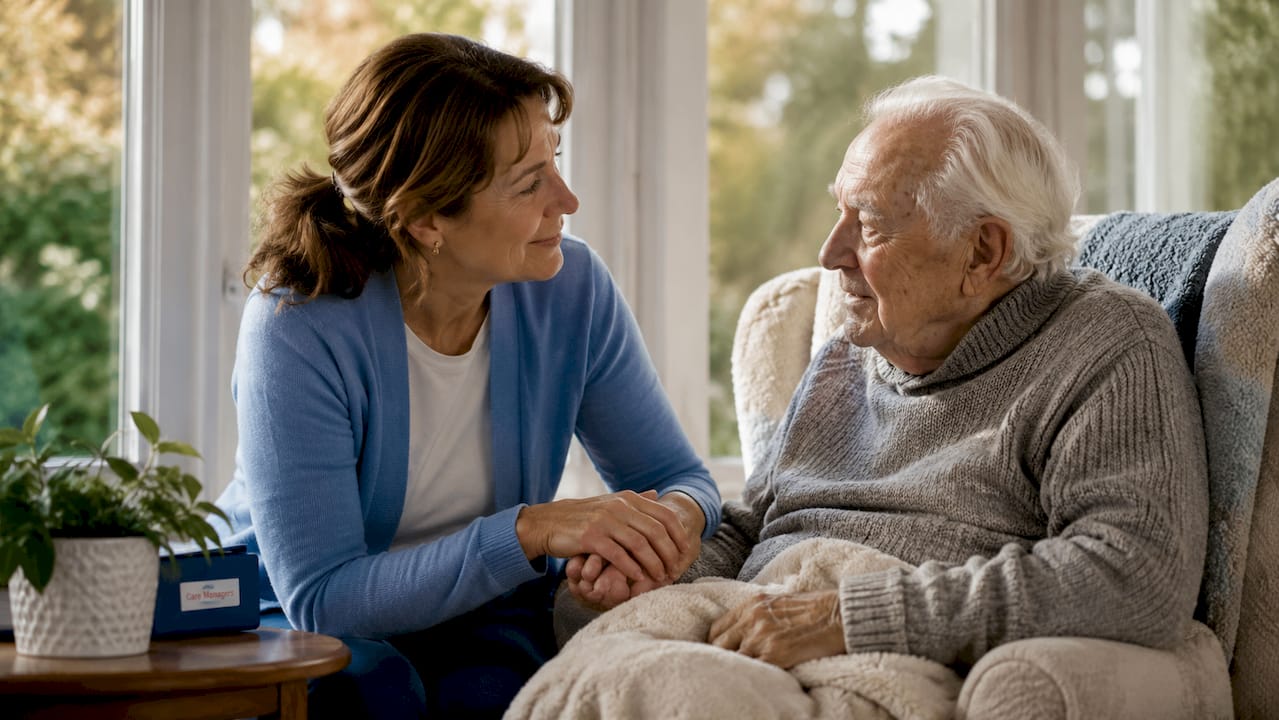
Person-centred dementia care is the practice of placing the individual, rather than the disease, at the heart of every care decision, with a focus on their unique identity, history, and preferences. Formally recognised as a holistic, philosophy-driven approach, it treats the person living with dementia as a whole human being, not a collection of symptoms. For families and caregivers, this distinction matters enormously. The way care is delivered shapes not just physical wellbeing, but dignity, emotional security, and quality of life. Understanding this approach is the first step towards providing care that truly makes a difference.

What is person-centred dementia care built on?
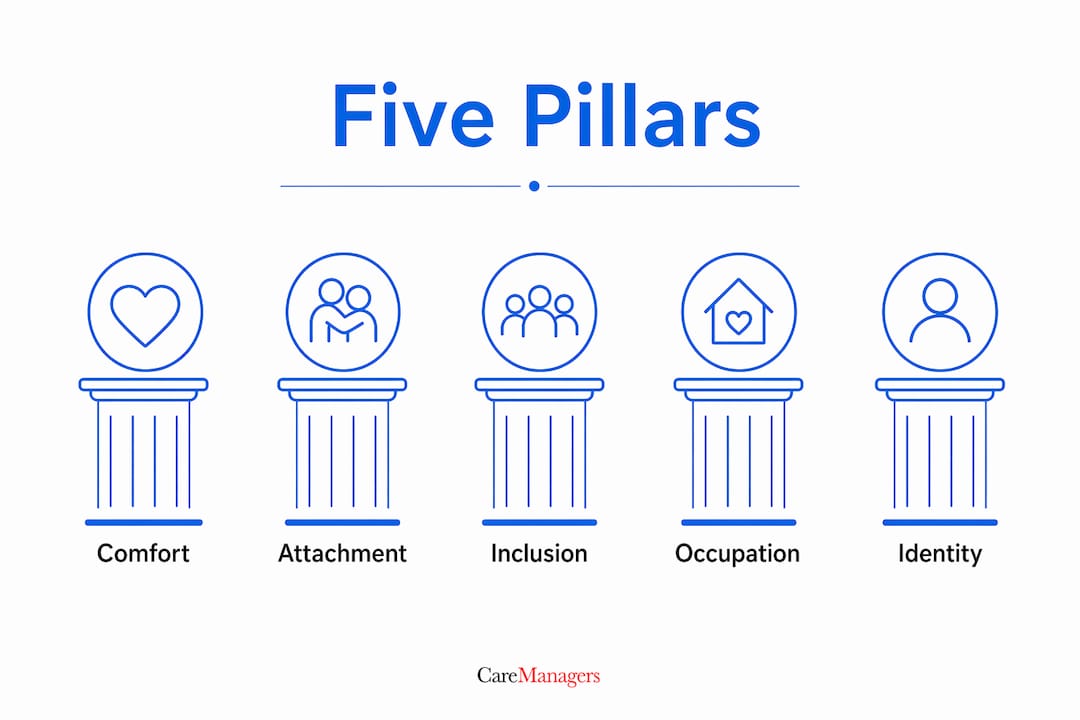
Person-centred dementia care rests on five foundational pillars: comfort, attachment, inclusion, occupation, and identity. Each pillar addresses a core human need that dementia can threaten. Together, they form a practical framework that guides daily care decisions, from how you greet someone in the morning to how you structure their afternoon.
- Comfort means reducing physical and emotional distress at every opportunity. This includes managing pain, creating calm environments, and responding quickly when someone appears anxious or unsettled. A person who feels safe is far more able to engage with the world around them.
- Attachment recognises that relationships are not a luxury in dementia care. They are a necessity. Familiar faces, consistent caregivers, and trusted family members provide the emotional anchoring that helps someone with dementia feel secure even when memory fails.
- Inclusion means ensuring the person remains part of family life and social interaction, not sidelined by their diagnosis. Simple acts, such as including someone in a conversation or inviting them to sit with the family during meals, reinforce their sense of belonging.
- Occupation refers to meaningful activity, not paid work. Meaningful activities that align with a person’s lifelong interests, whether gardening, listening to music, or folding laundry, promote wellbeing and reduce agitation. The activity does not need to be complex. It needs to feel purposeful.
- Identity is perhaps the most profound pillar. Dementia does not erase who a person is. Their values, preferences, and life story remain, even when words become harder to find. Caregivers who know a person’s history, their favourite foods, their career, their proudest moments, can honour that identity in every interaction.
Pro Tip: Create a simple one-page life history document for your loved one. Include their preferred name, key relationships, past hobbies, and important memories. Share it with every professional involved in their care.
What are the main barriers to person-centred dementia care?
Knowing the principles is one thing. Applying them consistently is another. Significant systemic barriers exist in formal care settings that families should understand, both to advocate effectively and to appreciate why home care can offer distinct advantages.
-
Staff turnover and shortages. High turnover in care settings is one of the most damaging barriers to person-centred care. Consistent assignment of care staff is critical because authentic relationships take time to build. When a person with dementia meets a different carer every few days, trust cannot develop, and care becomes transactional rather than personal.
-
Lack of specialised training. Not all care workers receive dedicated dementia training. Without it, caregivers may misread behavioural signals, respond to distress with task-focused routines, or inadvertently undermine a person’s dignity. Structured education and training significantly improve the consistency and quality of person-focused care.
-
System-driven routines. Institutional schedules, fixed meal times, group activities with no individual relevance, can override personal preferences entirely. A person who has never eaten breakfast before 9am should not be woken at 7am simply because a rota demands it. Rigid routines contradict the core principle of individual-focused care.
-
Limited family involvement. Families hold irreplaceable knowledge about a person’s history, preferences, and personality. When care systems do not actively involve families in care planning, that knowledge goes unused, and care becomes less personal as a result.
Recognising these barriers helps you ask the right questions when choosing or evaluating care. You can read more about common caregiving challenges and how to navigate them practically.
How does communication support person-centred dementia care?
Communication is the mechanism through which person-centred care is delivered. People with dementia communicate through facial expressions, body language, and behaviour, and skilled caregivers learn to read these signals rather than waiting for verbal requests. This shift in perspective changes everything about how care is given.
The table below outlines practical communication strategies aligned with person-centred principles:
| Situation | Person-centred approach |
|---|---|
| Person appears agitated | Look for unmet physical needs first: pain, hunger, or the need for the toilet |
| Person repeats a question | Answer calmly each time without showing frustration; the emotion behind the question matters more than the words |
| Person resists personal care | Pause, explain gently, and try again later; forcing the task causes distress and damages trust |
| Person uses incorrect words | Focus on the meaning and feeling, not the accuracy of the language |
| Person withdraws from conversation | Sit quietly nearby; presence without pressure is itself a form of connection |
Language also carries significant weight. Person-centred language that validates identity, including respecting whether someone prefers “living with dementia” over “dementia sufferer,” upholds dignity in a way that clinical language often does not. The words you choose signal whether you see the person or only the condition.
- Use the person’s preferred name, always.
- Speak directly to the person, not about them to others in the room.
- Keep sentences short and give time for a response.
- Match your tone to the emotional register of the moment, calm when they are anxious, warm when they are withdrawn.
- Avoid correcting factual errors that cause no harm; entering their reality is kinder than insisting on yours.
Pro Tip: Non-verbal communication often carries more meaning than words. A gentle touch on the hand, a warm smile, or simply sitting at eye level can communicate safety and respect far more effectively than a well-worded sentence.
How can families support person-centred dementia care at home?
Home is where person-centred care has its greatest natural advantage. The familiar environment, the personal objects, the established routines, all of these support identity and comfort in ways that institutional settings struggle to replicate. Every person with dementia’s experience is unique, which means home care can be shaped entirely around the individual rather than adapted from a generic template.
Families can apply person-centred principles in practical, daily ways:
- Build routines around their history, not your convenience. If your loved one has always had a bath in the evening, keep that pattern. If they have always listened to the radio over breakfast, make that part of the morning. Familiar routines reduce anxiety and reinforce identity.
- Use reminiscence actively. Looking through old photographs, listening to music from their youth, or talking about past events they remember clearly are not just pleasant activities. They are therapeutic. Reminiscence supports identity and can improve mood significantly.
- Involve them in decisions, however small. Offering a choice between two jumpers, asking whether they would prefer tea or coffee, or letting them decide when to go for a walk preserves autonomy. Small choices matter because they communicate respect.
- Create opportunities for meaningful occupation. Identify what your loved one has always enjoyed and find adapted versions they can still participate in. Someone who loved cooking might enjoy stirring a bowl or arranging biscuits on a plate. The engagement is what counts.
- Seek professional support when needed. Caring alone is not sustainable, and professional support does not diminish your role. It strengthens it. You can explore the benefits of dementia care at home and understand how coordinated professional care complements what families already provide.
The quality of relationships in dementia care matters as much as the clinical tasks performed. Care is as much about relationships as clinical tasks, and families are uniquely placed to provide the relational continuity that makes person-centred care real.
Key takeaways
Person-centred dementia care works because it treats the individual’s identity, relationships, and preferences as the foundation of every care decision, not an afterthought.
| Point | Details |
|---|---|
| Definition matters | Person-centred care focuses on the whole person, not the disease, placing identity and dignity at the centre. |
| Five pillars guide practice | Comfort, attachment, inclusion, occupation, and identity form the practical framework for daily care. |
| Barriers are real but manageable | Staff turnover, poor training, and rigid routines undermine person-centred care; home care reduces these risks. |
| Communication is a skill | Reading non-verbal signals and using validating language are as important as any clinical task. |
| Home is an advantage | Familiar environments and consistent family relationships support person-centred principles naturally. |
What I have learned from watching families navigate dementia care
The families who cope best with dementia care are not the ones with the most resources. They are the ones who stay curious about who their loved one still is, rather than grieving only who they were. That distinction sounds small. In practice, it changes everything about how care feels, for the person receiving it and for the family giving it.
What I find most striking is how often families underestimate their own knowledge. You know your loved one’s history, their preferences, their sense of humour, their fears. That knowledge is clinical gold. No care professional, however well trained, arrives with it. When families share that information actively and insist it shapes the care plan, the quality of care improves measurably.
The systemic barriers are real and frustrating. Staffing shortages and inconsistent training are not problems families caused, and they are not problems families can solve alone. What you can do is choose care providers who take these issues seriously, ask directly about staff consistency, and stay involved in reviewing how care is delivered. Person-centred care is not a one-time decision. It is a daily practice, and families are its most important guardians.
— Emm
How Caremanagers supports person-centred dementia care at home
Caremanagers provides specialist dementia support at home across South Wales and England, built around the individual rather than a standard care package. Every care plan starts with a detailed assessment of the person’s history, preferences, and daily routines, because genuine person-centred care cannot begin without that foundation.
The Caremanagers team is trained to recognise and respond to non-verbal communication, maintain consistent carer relationships, and involve families as active partners in care. Whether you need a few hours of support each week or full live-in care arrangements, Caremanagers tailors every aspect of support to the person living with dementia. Contact Caremanagers today to discuss a care plan that puts your loved one’s identity and dignity first.
FAQ
What is person-centred dementia care in simple terms?
Person-centred dementia care means treating the person living with dementia as an individual with a unique history, preferences, and identity, rather than focusing solely on managing their symptoms. Every care decision is guided by what matters to that specific person.
What are the five pillars of person-centred dementia care?
The five pillars are comfort, attachment, inclusion, occupation, and identity. Each one addresses a core human need that dementia can threaten, and together they form the practical basis for daily care.
Why does consistent staffing matter in dementia care?
Consistent caregivers allow trust and genuine relationships to develop, which is central to person-centred care. High staff turnover disrupts this continuity and makes it harder to deliver care that reflects the individual’s real needs and preferences.
How can families apply person-centred care at home?
Families can build routines around their loved one’s lifelong habits, use reminiscence activities, offer small daily choices, and involve professional carers who share their knowledge of the person’s history and preferences.
Is home care better for person-centred dementia care?
Home care offers a natural advantage because the familiar environment, personal objects, and consistent family relationships already support identity and comfort. These elements are harder to replicate in institutional settings.