
Table of Contents
- Why Families Seek Dementia Care Alternatives
- Dementia Care at Home: Supporting Independence in Familiar Surroundings
- Live-in Care for Dementia: 24-Hour Support and Continuity
- Residential Care Homes: When Full-Time Professional Support Is Needed
- Creating a Personalised Dementia Care Plan
- Choosing a Dementia Care Provider: What to Look For
- Key Questions to Ask Before Committing to a Care Provider
- Frequently Asked Questions
Last Updated: October 12, 2026
Why Families Seek Dementia Care Alternatives
When someone you love is diagnosed with dementia, deciding how to support them becomes urgent and deeply personal, and exploring an Everycare alternative for dementia patients may be part of that decision.
The challenge isn’t finding care, it’s finding the right type. Early-stage dementia may suit part-time in-home support that preserves independence; advanced dementia needing round-the-clock supervision may need a care home.
Care Managers helps families weigh these decisions daily, matching each option to their situation rather than pushing a single solution.
Dementia Care at Home: Supporting Independence in Familiar Surroundings
Home care for dementia preserves what matters most: the person’s sense of self, daily routines, and connection to familiar spaces and people.
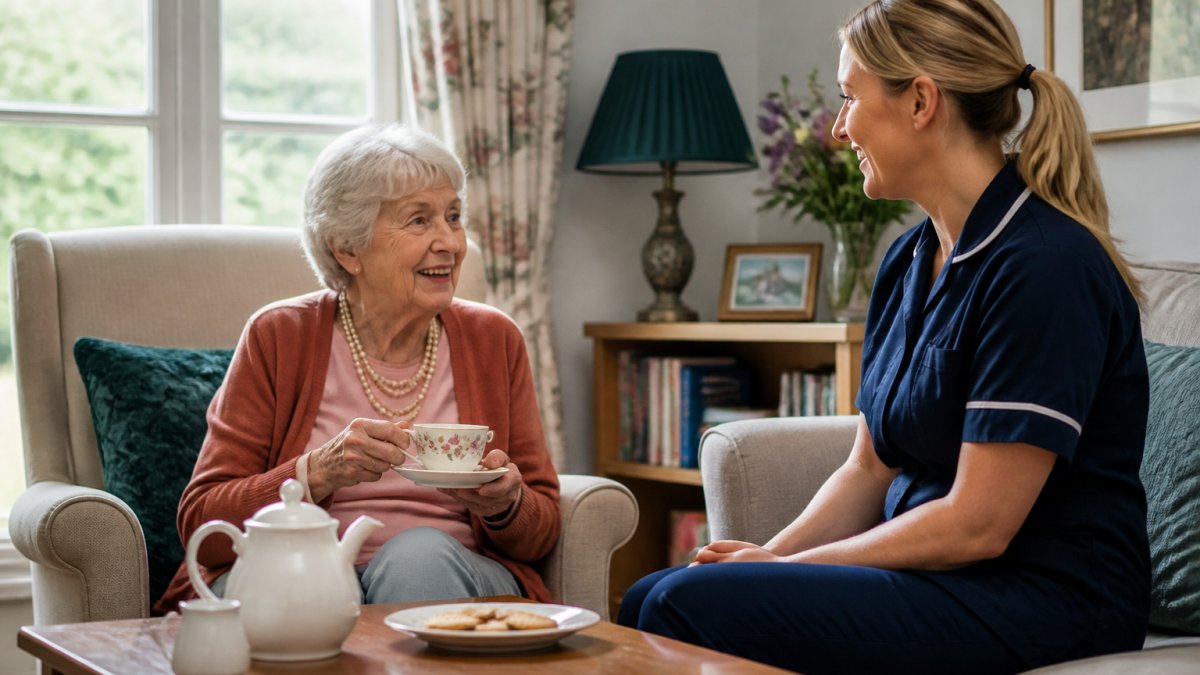
The practical benefits are significant. People with dementia often become confused and anxious when surroundings change; familiar furniture, photos, and routines act as anchors.
In-home care works best when:
- The person is in early to moderate stages of dementia
- They have a safe, suitable home environment
- Family support or professional carers can provide consistent supervision
Home care does require commitment: coordinating appointments, managing medications, arranging respite, and handling the emotional weight of watching someone’s condition change.
The key to successful home care for dementia is consistency. The same carers visiting regularly, following a written care plan, and maintaining clear communication with family members creates the stability that people with dementia need.
Live-in Care for Dementia: 24-Hour Support and Continuity
Live-in care bridges home-based independence and residential structure.
Continuity is the defining feature. Rather than multiple carers rotating through, one person (or a small shift team) learns the person’s habits, preferences, triggers, and needs.
Live-in care is most suitable when:
- The person has advanced dementia requiring constant supervision
- They need help with personal care, toileting, and mobility
- Staying at home is essential to their wellbeing
- The family cannot provide 24-hour supervision themselves
The logistics are more complex: a live-in carer needs suitable space, privacy, and clear boundaries, and the arrangement works only when person and carer are genuinely compatible.
Care Managers provides live-in care with trained staff who understand dementia-specific needs, including challenging behaviour, medication routines, and dignity during personal care, working within your home and routines.
Residential Care Homes: When Full-Time Professional Support Is Needed
A residential care home is a structured environment with trained staff always present, accessible medical support, and organised activities and meals.
Residential care is appropriate when:
- The person has advanced dementia with significant behavioural or medical complexity
- They need specialist dementia-trained staff available 24/7
- Home care has become unsafe or unmanageable
- The family cannot sustain the emotional or practical burden of home-based care
The advantages are real: dementia-trained staff, supervised medication, activities for different cognitive levels, prepared meals, managed laundry, and other residents, comforting to some, overwhelming to others.
The disadvantages are equally real: leaving home, familiar surroundings, and often independence; restrictive visiting hours; care that can feel less personalised.
Choosing residential care is not a failure. For some people with dementia, it is the right choice. But it should be made thoughtfully, with full understanding of what the person is losing and what they are gaining, not as a default when home care becomes difficult.
Creating a Personalised Dementia Care Plan
A good care plan is the difference between reactive crisis management and proactive, dignified support. Use this framework to match care settings to the person’s current situation and plan for changes.
Matching Care Options to Dementia Stage and Needs
Dementia is progressive, and care needs evolve: the right setting at one stage may become unsuitable later. Assess what fits now and anticipate transitions.
Early stage (mild cognitive impairment):
- The person can still manage most daily tasks but may need reminders for medication, appointments, or meals.
- Supervision needs are low; safety risks are minimal but monitoring for wandering or confusion is wise.
- Best fit: Part-time home care (a few hours a week) to provide companionship, medication prompts, and help with shopping or cooking. This preserves independence and routine.
- What to watch for: Increasing forgetfulness, difficulty with finances, or getting lost on familiar routes.
Middle stage (moderate dementia):
Call us for Free Assessment Today →
- The person needs help with personal care (bathing, dressing), may experience confusion or anxiety, and could wander or become disoriented.
- Night-time support may be needed if they wake confused or try to leave the house.
- Best fit: Increased home care hours, possibly live-in care if night-time supervision is required. Residential care may be considered if the home environment is unsafe or family cannot provide consistent oversight.
- What to watch for: Changes in mobility, incontinence, aggression, or refusal of care.
Late stage (severe dementia):
- The person requires 24-hour supervision, full assistance with all personal care, and may have difficulty communicating or swallowing.
- Medical needs may be complex (pressure sores, infections, feeding tubes).
- Best fit: Live-in care with a team of carers, or a residential care home with specialist dementia nursing. Home care may still be possible with a robust team, but safety and medical oversight are critical.
- What to watch for: Infections, weight loss, reduced mobility, and increased sleeping.
Key Needs to Assess
Beyond stage, specific needs determine the right setting:
- Supervision level: Does the person need someone present at all times, or just check-ins? Night-time wandering or confusion often tips the balance toward live-in or residential care.
- Mobility: Can they move around safely? If they need help transferring from bed to chair, a care home with hoisting equipment may be safer.
- Medical complexity: Do they need regular nursing care, catheter management, or wound care? Residential homes with nursing staff may be necessary.
- Behaviour: Aggression, agitation, or severe anxiety may require specialist dementia-trained staff who can de-escalate and keep everyone safe.
Building the Plan
Once you’ve assessed stage and needs, the care plan should document:
- Daily routines (when the person wakes, eats, takes medication, goes to bed)
- Personal preferences (how they like to be addressed, activities they enjoy, what upsets them)
- Medical information (medications, allergies, health conditions, GP contact details)
- Behaviour management strategies (what triggers distress, what calms the person)
Create the plan with input from the person (if able), their family, their GP, and the care team. Review it at least every three months and update it whenever needs change. Without a clear plan, carers guess, inconsistency increases confusion, and dignity suffers.
Use the stage-based framework above as a starting point, but remember that dementia affects everyone differently. A person in the middle stage may still be safe at home with the right support, while someone in early stage may need more help due to other health conditions. Always prioritise the individual’s safety and wellbeing over rigid categories.
Choosing a Dementia Care Provider: What to Look For
Not all care providers are the same. Some have genuine dementia expertise; others are generalists. The difference shows in how they respond when someone is distressed, handle medication, communicate with families, and whether they see the person or just the tasks.
When evaluating an Everycare alternative for dementia patients or any dementia care provider, look for:
- Dementia-specific training: Staff have completed accredited dementia care training, not just general care qualifications
- Experience with advanced dementia: They’ve worked with people who have challenging behaviour, advanced cognitive decline, or complex medical needs
- Clear communication: They provide regular updates without being asked, they respond to concerns quickly, and they involve families in decisions
- Flexibility: They adjust care plans as the person’s needs change, and they work within the family’s preferences and routines
Care Managers offers tailored care plans based on individual needs and routines, dementia care delivered by staff trained in person-centred support, ongoing quality assurance, reliable family communication, and faith-based care options that recognise how deeply cultural and spiritual values matter to many families.
Key Questions to Ask Before Committing to a Care Provider
Before committing to a provider, get answers to these questions. They reveal how seriously the provider takes dementia care and how well they understand your situation.
Provider Assessment Checklist
Use this checklist for each provider you speak to, scoring each answer from 1 (poor) to 5 (excellent).
Dementia expertise
- How long have you worked with people with dementia?
- What training do your carers have in dementia-specific care? (Ask for the name of the qualification and how often it’s refreshed.)
- How do you handle challenging behaviour such as aggression, wandering, or refusal of care?
- Can you provide examples of how you’ve supported someone with advanced dementia?
Continuity and reliability
- How do you minimise carer changes, especially for live-in care?
- What happens if a carer is sick or leaves? How quickly can you provide a replacement?
- Do you have carers available for urgent or emergency situations?
- How do you ensure consistency in the care plan across all staff?
Communication and family involvement
- How often will I hear from you about my relative’s wellbeing?
- How do you handle concerns or complaints?
- Who is my main point of contact?
- How are families involved in decisions about changes to care?
Safeguarding and quality assurance
- What safeguarding procedures do you have in place?
- How do you vet carers before they start? (Ask about DBS checks and references.)
- Can you provide references from other families?
- How do you ensure quality of care over time? (Ask about spot checks, supervision, and training updates.)
Specific needs
- Can you support someone with [specific behaviour or medical need]?
- How would you handle [specific situation your relative might encounter]?
- Do you have experience with [any relevant condition or preference]?
- Can you work with our family’s routines and preferences?
How to Use the Checklist
- Ask every provider the same questions so you can compare fairly.
- Take notes and score each answer. Vague or defensive answers are a warning sign.
- Ask for evidence where possible, such as training certificates, CQC reports, or references.
- Trust your instincts. If something feels off, it probably is.
Clear answers before you commit mean fewer problems later. A good provider will answer confidently and welcome your questions.
Do not choose a provider based on price alone. The cheapest option may lack dementia-specific training or have poor continuity of care, which can lead to distress for the person with dementia and burnout for family carers. Prioritise quality, safety, and compatibility.
Care Quality Commission inspection reports
Frequently Asked Questions
What are the main alternatives to Everycare for dementia patients?
The primary alternatives include home care services (where carers visit for set hours), live-in care (24-hour support in the person’s home), and residential care homes (full-time residential facilities). Home care suits those needing part-time support whilst remaining independent. Live-in care works well for advanced dementia requiring round-the-clock supervision. Residential care homes provide specialist environments with trained staff and medical oversight. The right choice depends on the person’s dementia stage, care needs, and preference for remaining at home versus moving to a care facility.
Can someone with dementia receive care at home?
Yes. Dementia care at home is possible across all stages, from early diagnosis to advanced dementia, with the right support structure. Home-based care allows people to remain in familiar surroundings, which can reduce confusion and anxiety. Support ranges from a few hours weekly (help with shopping, medication, personal care) to live-in carers providing 24-hour supervision. The key is matching the level of care to the person’s current needs and adjusting as their condition changes. Many families find home care preserves independence and dignity whilst providing essential support.
What should I look for in a dementia care provider?
When choosing a dementia care provider, prioritise dementia-specific training and experience. Ask whether carers have formal qualifications in dementia support and understand communication techniques for people with memory loss. Check their approach to person-centred care: do they build care plans around the individual’s routines, preferences, and life history? Verify safeguarding procedures, staff continuity (how stable is the team), and communication with family. Faith-based care alignment matters if religious observances or dietary practices are important. Request references from other families and ask how they handle behavioural changes or emergencies.
How is live-in care different from hourly home care for dementia?
Hourly home care involves carers visiting for scheduled periods (typically 1-4 hours) to help with specific tasks like personal care, meals, or medication. The person remains largely unsupervised between visits. Live-in care provides a dedicated carer in the home 24 hours daily, offering continuous supervision, companionship, and immediate response to needs. For advanced dementia, where the person may wander, become distressed, or require frequent assistance, live-in care provides greater safety and emotional reassurance. Hourly care works better for early-stage dementia when supervision gaps are manageable and the person retains some independence.