
Table of Contents
- What Supported Living Means for Brain Injury
- Understanding Brain Injury and Support Needs
- Assessing Eligibility and Care Requirements
- Brain Injury Care at Home: Daily Living and Practical Help
- Housing Adaptations After Brain Injury
- Creating a Supported Living Care Plan
- Living Independently After Brain Injury: Moving In and Beyond
- Funding, Costs, and Financial Support
- Frequently Asked Questions
Last Updated: October 10, 2026
What Supported Living Means for Brain Injury
Supported living for brain injury separates housing from care, allowing someone to live in their own home with trained carers providing personalised support. Unlike residential care homes, the person retains control over where they live, who supports them, and their daily routine. A carer might help with medication, meals, or appointments, but the person directs the support. This model enables gradual reintegration into community life whilst maintaining connections to neighbourhood, family, and existing networks.
Supported living is housing plus personalised care that the person controls. The goal is independence, dignity, and choice, not just safety.
Understanding Brain Injury and Support Needs
An acquired brain injury occurs when the brain is damaged after birth through trauma, stroke, infection, or lack of oxygen. Effects vary widely and may include difficulty with memory, concentration, physical weakness, mood changes, or fatigue. Support needs depend entirely on the individual, one person might need medication reminders, another physical assistance with personal care, a third emotional support. The right supported living arrangement asks: what does this specific person need to live as independently as possible?
Brain injury effects are not always visible. Someone might look fine but struggle with memory or impulse control. Carers trained in brain injury understand these hidden challenges and adjust support accordingly.
Assessing Eligibility and Care Requirements
Before arranging supported living, a formal assessment determines what support is needed and whether you qualify for local authority funding. Your local authority’s adult social care team typically leads this, usually involving a social worker or occupational therapist specialising in brain injury. Ask your local authority who will be involved and what their qualifications are.
What the assessment covers
The assessment is holistic. It examines:
- Physical health and mobility, including balance, strength, continence, and any physical disabilities from the brain injury
- Cognitive function, such as memory, attention, planning, and decision-making ability
- Emotional and mental wellbeing, including mood, anxiety, depression, and behavioural changes
- Daily living skills, your ability to wash, dress, prepare meals, manage medication, and handle finances
- Social needs, your desire to work, volunteer, maintain relationships, and participate in community activities
- Informal support, what family members or friends currently help with
- Your home environment, whether adaptations are needed and whether your current housing suits your needs
- Your goals, what you want to achieve in the next 6-12 months
Preparing for your assessment
Gather evidence before the meeting: medical records, a timeline of your injury, specific examples of current difficulties (“I forget to take medication” rather than “I have memory problems”), what you want to achieve, who currently helps you, and any letters from therapists or doctors.
The assessment meeting
Be honest about what you struggle with; the assessment only works if it reflects reality. The meeting usually lasts 1-2 hours and may include observation of how you move around your home. If you have difficulty concentrating, say so; the assessor can arrange a follow-up visit.
The local authority should provide a written assessment and care plan setting out what support you need, costs, what the local authority will fund, your contribution, and how support will be arranged. If you disagree, you can request a review or independent assessment.
If the local authority agrees to fund your care, they’ll conduct a financial assessment examining your income, savings, essential living costs, and dependants. There are upper and lower thresholds determining your contribution. Ask for a detailed breakdown in writing.
Bring a notebook to the assessment and take notes. Ask the assessor to clarify anything you don’t understand. You should leave the meeting knowing what happens next and when.
Brain Injury Care at Home: Daily Living and Practical Help
Practical help focuses on enabling daily tasks: medication management, meal planning, personal care, household tasks, appointments, and money management. The goal is to build skills, not create dependence. If someone can prepare simple meals with reminders, the carer reminds rather than cooks. Consistency matters; working with the same carer builds trust and understanding.
Ask carers to involve you in decisions about how tasks are done. If you prefer the kitchen organised a certain way or have a routine that works, that matters. Care should fit your life, not force you into someone else’s system.
Housing Adaptations After Brain Injury
Simple home adaptations improve safety and independence: grab rails, bathroom modifications, accessible storage, kitchen adjustments, improved lighting, and non-slip flooring. An occupational therapist assesses your home and recommends changes. Some adaptations are free or subsidised through local authority grants. Good adaptations blend in; your home should feel like yours, not a care facility.
Housing adaptations reduce the amount of hands-on care needed. A safer home means more independence.
Creating a Supported Living Care Plan
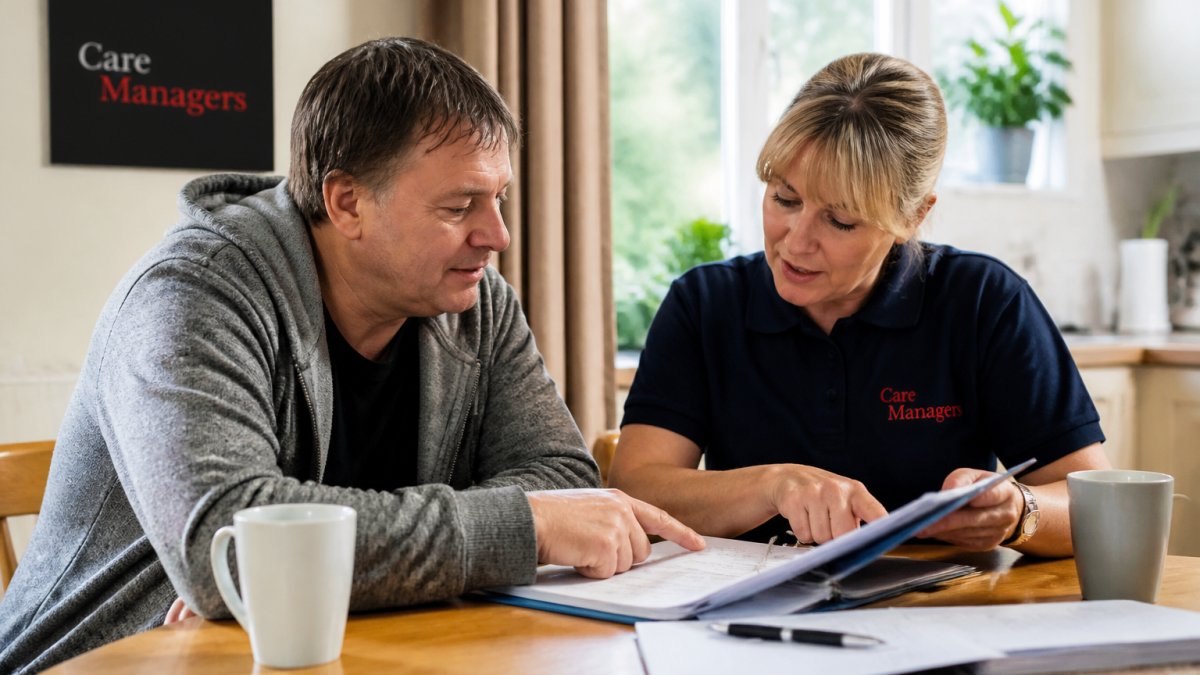
A care plan sets out what support you need, when you need it, and how it will be delivered. A good plan is detailed, realistic, and flexible enough to change as your needs evolve.
Your care plan should include:
| Element | What It Covers |
|---|---|
| Daily routine | What time you wake, eat, take medication, go to bed |
| Personal care needs | Washing, dressing, toileting, grooming support required |
| Meal planning | Dietary preferences, allergies, who shops and cooks |
| Appointments | Doctor visits, therapy, social activities, transport |
| Medication | What you take, when, and who manages it |
| Communication | How you’ll stay in touch with carers, family, doctors |
| Emergency contacts | Who to call if something goes wrong |
| Goals | What you want to achieve in the next 3-6 months |
The plan should be written in plain language. You should understand every part of it and ask for changes if something doesn’t feel right. Review regularly; brain injury recovery is not linear, and a good care plan adapts as your needs change.
Living Independently After Brain Injury: Moving In and Beyond
The transition to supported living for brain injury works better with planning: visit the home multiple times, meet your carer in advance, set up your space, establish routines gradually, stay connected to family and community, and build confidence slowly. Supported living puts control back in your hands. You choose the support, set the terms, and decide what independence looks like for you. Community participation is important; support should enable you to do things you enjoy, whether that’s visiting friends, volunteering, or returning to work.
Set small, achievable goals. If you want to manage your own finances, start with one bill. If you want to cook a meal, begin with something simple. Success builds confidence.
Funding, Costs, and Financial Support
Once your care needs are assessed, the local authority conducts a financial assessment considering your income, savings, essential living costs, and dependants. The local authority uses a standard formula with upper and lower thresholds.
When discussing funding, ask for clarity on the total cost of your support package, what’s included, your assessed contribution and how it was calculated, what happens if your needs change, any additional charges, how costs are reviewed, hardship provisions, and appeal rights.
Personal budgets and direct payments
Call us for Free Assessment Today →
Many local authorities now offer personal budgets. This means you receive a sum of money (rather than the council arranging care directly) and you purchase support yourself. This gives you more control but also more responsibility.
If you receive a personal budget, you can:
- Use it to employ a carer directly (you become the employer)
- Purchase care from an agency (the agency employs the carer)
- Buy a mix of services (some agency care, some direct employment, some other support)
- Combine it with NHS funding if you have a personal health budget
Direct employment gives you maximum control but requires you to manage payroll, tax, and employment law. Many people find this challenging after brain injury. If you choose this route, ask about support from an employment agency or payroll service.
Funding if you don’t qualify for local authority support
Not everyone qualifies for council funding. If your needs are assessed as lower priority or your income is above the threshold, you may need to fund care privately.
If this applies to you:
- Get quotes from multiple providers to understand the market rate in your area
- Ask about package discounts (some agencies offer lower rates for longer-term contracts)
- Explore whether you qualify for any benefits that could help fund care (Personal Independence Payment, Attendance Allowance, or Employment and Support Allowance)
- Consider whether a shared supported-living arrangement (sharing a home with others receiving support) might be more affordable than solo living
- Ask about phased funding (starting with part-time support and increasing as you can afford it)
What happens when needs change
Brain injury recovery is not linear. You may need more support initially, then less as you regain skills. Or you may plateau and then face new challenges. Your funding should adapt.
If your needs increase:
- Request a reassessment from your local authority
- Provide evidence of the change (new medical reports, examples of increased difficulty)
- Ask for your care plan and funding to be updated
- If the local authority refuses, ask for the decision in writing and request a review
If your needs decrease:
- The local authority may reduce your funding
- You can request a reassessment if you believe the reduction is too steep
- Reduced funding can be positive (it reflects progress) but ensure you’re not left without essential support
Funding appeals and complaints
If you disagree with the local authority’s funding decision, you can:
- Request a review within a specified timeframe (usually 28 days)
- Provide new evidence (updated medical reports, examples of unmet needs)
- Ask for a second assessment if you believe the first was inaccurate
- Complain formally to the local authority’s complaints team
- Seek advice from a brain injury charity, Citizens Advice, or an independent advocate
Don’t accept a funding decision you believe is wrong. Many decisions are overturned on appeal.
Planning ahead financially
If you’re funding care privately or contributing towards costs:
- Budget for inflation, care costs typically rise 3-5% annually
- Plan for contingencies, what if you need more support temporarily?
- Review regularly, ensure your funding still covers your needs
- Ask about payment plans, some providers offer flexible payment arrangements
Don’t assume you can’t afford supported living without checking your options. Many people qualify for full or partial local authority funding. Even if you pay a contribution, it’s often less than you expect. Always ask for a detailed financial assessment before deciding you can’t proceed.
Keep all funding documents together: your assessment, your care plan, your financial assessment, and any quotes from providers. You’ll need these if you appeal or if your circumstances change.
Frequently Asked Questions
Can someone with a brain injury live independently with the right support?
Yes. Many people with acquired brain injury can live independently with appropriate supported living arrangements. The level of independence depends on the individual’s specific needs, recovery stage, and available support. Person-centred support that focuses on building confidence and life skills helps people regain autonomy. A tailored care plan, combined with housing adaptations and regular rehabilitation, enables many individuals to maintain their own home whilst receiving the help they need for daily tasks and emotional wellbeing.
What support can a person with a brain injury receive at home?
Brain injury care at home covers practical assistance with daily living tasks, medication management, meal preparation, personal hygiene, and household management. Support also includes emotional wellbeing, befriending, confidence-building, and help with community participation. Some people benefit from occupational therapy to develop life skills and adapt their environment. Specialist support addresses specific challenges like fatigue, memory difficulties, or physical disabilities. The type and frequency of support are tailored to individual needs through a comprehensive assessment and personalised care plan.
How do you assess someone’s care needs after a brain injury?
Assessment involves a multidisciplinary team, typically including occupational therapists, physiotherapists, social workers, and healthcare professionals, who evaluate physical abilities, cognitive function, emotional wellbeing, and practical needs. They examine daily living skills, medication management, mobility, social connection, and risk factors. The assessment considers the person’s goals, preferences, and existing support network. Results inform the supported living care plan and determine the level of support required. Regular reassessment ensures the plan evolves as the person recovers and circumstances change.
What housing adaptations might help after a brain injury?
Housing adaptations depend on individual needs but commonly include handrails and grab bars for safety, accessible bathrooms with walk-in showers, improved lighting for those with vision difficulties, ramps or level-access entrances, and modifications to bedrooms and kitchens. Some people benefit from smart home technology to support memory or safety. An occupational therapist assesses the home environment and recommends specific changes. Adaptations aim to reduce falls, improve accessibility, support independence, and create a safe living environment that works with the person’s abilities rather than against them.