TL;DR:
- The home care assessment is a face-to-face evaluation that creates a personalized support plan for individuals. It is conducted by trained professionals using clinical tools and focuses on medical, physical, cognitive, and environmental factors. Families should prepare by gathering medical histories, medication lists, and activity logs to ensure accurate assessments and better care outcomes.
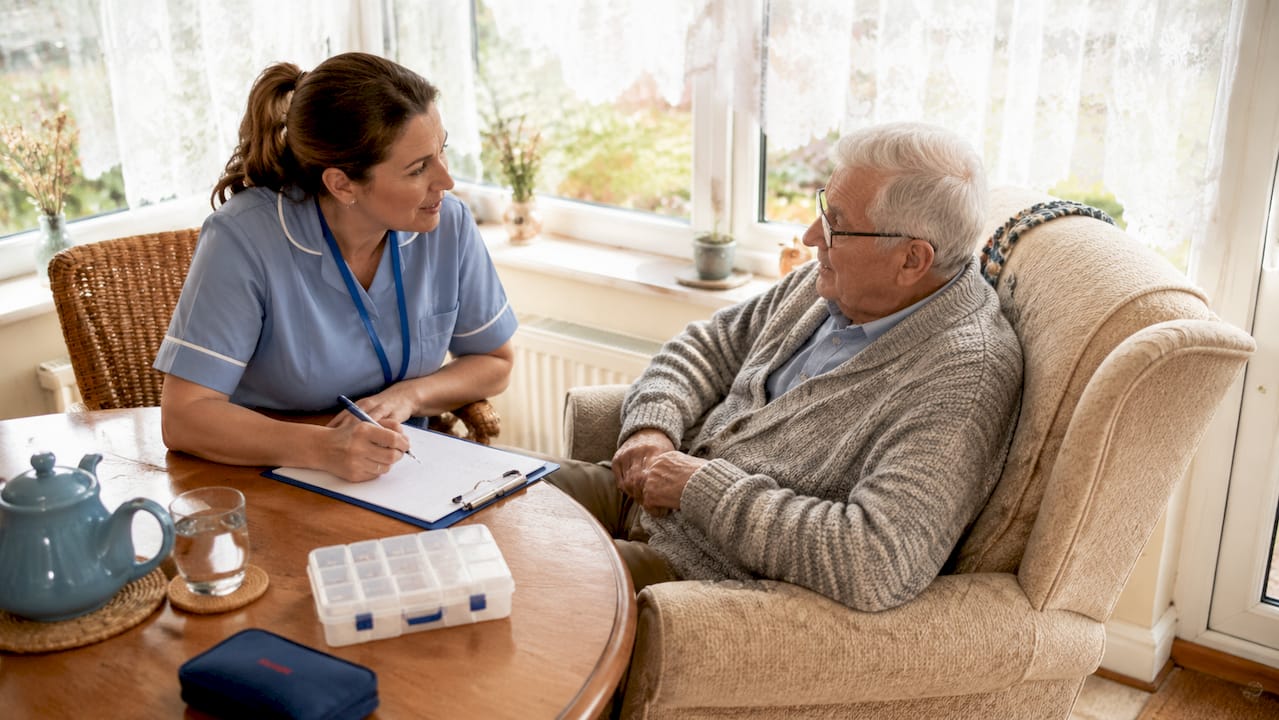
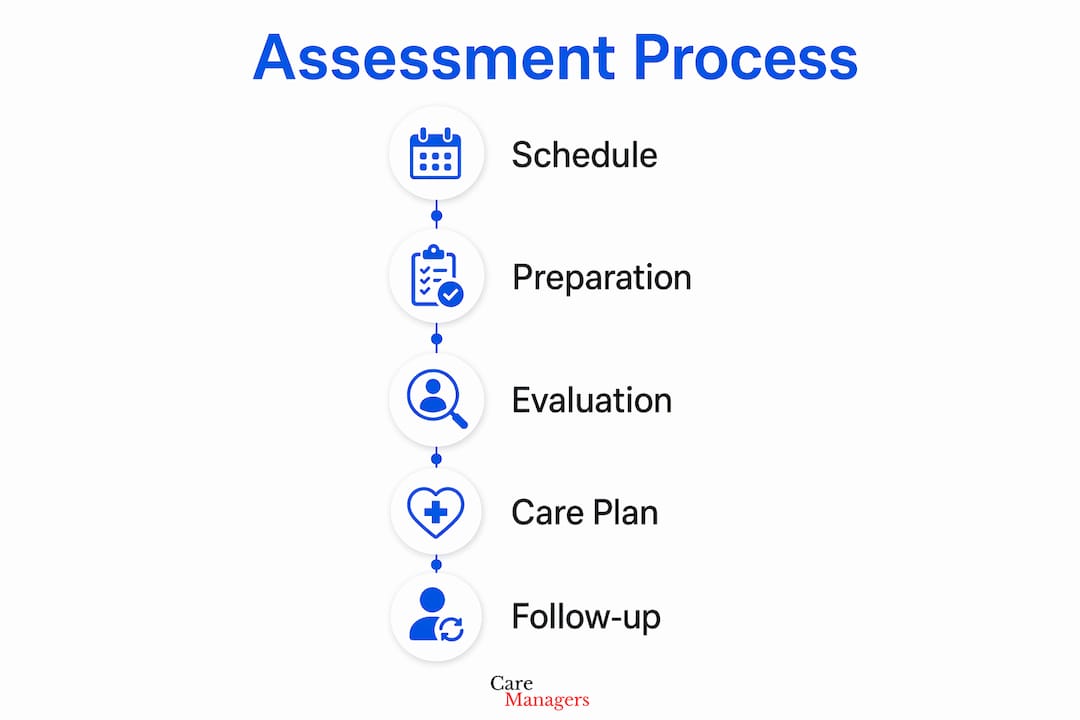
The home care assessment process is a face-to-face evaluation conducted by trained professionals to understand an individual’s daily living needs, health status, and home environment, with the goal of building a personalised care plan. Formally known as a needs assessment or care needs evaluation, it sits at the heart of every good home care arrangement. For families supporting an elderly parent or a loved one recovering from illness, understanding what this process involves removes uncertainty and helps you prepare. This guide explains who carries out the assessment, what happens during it, how to prepare, and why regular reassessments matter.
What is the home care assessment process?
The home care assessment process is a structured, in-home evaluation that covers medical history, physical abilities, cognitive function, and home safety. Its purpose is not to judge your loved one or your home. The outcome is a care plan that specifies the type and level of support needed to keep your loved one safe and as independent as possible.
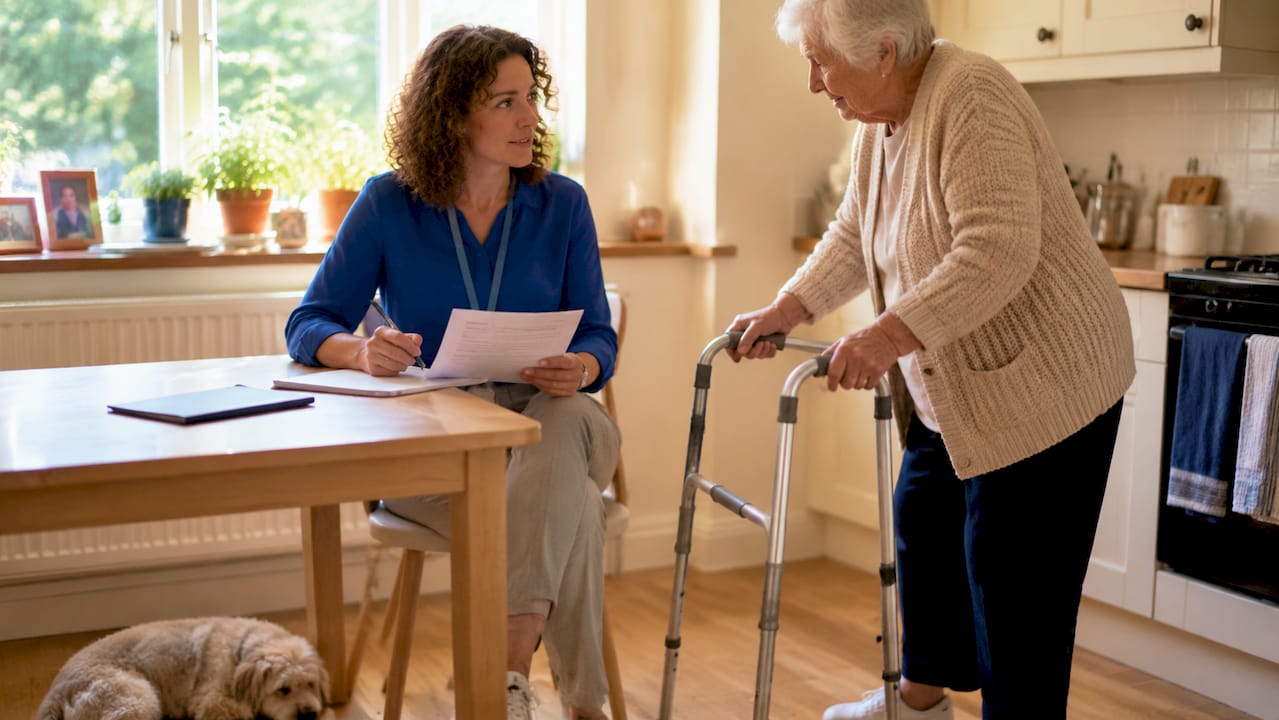
A standard assessment typically lasts between 1 and 2 hours. That duration reflects the breadth of what is covered, from reviewing prescription medications to observing how someone moves around their kitchen. The conversational format is deliberate. Assessors gather more accurate information when the person being assessed feels at ease.
The assessment covers two core categories of daily tasks. Activities of Daily Living (ADLs) include personal care tasks such as washing, dressing, and eating. Instrumental Activities of Daily Living (IADLs) cover more complex tasks such as managing finances, preparing meals, and taking medication. Both categories shape the final care plan.
Who performs a home care assessment and what tools are used?
Assessments are carried out by registered nurses, occupational therapists, or care managers, depending on the complexity of the individual’s needs. For people with multiple health conditions, interdisciplinary teams including nurses, geriatricians, and social workers produce the most thorough evaluations. Each professional brings a different lens, covering medical, functional, and social dimensions together.
Clinical tools are used to make assessments objective and consistent. The Mini-Cog screening tool has 73% sensitivity and 84% specificity for detecting cognitive impairment. That level of accuracy makes it one of the most widely used instruments in home care evaluations across the UK.
The 4Ms framework is recommended practice for structuring person-centred assessments. It covers four domains:
- What Matters: the individual’s personal goals and priorities
- Medication: reviewing all current medications for safety and appropriateness
- Mentation: cognitive and mental health status
- Mobility: physical function and fall risk
This framework shifts the focus away from a checklist approach and towards what actually matters to the person receiving care. Family input is welcomed throughout. You know your loved one’s routines, preferences, and recent changes better than any clinician who has just arrived at the door.
Pro Tip: Bring a written list of all current medications, including over-the-counter supplements, to the assessment. Assessors use this to check for interactions and flag any risks.
How should families prepare for a home care assessment?
Good preparation leads to a more accurate assessment and a better care plan. The most useful thing you can do is gather information before the assessor arrives, not tidy the house.
- Compile a full medical history. Include diagnoses, recent hospital stays, surgical history, and the name of the GP. Recent letters from consultants or discharge summaries are particularly useful.
- List all medications. Write down every prescribed and non-prescribed medicine, including dosage and frequency. Note any recent changes.
- Keep an ADL and IADL log. Tracking daily activities for 3 to 5 days before the assessment gives the assessor objective data rather than a general impression. Note what your loved one can do independently, what they struggle with, and what they cannot do at all.
- Note recent changes. Changes in mood, appetite, sleep, or behaviour are relevant. Write them down even if they seem minor.
- Prepare questions. Ask about the types of care available, how the care plan will be reviewed, and what happens if needs change.
Assessors need to see the home as it is normally lived in, not as it looks after a thorough clean. Loose rugs, cluttered hallways, and poor lighting are exactly the kinds of hazards that need to be identified. Removing them before the visit means the assessor cannot flag them.
Pro Tip: If your loved one is reluctant to have an assessment, frame it as a conversation about how to make life at home easier, not as an inspection. That framing is accurate and tends to reduce anxiety.
What happens during the assessment and what areas are evaluated?
The assessment follows a structured but conversational format. The assessor works through several key areas, usually in this order:
- Personal and medical history: current diagnoses, recent hospital admissions, and ongoing treatments
- Physical abilities: observation of how the person moves, transfers from a chair, climbs stairs, and manages personal care tasks
- Cognitive and mental health screening: short tests to assess memory, orientation, and mood
- Home safety walkthrough: identifying fall hazards, checking bathroom safety, assessing lighting and access
- Social and emotional wellbeing: understanding the person’s support network, social connections, and emotional state
- Personal preferences and lifestyle: daily routines, cultural preferences, and what matters most to the individual
The table below summarises the key evaluation domains and what assessors look for in each.
| Evaluation domain | What assessors look for |
|---|---|
| Physical function | Mobility, balance, ability to complete ADLs independently |
| Cognitive status | Memory, orientation, decision-making capacity |
| Medication management | Adherence, risk of interactions, storage safety |
| Home environment | Fall hazards, accessibility, equipment needs |
| Social support | Family involvement, isolation risk, carer wellbeing |
| Personal goals | Individual priorities, lifestyle preferences, care wishes |
The outcome of the assessment is a written care plan. This document specifies the type of support needed, how often it is required, and which professionals or carers will provide it. For families navigating hospital discharge, a care plan developed through a thorough assessment makes the transition home significantly safer.
How often should home care assessments be repeated?
A single assessment is a snapshot, not a permanent record. Needs change, and care plans must change with them.
Medicare-certified home health services require reassessments at 60-day intervals. Private home care plans in the UK are typically reviewed every 6 to 12 months, or sooner if there is a significant change in health. That difference in frequency reflects the funding model, not the clinical need.
The table below compares reassessment triggers and typical intervals.
| Trigger | Recommended action |
|---|---|
| Routine review (stable needs) | Reassess every 6–12 months |
| Hospital admission or discharge | Reassess before returning home |
| Significant health change | Reassess within 2–4 weeks |
| Change in carer availability | Reassess care plan immediately |
| Decline in ADL or IADL function | Reassess without delay |
Regular reassessments also give families the opportunity to raise concerns and adjust the level of support. If your loved one’s needs have grown beyond what the current provider can offer, a reassessment creates the evidence base for changing home care providers or increasing support hours.
What are common challenges families face during assessments?
The most common barrier to a successful assessment is fear. Many older people worry that an assessment will lead to a loss of independence or a move into residential care. That fear causes them to downplay difficulties, which results in an inaccurate care plan.
Assessments are collaborative conversations, not inspections. The goal is to identify what support will help someone stay at home safely, not to find reasons to remove their independence. Framing the process this way, both for yourself and for your loved one, leads to more honest communication and better outcomes.
Other challenges families commonly encounter include:
- Underreporting non-physical changes. Early physical health decline in older adults often appears first as mood changes, withdrawal, or confusion. These symptoms are clinically relevant and should be shared with the assessor.
- Assuming the home must look perfect. A staged home hides the real risks. Assessors are trained to spot hazards, not to judge housekeeping.
- Speaking for the person being assessed. Family members sometimes answer questions on behalf of their loved one. Assessors need to hear directly from the individual wherever possible.
- Not asking questions. You have every right to ask what the care plan will include, who will deliver it, and how it will be reviewed.
Honest, open communication with the assessor is the single most effective thing a family can do to get the right care plan in place.
Key takeaways
A thorough home care needs assessment, conducted honestly and with good preparation, is the most reliable route to a care plan that genuinely fits your loved one’s life.
| Point | Details |
|---|---|
| Assessment duration | A standard in-home evaluation lasts 1 to 2 hours and covers medical, physical, cognitive, and environmental factors. |
| Preparation matters | Keep an ADL and IADL log for 3 to 5 days before the visit and compile a full medication list. |
| Do not tidy excessively | Assessors need to see the home as normally lived in to identify real safety risks. |
| Reassessment is ongoing | Private care plans should be reviewed every 6 to 12 months or after any significant health change. |
| Honesty improves outcomes | Reporting non-physical changes such as mood shifts or confusion leads to more accurate and appropriate care. |
What I have learned from sitting in on assessments
The assessments that produce the best care plans share one quality: the family came prepared but not defensive. They brought medication lists and honest accounts of difficult days. They did not try to present their loved one at their best.
The 4Ms framework changed how I think about what a good assessment actually measures. Mobility and medication matter, but “What Matters” is the domain that most families overlook. Knowing that someone’s priority is to keep attending their weekly lunch club, or to remain able to make their own cup of tea, shapes the entire care plan in ways that a checklist never could.
The families who struggle most are those who see the assessment as a threat. The families who get the most from it are those who treat the assessor as an ally. That shift in perspective is not naive. It is practical. Home care exists to support independence, not to replace it. The assessment is the tool that makes that support precise enough to actually work.
One more thing: do not wait for a crisis. A proactive assessment, carried out before things become urgent, gives families time to make good decisions rather than rushed ones.
— Emm
How Caremanagers can support your family through the assessment process
Caremanagers provides personalised home care and live-in support across South Wales and England, working with families from the very first conversation about care needs through to ongoing support at home.
Whether your loved one is returning home after a hospital stay, living with dementia, or simply needing extra support day to day, Caremanagers can help you understand what care is right and how to put it in place. The team works with families to match the right level of home care services to individual needs, respecting personal preferences and promoting dignity at every stage. Contact Caremanagers to speak with a care specialist and take the next step with confidence.
FAQ
What is a home care assessment?
A home care assessment is a face-to-face evaluation by a trained professional, usually lasting 1 to 2 hours, that reviews medical history, daily living abilities, cognitive status, and home safety to produce a personalised care plan.
Who carries out a home care assessment in the UK?
Assessments are carried out by registered nurses, occupational therapists, or care managers. Complex cases are often reviewed by interdisciplinary teams that include geriatricians and social workers.
How should I prepare for a home care assessment?
Gather a full medication list, compile recent medical history, and keep a 3 to 5 day log of daily activities before the visit. Do not tidy the home excessively, as assessors need to see real living conditions to identify safety risks accurately.
How often is a home care assessment repeated?
Private home care plans are typically reassessed every 6 to 12 months. An unscheduled reassessment should take place after any hospital admission, significant health change, or noticeable decline in daily function.
What happens after a home care assessment?
The assessor produces a written care plan specifying the type and frequency of support required. This plan is reviewed regularly and updated whenever needs change, ensuring care remains appropriate over time.