TL;DR:
- Dementia care involves providing ongoing physical, emotional, and social support tailored to each stage of the condition. It includes both formal professional services and informal family support, focusing on managing symptoms and maintaining quality of life. Families should plan ahead, combining care types and embracing person-centered approaches to support independence and dignity.
Dementia care is defined as ongoing physical, social, and emotional support tailored to a person living with dementia, helping them maintain independence and wellbeing as their condition progresses. Understanding dementia care means recognising that it covers far more than medical treatment. It includes practical daily assistance, emotional reassurance, and social connection. Because there is no known cure for dementia, care focuses entirely on managing symptoms and preserving quality of life. Whether you are a family member stepping into a caring role or exploring professional options, knowing what dementia care truly involves is the first step towards making confident decisions.
What does dementia care mean in practice?
Dementia care refers to the full range of physical, social, and emotional support provided to someone living with dementia. It covers both formal care delivered by trained professionals and informal care provided by family members or friends. The term is widely used, but the recognised professional framework for it is “person-centred dementia care,” which places the individual’s preferences, history, and dignity at the heart of every decision.
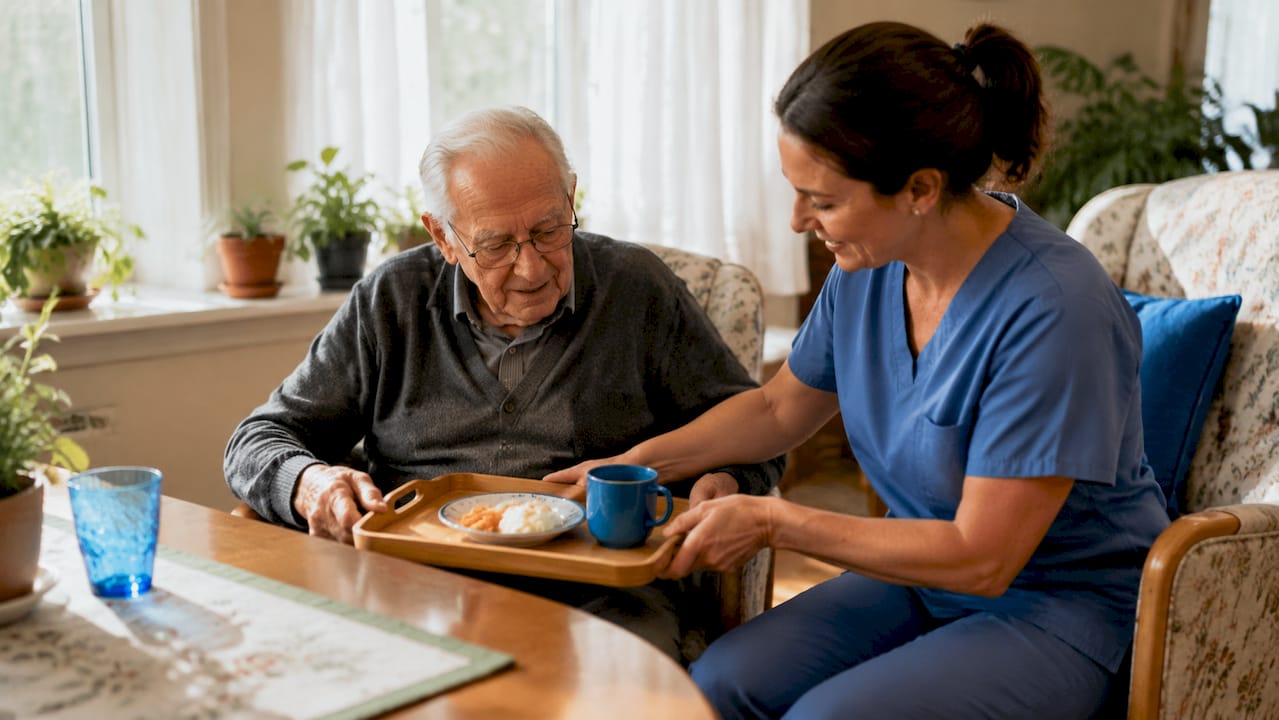
Formal dementia care services include support from nurses, care workers, and social care professionals working in hospitals, care homes, or the person’s own home. Informal care describes the unpaid, daily support that families and friends provide, from helping with meals and medication to offering companionship and reassurance. Both types of care are equally valid and often work alongside each other.
The core purpose of dementia care is not to reverse the condition. It is to manage symptoms and maintain quality of life at every stage. That means adapting the level and type of support as the person’s needs change over time.
What are the different types of dementia care and who provides them?
Dementia care services fall into two broad categories: formal and informal. Understanding both helps families plan more effectively.
Formal dementia care is delivered by paid, trained professionals and includes:
- Home care visits from care workers who assist with personal hygiene, dressing, and meals
- Live-in care, where a professional carer stays in the home around the clock
- Day centre programmes offering structured activities and social interaction
- Residential or nursing home care for those who need full-time support
- Specialist memory care units within care homes
Informal dementia care is provided by family members, partners, and friends. It typically includes:
- Emotional support and companionship
- Help with communication when the person struggles to express themselves
- Assistance with daily tasks such as shopping, cooking, and personal care
- Monitoring safety at home and managing medication
The main benefit of informal care is continuity. A family member knows the person’s history, preferences, and personality in a way a new professional carer cannot immediately replicate. The limitation is that informal carers often lack specialist training and can experience significant stress over time. Formal care brings expertise and consistency but requires careful matching to the individual’s needs and personality.
Pro Tip: If you are a family carer, you do not have to choose between formal and informal care. The most effective arrangements combine both, with professional support filling the gaps that family members cannot cover.
How do dementia care needs progress as the disease advances?
Dementia symptoms worsen over months to years, and the level of care required escalates accordingly. Families who understand this progression can plan ahead rather than react in a crisis.
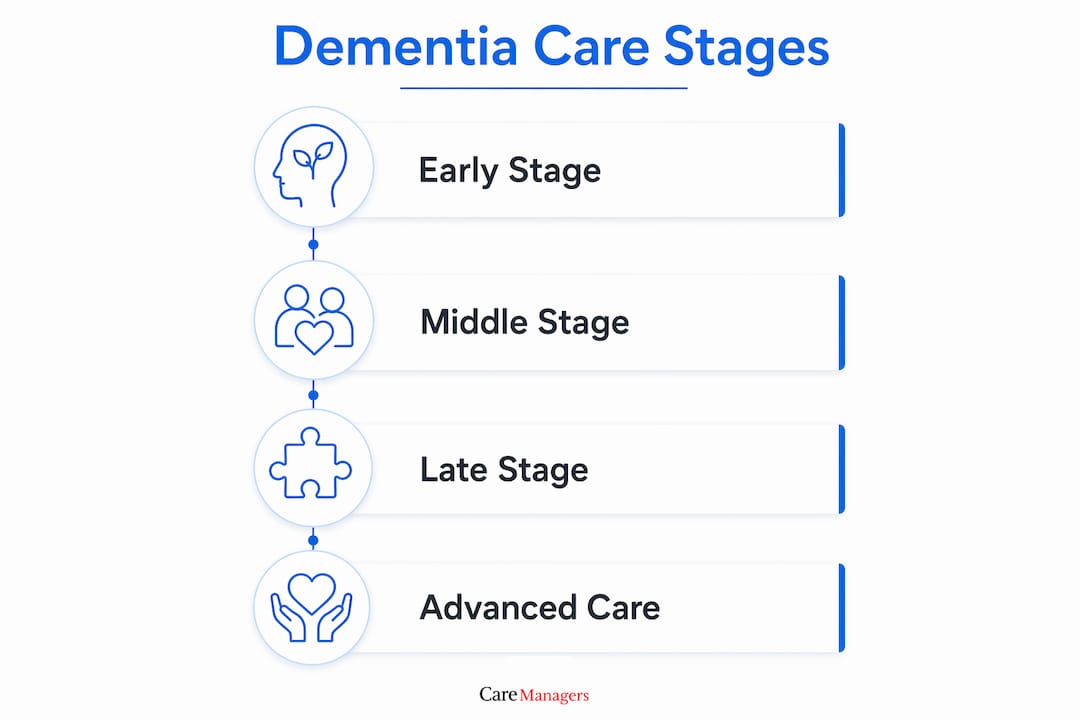
The three broad stages of care escalation are:
- Early stage: The person may need gentle reminders, help with complex tasks like finances, and support to stay socially connected. Care at this stage is often light and can be provided mostly by family.
- Middle stage: Memory loss and confusion become more pronounced. The person needs assistance with personal care such as bathing and dressing, and safety at home becomes a priority. Professional home care visits often begin at this point.
- Late stage: The person requires full assistance with daily living, including eating, mobility, and continence care. Round-the-clock support, either through live-in care or a care home, is usually necessary.
The table below summarises how care needs typically shift across these stages.
| Stage | Typical care needs | Who usually provides support |
|---|---|---|
| Early | Reminders, companionship, task support | Family, community services |
| Middle | Personal care, safety monitoring, medication | Family and professional home carers |
| Late | Full daily living assistance, nursing care | Live-in carers or residential care |
Planning for each stage in advance reduces stress for both the person with dementia and their family. NHS inform recommends early engagement with health and social care professionals to put equipment, support, and legal arrangements in place before a crisis arises.
What are best practices for communication and emotional support?
Communication is one of the most challenging aspects of caring for someone with dementia. Memory loss and cognitive decline affect how the person processes language, recalls words, and interprets social cues. Effective dementia care requires adapting communication to reduce anxiety and respond with understanding rather than frustration.
The following approaches make a measurable difference:
- Use short, simple sentences and speak slowly and clearly
- Maintain eye contact and use a calm, warm tone of voice
- Avoid correcting the person or arguing about facts they misremember
- Use non-verbal cues such as gentle touch, facial expressions, and gestures
- Give the person time to respond without rushing or finishing their sentences
Person-centred care is the professional standard for dementia support. It means treating the person as an individual with a full life history, not as a set of symptoms to manage. Preserving autonomy, even in small ways such as letting the person choose what to wear, reduces distress and supports dignity.
Emotional support is equally important for the carer. Recognising that difficult communication is a result of the disease, not a personal rejection, helps family carers respond with compassion rather than hurt or frustration.
Pro Tip: Keep a short written record of phrases, topics, or activities that consistently calm or engage your loved one. Sharing this with professional carers ensures continuity of approach across everyone involved in their support.
What modern dementia care models support families and carers?
Coordinated care models represent the most significant recent development in understanding dementia care at a system level. Rather than leaving families to piece together support on their own, these models bring together multiple services under one organised framework.
The CMS GUIDE Model is a leading example. Running from 2024 to 2032, it offers coordinated dementia care that includes care navigation, caregiver training, respite services, and a 24-hour support line. The model is designed to improve outcomes for both people with dementia and their carers by ensuring no one falls through the gaps between services.
The table below compares a traditional uncoordinated approach with a coordinated model like GUIDE.
| Feature | Traditional approach | Coordinated model (e.g. GUIDE) |
|---|---|---|
| Care navigation | Family manages independently | Dedicated navigator guides the family |
| Caregiver training | Ad hoc or unavailable | Structured, accessible training provided |
| Respite support | Family arranges separately | Built into the care plan |
| Out-of-hours support | Limited | 24/7 helpline available |
| Outcome focus | Reactive | Proactive and preventative |
Caregiver training is a critical component of any strong dementia care model. A 2026 study identified 72 validated caregiving practices that improve care outcomes, confirming that good dementia care depends on specific skills, not just goodwill. Research also shows that accessible training formats such as telehealth with technical support significantly increase carer participation and confidence.
Pro Tip: Ask your GP or local social services team whether a coordinated dementia care pathway is available in your area. Many families are unaware these structured programmes exist until they specifically request them.
How can families apply dementia care at home every day?
Families providing dementia care at home can make a significant difference through consistent, thoughtful daily practices. The goal is to balance safety with as much autonomy as possible.
Practical steps that support wellbeing at home include:
- Establishing a daily routine to reduce confusion and anxiety
- Simplifying the home environment by removing clutter and trip hazards
- Labelling cupboards and drawers with pictures or words to support independence
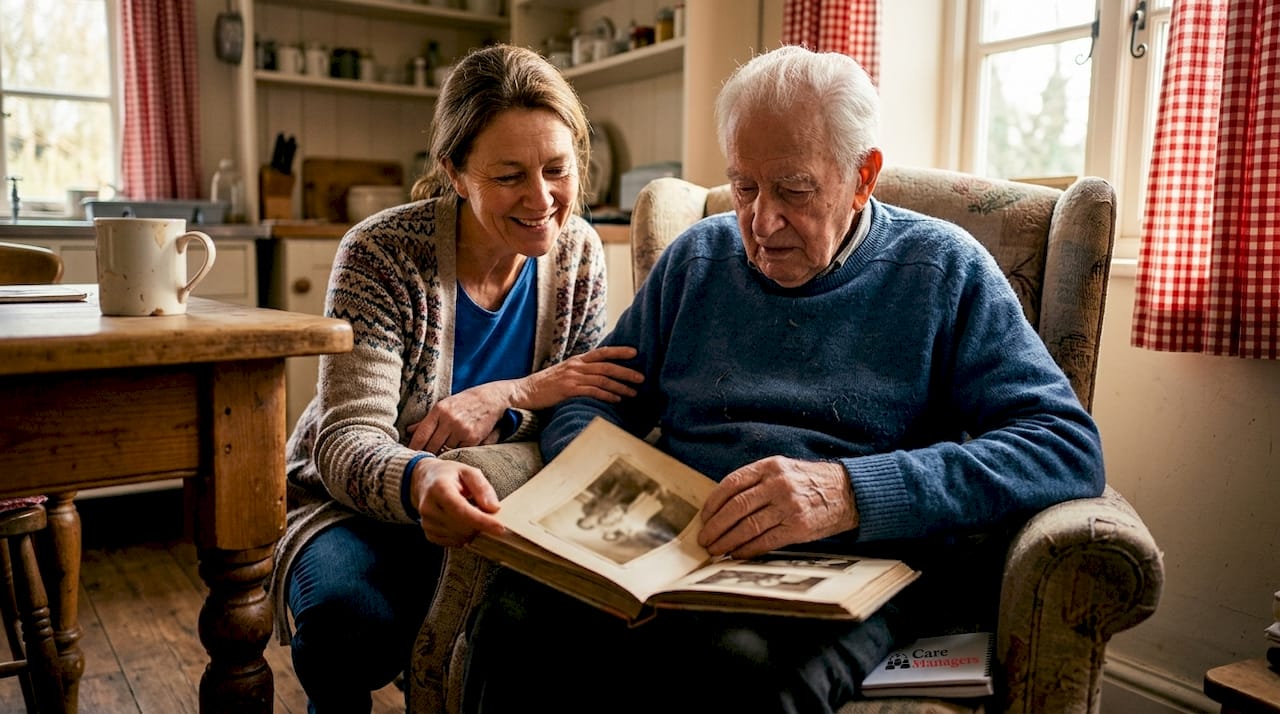
- Keeping familiar objects and photographs visible to provide comfort and orientation
- Reducing background noise and distractions during conversations or meals
Planning for respite is not a luxury. It is a necessity for sustainable caring. Family carers who do not take breaks are at higher risk of burnout, which ultimately affects the quality of care they can provide. Choosing the right home care services early, before a crisis, gives families time to find a good match rather than accepting the first available option.
Caregiver training resources are more accessible than ever. Online programmes allow family carers to build specific skills around personal care, communication, and safety at their own pace. The importance of dementia care education cannot be overstated. Families who understand the condition respond more effectively and feel less isolated in their role.
Pro Tip: Contact your local carers’ centre or the Alzheimer’s Society for free training and peer support groups. Connecting with other carers who share your experience is one of the most effective ways to sustain your own wellbeing.
Key takeaways
Dementia care means providing person-centred physical, emotional, and practical support that adapts at every stage of the condition to preserve dignity, autonomy, and quality of life.
| Point | Details |
|---|---|
| Core definition | Dementia care covers physical, social, and emotional support for people living with dementia. |
| Two types of care | Formal professional care and informal family care work best in combination. |
| Care escalates over time | Needs progress from light task support in early stages to full daily living assistance in late stages. |
| Communication is a skill | Using calm, simple language and non-verbal cues reduces distress and supports connection. |
| Coordinated models improve outcomes | Frameworks like the CMS GUIDE provide training, navigation, and respite to support the whole family. |
What dementia care really asks of us
People often ask me what dementia care truly means, expecting a clinical answer. My honest view is that it means something far more personal than a list of tasks.
The families I have seen navigate this well share one quality: they stopped trying to correct the person with dementia and started meeting them where they are. That shift, from fixing to accompanying, changes everything. It reduces conflict, lowers distress, and restores a sense of connection that many families fear they have lost for good.
The hardest part is not the physical work. It is the grief of watching someone you love change, while still being present for them every day. Families deserve acknowledgement for that, not just practical guidance.
What gives me genuine hope is the direction care models are moving. The CMS GUIDE approach, and the growing body of validated caregiving practices from research like the 2026 BMC Geriatrics study, show that good dementia care is teachable. It is not reserved for professionals. With the right support and training, families can provide care that is genuinely excellent, and they should not have to figure it out alone.
— Emm
Professional dementia care support from Caremanagers
Caring for a loved one with dementia at home is one of the most meaningful things a family can do. It is also one of the most demanding. Caremanagers provides specialist home care services across South Wales and England, tailored to the specific needs of people living with dementia.
The Caremanagers team supports families with personal care, companionship, and planned respite, giving family carers the breathing space they need. Every care plan is built around the individual, respecting their preferences and adapting as their needs change. If you are thinking about what level of support is right for your family, the Caremanagers team can help you understand your home care options and plan with confidence.
FAQ
What does dementia care mean in simple terms?
Dementia care is the ongoing physical, emotional, and social support provided to someone living with dementia. It adapts over time to help the person maintain their independence and quality of life.
What is the difference between formal and informal dementia care?
Formal dementia care is delivered by trained, paid professionals such as home carers or nurses. Informal care is provided by family members or friends and typically covers daily tasks and emotional support.
How does dementia care change as the condition progresses?
Dementia symptoms worsen over months to years, so care escalates from light assistance in the early stage to full daily living support in the late stage. Planning ahead for each stage reduces stress for the whole family.
What is person-centred dementia care?
Person-centred care treats the individual as a whole person with a unique history and preferences, not just a set of symptoms. It preserves dignity and autonomy, which reduces distress and improves wellbeing.
How can family carers get training and support?
Organisations such as the Alzheimer’s Society offer free resources and peer support groups. Accessible training formats including telehealth have been shown to increase carer participation and build practical skills effectively.