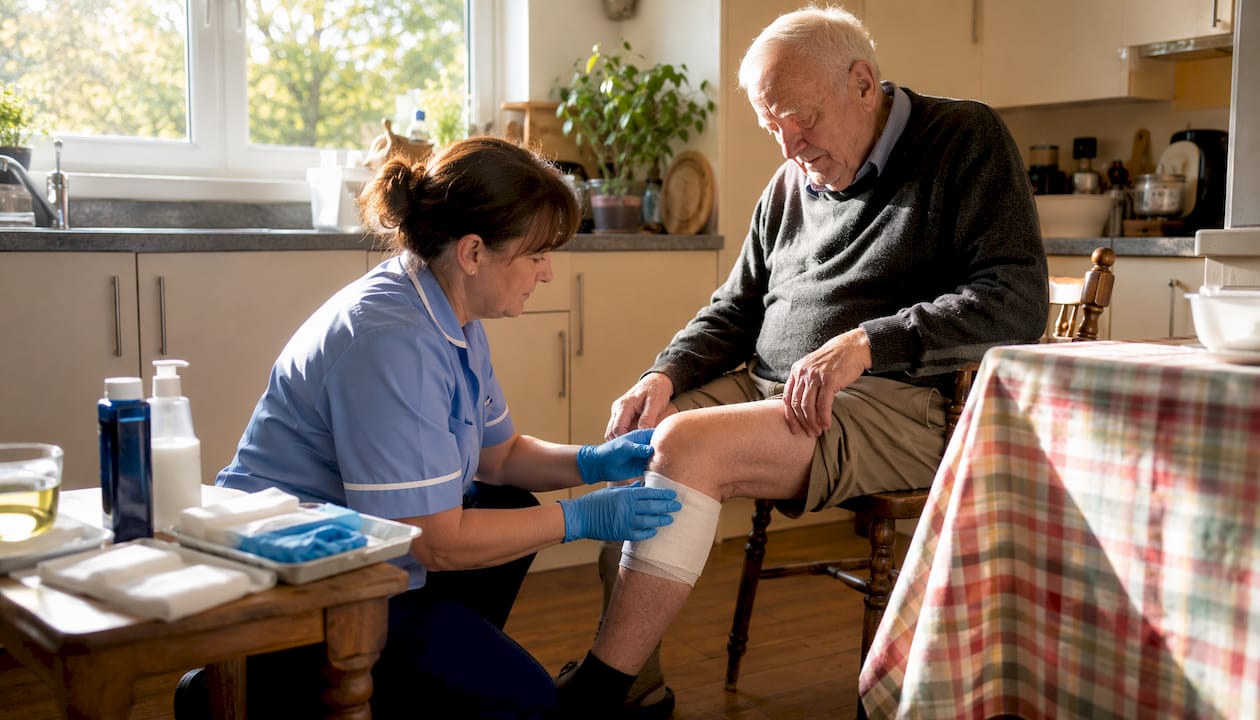
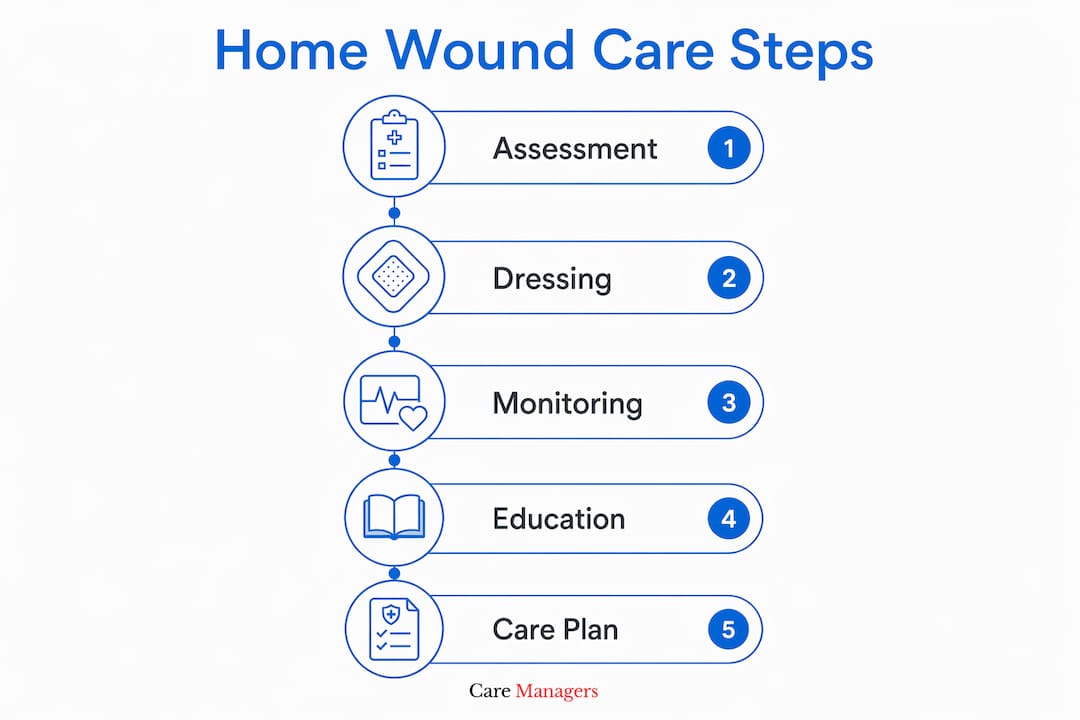
Wound care at home means clinician-led assessment, dressing management, infection monitoring, and a documented care plan delivered in your own home or a nearby community clinic. In the UK, this is provided by NHS district or community nurses, tissue viability teams, or regulated private providers such as Caremanagers. If you have just been discharged from hospital, follow your discharge instructions, expect a phone call from your district nursing team within a few days, and contact your GP if that call does not arrive. If you need private support sooner, contact a CQC-registered provider directly.
Table of Contents
- What does a home wound-care visit actually include?
- How do you arrange wound care at home in the UK?
- When is home wound care appropriate, and what are the red flags?
- What can families safely do at home, and what should you avoid?
- Common wound types managed at home and what matters most for each
- How do you choose a private home wound-care provider?
- Caremanagers can support your wound care at home
- Key takeaways
- A note on why this matters
- Useful sources
- FAQ
What does a home wound-care visit actually include?
A clinical visit covers far more than a simple dressing change. The nurse will assess wound size, the amount and smell of any discharge, the condition of the surrounding skin, and your pain level. That assessment drives every decision that follows, because no single dressing type is clinically superior across all wound types; good outcomes depend on thorough assessment and the right first-line intervention for your specific wound.
Clinical tasks you can expect:
- Wound cleansing and dressing selection or change
- Infection checks and escalation to tissue viability, vascular, or podiatry teams when needed
- Compression therapy for venous leg ulcers, where clinically indicated, which reduces healing time when applied correctly
- Pain review and medication liaison with your GP
- Full documentation of each visit in a written care plan
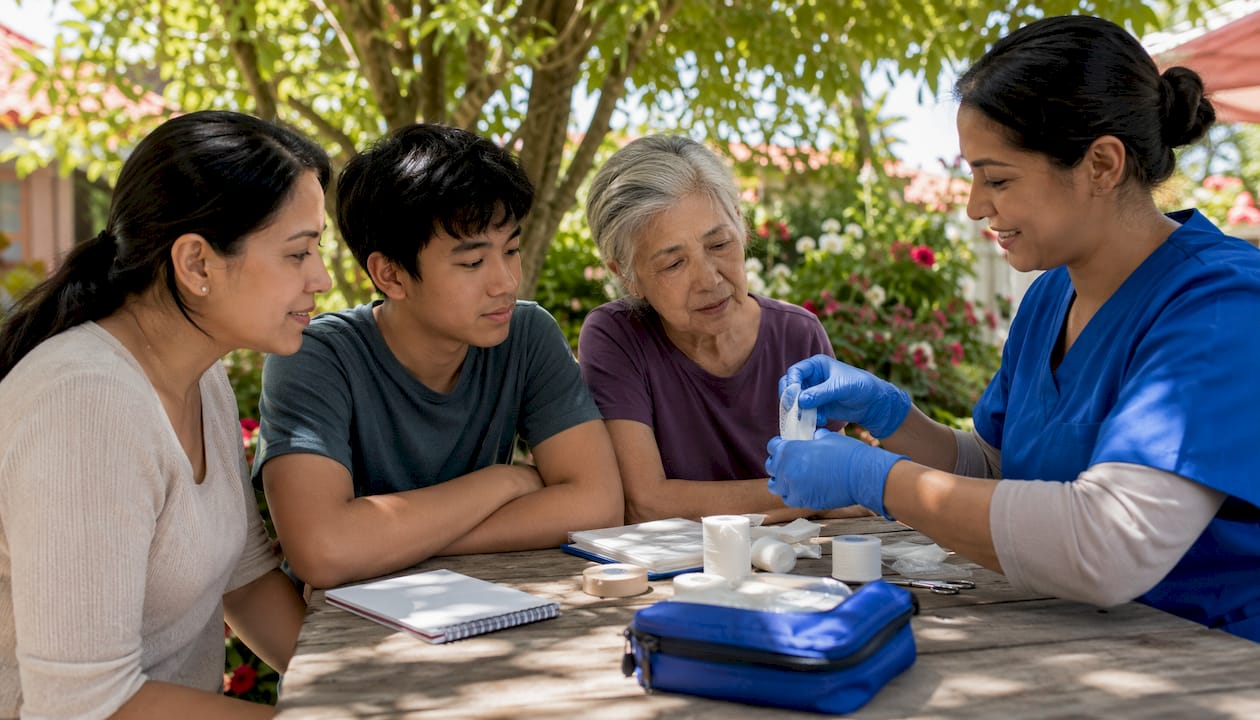
Beyond the clinical work, the nurse will also explain self-care steps to you and your family, arrange ongoing dressing supplies, set visit frequency, and coordinate with your GP or hospital team. District nursing teams document dressing type, change frequency, and escalation steps in a formal care plan; keep that document safe and accessible at home.
How do you arrange wound care at home in the UK?
The most common starting point is a hospital discharge referral, where the ward team notifies local district nurses before you leave. You should receive a phone call within days of discharge to arrange your first visit or clinic appointment. A GP referral or a direct self-referral to community nursing services are the other main NHS routes.
Not every patient receives a home visit. Clinicians prefer clinic-based appointments for patients who are mobile, because clinics offer specialist equipment and a controlled environment that reduces secondary infection risk. Home visits are typically reserved for people who are housebound or have significant mobility difficulties.
What to have ready when you make first contact:
- Your hospital discharge letter and any wound summary
- A list of current medications
- Your GP’s name and surgery
- Your mobility status (can you travel to a clinic?)
- Any supplies already provided by the ward
Understanding your hospital discharge care plan before you leave the ward makes this first conversation much smoother.
When is home wound care appropriate, and what are the red flags?
Home management suits routine post-surgical dressing changes for housebound patients, stable chronic leg ulcers, and simple wounds that need supervised dressing changes but no specialist equipment. A clinic or hospital setting is preferable when the wound requires complex dressings, specialist equipment, or multi-disciplinary team input.
Red flags that need immediate attention:
- Spreading redness or warmth around the wound
- Increasing pain rather than gradual improvement
- A fever or feeling generally unwell
- Offensive or unusual discharge
- A sudden increase in wound size or depth
- Any sign of sepsis (confusion, rapid breathing, mottled skin)
If you notice any of these, call NHS 111 or, in an emergency, dial 999. Do not wait for the next scheduled nurse visit.
What can families safely do at home, and what should you avoid?
Families play a real role in wound healing, even without clinical training. The key is staying within the agreed care plan and reporting changes promptly.
Safe actions:
- Keep the wound covered using the dressing your nurse has agreed
- Wash your hands thoroughly before and after any contact with the wound area
- Record dressing dates, any changes in appearance, and symptoms in a wound diary
- Support good nutrition and gentle mobility, both of which aid tissue repair
- Attend all scheduled nurse visits and clinic appointments
What to avoid:
- Applying unprescribed creams or alternative dressings, which can irritate healing skin and restart treatment
- Soaking the wound in a bath unless your nurse has specifically advised it
- Rubbing the wound area when drying after a shower
- Ignoring worrying changes and waiting to mention them at the next visit
Pro Tip: A simple wound diary, noting the date, dressing type, and a brief description of the wound’s appearance, materially improves clinical handover. A photograph taken in consistent lighting is even more useful: it lets your nurse spot changes between visits and speeds up decisions about escalation or dressing changes. Bradford District Care NHS Foundation Trust’s patient diary and care plan is a practical template you can download and use.
Common wound types managed at home and what matters most for each
- Surgical wounds: Keep the area clean and dry for the first 48 hours. Showering is preferable to bathing. Do not apply soap, body lotion, or talcum powder directly onto the healing wound. Stitches or clips are usually removed between 5 and 21 days after treatment, depending on the wound.
- Venous leg ulcers: Compression therapy is the central intervention where clinically indicated. Monitor for increased swelling or changes in discharge, and attend compression bandaging appointments consistently.
- Diabetic foot wounds: Blood-sugar control is as important as the dressing itself. Podiatry involvement is standard, and any sign of infection warrants rapid escalation given the risk of serious complications.
- Pressure ulcers: Regular repositioning and pressure redistribution are non-negotiable alongside dressing care. Nutritional support, particularly adequate protein intake, supports tissue repair.
- Acute traumatic wounds: Early assessment for wound closure, infection risk, and tetanus status (if relevant) should happen promptly. Risk factors such as diabetes, poor circulation, and smoking increase the chance of complications and should be flagged to the assessing clinician.
For families managing venous leg ulcers at home, understanding the role of compression hosiery between clinical appointments can help you ask better questions at your next visit.
How do you choose a private home wound-care provider?
Community wound care in the UK shows wide variation due to workforce pressures and local resource limits. That makes your choice of private provider more consequential than it might appear.
Questions to ask when you call:
- What clinical qualifications do the staff who perform wound assessments hold?
- Who writes and reviews the care plan, and how often is it updated?
- How do you escalate to NHS tissue viability or GP teams if the wound deteriorates?
- What is the visit frequency, and how are dressing supplies arranged?
- Can you provide evidence of CQC registration?
Credentials to verify before you commit:
- CQC registration (check the CQC website directly)
- DBS checks for all carers who will enter your home
- Documented links to tissue viability nurses or district nursing services
- Clear clinical governance arrangements and insurance
Red flags to walk away from:
- Inability or reluctance to confirm CQC registration
- Vague answers about escalation procedures or staff training
- Pressure to sign a long contract before a care plan has been agreed
The home care assessment process a reputable provider follows should be transparent and documented from the first conversation.
Caremanagers can support your wound care at home
Recovering from surgery or managing a chronic wound at home is easier when you have reliable, coordinated support in place from day one. Caremanagers provides hospital discharge care and short-term post-operative support across South Wales and England, working alongside NHS district nurses, tissue viability teams, and GPs to keep your care joined up.
Whether you need a visiting carer to assist with dressing changes under clinical supervision, or live-in support during a longer recovery, Caremanagers coordinates the practical and personal care around your clinical appointments. The team can help you prepare your home for nurse visits, manage supplies, and keep a clear record of your wound’s progress. To discuss short-term wound support or arrange an assessment, visit the home care services page or call the team directly.
Key takeaways
Home wound care in the UK is clinician-led, documented, and most effective when families understand both the clinical pathway and their own safe role in supporting recovery.
| Point | Details |
|---|---|
| Wound care at home is clinician-led | Assessment, dressing management, and a documented care plan are delivered by qualified nurses, not family members alone. |
| NHS referral routes are clear | Hospital discharge or GP referral triggers district nurse contact; expect a call within days of leaving hospital. |
| Red flags need immediate action | Spreading redness, fever, offensive discharge, or signs of sepsis require NHS 111 or 999, not a wait for the next visit. |
| Families have a safe, defined role | Keep the wound covered, maintain a wound diary, support nutrition, and never apply unprescribed products. |
| Caremanagers offers coordinated support | Visiting and live-in care across South Wales and England, working alongside NHS teams from hospital discharge onwards. |
A note on why this matters
Wound healing at home is not just a clinical process. It happens in someone’s bedroom, their living room, the place where they feel most themselves. That context matters enormously to how care should be delivered.
What concerns me most, when I look at how families navigate this, is the gap between discharge and the first nurse visit. That window, sometimes two or three days, is when anxiety peaks and mistakes are most likely. A wound diary started on the day of discharge, and a clear list of red flags on the fridge, can make that gap far safer. Families who know what to watch for and who to call are not just passive recipients of care; they are active partners in recovery. That partnership, between a regulated provider, NHS clinical teams, and an informed family, is what good home wound care actually looks like.
Useful sources
The following authoritative UK sources underpin the referral pathways, dressing evidence, and self-care guidance in this article:
- How to care for your wound at home, King’s College Hospital NHS Foundation Trust — practical discharge guidance on dressings, showering, and stitches
- Discharge home, NHS Cheshire and Merseyside — referral pathways and timing expectations after hospital discharge
- Looking after your wound, Bradford District Care NHS Foundation Trust — care plan documentation and clinic versus home visit triage
- Self-Care for Wounds: patient diary and care plan, Bradford District Care NHS Foundation Trust — wound diary template and self-management guidance
- Wound care management for patients, family members and carers, Wirral Community Health and Care NHS Foundation Trust — risk factors and wound-covering rationale
- How to prepare for an appointment: wound care, Leeds Community Healthcare — what to avoid and how to prepare for clinical visits
- What factors influence community wound care in the UK? BMJ Open — evidence on dressing choice, compression therapy, and variation in community practice
- Home Care Wound Care: guidance for patients and informal carers, EWMA — international guidance on daily skin inspection, nutrition, and recognising complications
FAQ
What is wound care at home in the UK?
Wound care at home is clinician-led assessment, dressing management, and infection monitoring delivered in a patient’s home by NHS district nurses, tissue viability teams, or regulated private providers such as Caremanagers.
How soon will a district nurse visit after hospital discharge?
Ward teams notify local district nurses before discharge; patients typically receive a phone call and a visit arranged within a few days of leaving hospital.
What are the signs of infection in a wound at home?
Watch for spreading redness, increasing pain, fever, offensive discharge, or a sudden increase in wound size. Call NHS 111 promptly or dial 999 if you suspect sepsis.
Can families change dressings themselves at home?
Families can maintain an agreed dressing and support hygiene, but should not apply unprescribed creams or switch dressing types without clinician approval, as this can delay healing.
How do I check whether a private wound-care provider is properly regulated?
Verify CQC registration directly on the CQC website, confirm DBS checks for all carers, and ask specifically how the provider escalates to NHS tissue viability or GP teams if a wound deteriorates.