
Table of Contents
- Quick Comparison of Top Home Care Agencies
- Care Managers: Tailored Care with Faith-Based Options
- Helping Hands: Nurse-Led Care for Complex Needs
- Home Instead: Relationship-Centred Care and Dementia Support
- How to Find Private Home Care for Overnight Support
- Choosing a Home Care Agency Checklist
- What to Look for in a Regulated Home Care Provider
- Conclusion
Last Updated: August 18, 2026
Quick Comparison of Top Home Care Agencies
Finding the right home care agency in Wales means balancing professional standards, service breadth, and genuine person-centred care. The best home care agencies Wales offers today span nurse-led complex care, faith-based support, and relationship-focused companionship models, each with distinct strengths for different needs.
This guide covers the leading home care agencies Wales residents turn to when independence, dignity, and tailored support matter most. We’ve analysed regulated providers across South Wales and the wider region, examining their specialisms, service models, and what sets them apart when families face the critical decision of bringing professional care into the home.
| Agency | Service Model | Specialisms | Best For |
|---|---|---|---|
| Care Managers | Tailored plans, faith-based options | Dementia, respite, live-in care | Families seeking personalised, values-aligned care |
| Helping Hands | Nurse-led, flexible visiting/live-in | Complex care, Parkinson’s, stroke | Complex medical needs and professional oversight |
| Home Instead | Relationship-centred, minimum 1-hour visits | Dementia, companionship, personal care | Those prioritising continuity and emotional connection |
| Abacare | Hourly domiciliary care, respite services | Dementia, reablement, domestic support | Central and North Wales residents needing flexibility |
| Cera Care | Digital-first, nurse-led, overnight care | Complex care, wound management, PEG feeds | Families wanting real-time updates and specialist nursing |
Care Managers: Tailored Care with Faith-Based Options
Care Managers stands out for its commitment to tailored care plans designed around individual routines and preferences, combined with genuine faith-based home care options, a rarity among major providers. This approach matters because it acknowledges that care isn’t one-size-fits-all; it’s personal, rooted in someone’s values, and shaped by how they’ve lived their life.
The service spans home care, live-in care, and supported living across South Wales and England. What distinguishes Care Managers is the emphasis on consistent staffing and reliable communication, two things families repeatedly cite as missing from previous care arrangements. When someone’s had three different carers in a year, continuity becomes non-negotiable.
Their faith-based care provision addresses a genuine gap. For families where religious observance, dietary practices, and spiritual support form part of daily life, matching a carer who understands those needs transforms the experience from functional support to genuinely respectful care. This isn’t tokenistic; it’s built into how they match carers to clients.
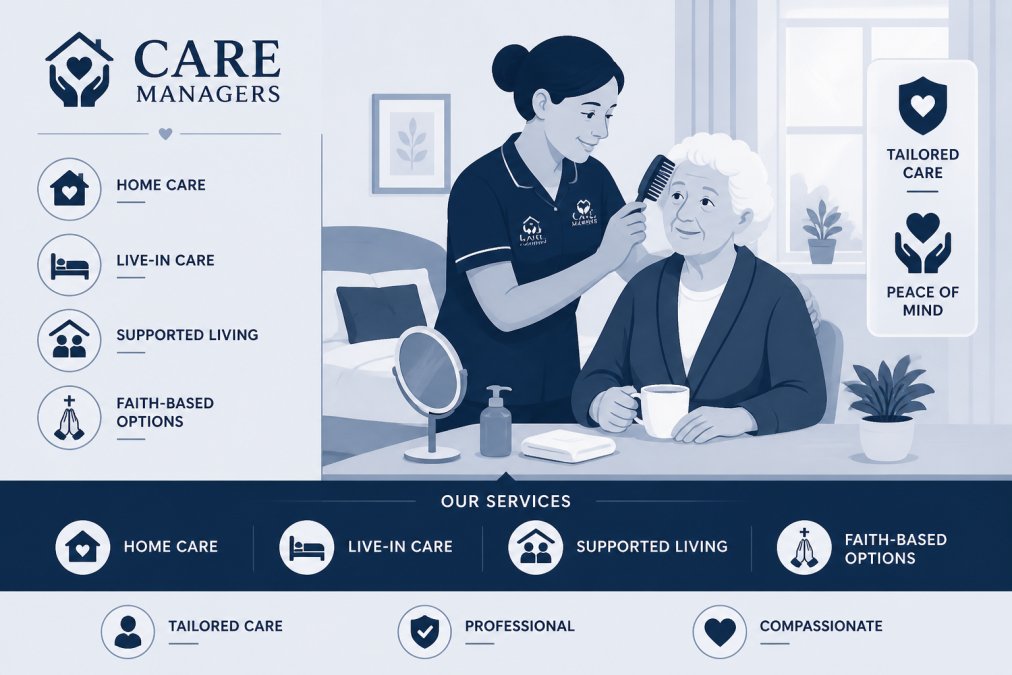
Professional staffing solutions extend beyond individual care, they support families and organisations needing reliable, vetted staff. Ongoing quality assurance underpins everything, meaning care plans aren’t set once and forgotten; they evolve with the person’s changing needs.
Ask prospective agencies how they handle staff continuity. A good answer includes named key workers, handover protocols, and what happens when someone’s usual carer is unavailable. Care Managers’ emphasis on consistent staffing is precisely what prevents the “three different carers in a year” problem.
Helping Hands: Nurse-Led Care for Complex Needs
Helping Hands brings over 30 years of experience and a nurse-led model that matters when complexity enters the picture. Their specialisms include dementia, Parkinson’s disease, and stroke recovery, conditions where professional oversight isn’t optional, it’s essential.
The service spans visiting care from 30 minutes weekly through to full-time live-in arrangements. Directly employing all carers (rather than franchising or using agency staff) creates consistency in training, values, and accountability. That employment model is significant; it means carers have stability, investment in their development, and clear reporting lines.
For complex care packages, Helping Hands’ nurse-led approach provides something many traditional home care agencies cannot: clinical oversight integrated into daily support. This is particularly valuable for post-hospital discharge, wound care, or conditions requiring medication management and symptom monitoring.
Transparent pricing with no hidden fees removes one source of anxiety. A flat travel charge per visit is stated upfront, which helps families budget accurately. Regulated by Care Inspectorate Wales, their service area spans all of Wales, though physical branch concentration means some areas have more local presence than others.
Travel charges add to hourly rates. If you’re in a rural area or the agency’s nearest branch is distant, calculate total cost including travel before committing. Some agencies bundle travel differently, compare the all-in cost, not just the hourly rate.
Home Instead: Relationship-Centred Care and Dementia Support
Home Instead’s model rests on a simple but powerful principle: genuine relationships between carer and client reduce anxiety, improve outcomes, and make care feel less transactional. They enforce a minimum one-hour visit duration specifically to build that connection rather than rushing through tasks.
Care Professionals are matched based on hobbies, personality, and interests, not just availability. This intentional matching means the person receiving care isn’t just getting help; they’re getting someone they can talk to, someone who shares interests, someone who becomes part of their routine. For dementia support especially, this consistency and emotional safety matter profoundly.
Their award-winning status reflects what families report: high satisfaction, low staff turnover, and carers who go beyond the care plan. Branches in Swansea, Newport, and Cardiff have been recognised as top providers, which matters if you’re in those areas and value local accountability.
Flexibility in care plans means adjustments happen when needs change, not on some arbitrary review schedule. Regulated by Care Inspectorate Wales, they offer companionship, personal care, home help, and specialist dementia support.
The minimum one-hour visit may not suit everyone, if you need 30-minute calls or brief medication support, this agency’s model isn’t the fit.
Individuals with dementia or those who’ve struggled with multiple carers. Home Instead’s relationship-centred model and minimum visit duration create the continuity and emotional connection that prevents the “revolving door of carers” problem.
How to Find Private Home Care for Overnight Support
Overnight support, whether sleeping-in care, waking-night care, or live-in arrangements, requires a different assessment than daytime visiting care. The intimacy is greater, the stakes higher, and the trust required is absolute.
Start by clarifying what "overnight" actually means for your situation. Sleeping-in care means the carer is present overnight but asleep unless called; waking-night care means they’re actively available; live-in care is full-time residential presence. Each has different cost implications and staffing requirements.
Vetting matters more with overnight care. Ask directly: How are carers selected? What checks are in place? What’s the process if something goes wrong? Reputable agencies can articulate this clearly. They’ll discuss Disclosure and Barring Service checks, references, training in safeguarding, and what happens if a carer breaches trust.
Ask about continuity. With overnight care, rotating staff every few weeks creates instability. A good agency either commits to consistent staffing or has a clear protocol for transitions. Some families prefer the same person every night; others need flexibility. Clarify what’s possible before committing.
Trial periods matter. Can you start with a few nights to see if the match works? Good agencies build this in because they know overnight care is intimate and requires genuine compatibility. If an agency pushes for immediate full-time commitment without trial, that’s a red flag.
Location and availability affect costs significantly. Rural areas may have limited providers or higher travel charges. Urban areas offer more choice but potentially higher rates due to demand. Check whether the agency covers your postcode and whether they have immediate availability or a waiting list.
Choosing a Home Care Agency Checklist
Selecting a home care agency is one of the most important decisions a family makes. This checklist helps you move beyond websites and marketing claims to what actually matters: does this agency understand your loved one, can they deliver consistent support, and will they communicate honestly when things are difficult?

Before You Contact:
Call us for Free Assessment Today →
- Define your actual needs (hours, specialisms, location, overnight vs. visiting, faith-based requirements)
- Establish your budget range and confirm whether you’re funding privately or through local authority support
- List any specific requirements (language, cultural understanding, experience with particular conditions)
- Identify 3-5 agencies to approach (not just one)
During Initial Contact:
- Ask about their regulatory status (Care Inspectorate Wales registration)
- Confirm they serve your postcode and have availability
- Request a free initial assessment or consultation
- Ask about their approach to continuity of staff
- Clarify pricing (hourly rates, travel charges, cancellation fees, any hidden costs)
Assessment and Matching:
- Does the agency ask detailed questions about your loved one’s routines, preferences, and personality?
- Do they discuss how they’ll match a carer, or do they assign whoever’s available?
- What happens if the match doesn’t work? Can you request a change?
- How do they handle emergency cover if the regular carer is ill?
Safeguarding and Accountability:
- What checks do they conduct on carers (DBS, references, training)?
- How do they handle complaints or concerns?
- What’s their process if something goes wrong?
- Do they have insurance and what does it cover?
- How do they ensure person-centred care, not just task completion?
Communication and Flexibility:
- How will you stay informed about your loved one’s day?
- Can they adjust the care plan if needs change?
- What’s their notice period for changes or cancellations?
- How responsive are they to questions or concerns?
Trial and Commitment:
- Can you start with a trial period (a few days or weeks)?
- What’s the minimum contract length?
- Is there flexibility if circumstances change?
What to Look for in a Regulated Home Care Provider
Regulation by Care Inspectorate Wales is non-negotiable. It means the agency meets minimum standards for safeguarding, staff training, record-keeping, and person-centred care. But regulation is a floor, not a ceiling, all the agencies in this guide are regulated, yet they differ significantly in quality and approach.
Beyond registration, look for these markers of genuine quality:
Staff Training and Development. Carers should have formal training in safeguarding, person-centred care, and any specialist areas (dementia, complex care, specific conditions). Ask what induction training looks like and whether ongoing development is offered. Agencies investing in staff training tend to have better retention and more confident carers.
Continuity and Matching. The best agencies don’t just send whoever’s available; they actively match carers to clients based on personality, interests, and needs. Ask how they approach this. If they can’t articulate a matching process, that’s telling.
Communication Systems. How do families stay informed? Real-time updates via an app, phone calls, written notes? Transparency about daily activities, any concerns, and changes matters enormously. Families who report feeling "kept in the dark" often switched agencies because of poor communication, not poor care.
Safeguarding Processes. Ask about their safeguarding policy. How do they handle concerns? What’s the escalation process? Good agencies have clear protocols and aren’t defensive about questions.
Flexibility with Changing Needs. Care plans should evolve as the person’s situation changes. An agency that reviews care regularly and adjusts without bureaucratic delay is responsive. One that requires formal review meetings every six months, even when needs are changing monthly, is inflexible.
Honest Limitations. A good agency knows what they can and can’t do. If your loved one needs specialist nursing care and they only provide personal care, they’ll say so rather than overpromising. Honesty about scope prevents disappointment later.
Review Scores and Feedback. Check independent review sites (homecare.co.uk, local authority feedback) for what families actually report. Look for patterns: do people consistently mention the same carer, or high turnover? Do they praise communication or complain about being ignored?
Regulation ensures baseline standards, but genuine quality lives in the details: how carers are matched, how communication happens, how the agency responds when things go wrong, and whether they’re genuinely person-centred or just task-focused.
Conclusion
The best home care agencies Wales offers share common threads: professional standards, genuine person-centred care, and honest communication about what they can deliver. Care Managers exemplifies this approach through tailored care plans designed around individual routines and preferences, combined with unique faith-based options and professional staffing solutions backed by ongoing quality assurance.
Your choice depends on your specific situation, whether you need complex nursing oversight, relationship-centred companionship, specialist dementia support, or flexible domiciliary care. What matters universally is finding an agency that treats your loved one with dignity, communicates reliably, and maintains the continuity that prevents the exhausting cycle of multiple carers.
To find the right fit, use the checklist above, speak to multiple agencies, and ask the hard questions about continuity, communication, and safeguarding. Care Managers’ emphasis on tailored support and reliable communication addresses the concerns families raise most often.
Care Inspectorate Wales regulation and standards
Ready to explore how personalised home care can work for your family? Book a call with Care Managers to discuss your loved one’s needs, and discover how tailored care plans and consistent, dignified support can help them stay safe and independent at home. We offer compassionate and professional home care, live-in care, and supported living services across South Wales and England.
Frequently Asked Questions
What is the difference between domiciliary care and live-in care?
Domiciliary care (visiting care) involves a carer visiting your home for set hours, typically for personal care, household support, or companionship. Live-in care provides 24-hour support with a carer residing in your home. Live-in care suits those needing round-the-clock assistance or complex support, whilst visiting care works for individuals requiring help with specific tasks or times of day. Both are regulated by Care Inspectorate Wales and tailored to your needs.
How do I check the quality rating of a home care agency in Wales?
Care Inspectorate Wales (CIW) is the regulatory body that inspects and rates home care agencies. You can search for an agency's inspection report on the CIW website, which details their ratings across key areas such as safety, care quality, and leadership. Independent review sites like homecare.co.uk also gather family feedback. Always request recent inspection reports from your chosen agency and ask about their compliance with CIW standards before committing.
Are there faith-based home care options available?
Yes, faith-based home care services are available in Wales. Some agencies, including Care Managers, specialise in matching carers who understand and respect specific religious practices, dietary requirements, and prayer times. If faith-aligned care is important to your family, mention this during your initial assessment so the agency can arrange a carer whose values and knowledge align with your beliefs and cultural needs.
How can I arrange overnight support for an elderly relative?
Overnight support is available through waking night care (carer awake throughout the night) or sleeping night care (carer sleeping on-site, available if needed). Contact agencies offering live-in care or night-care services and discuss your relative's specific needs during an assessment. The agency will arrange a tailored plan, including whether they need assistance during the night or simply a presence for safety and peace of mind. Pricing and availability vary by provider.
This article was written using GrandRanker