Table of Contents
- What Faith Based Home Care Services Actually Involve
- How Faith Based Home Care Differs from Standard Home Care
- Core Services: From Personal Care to Spiritual Support
- How to Choose a Home Care Agency That Matches Your Faith
- CQC Registered Home Care Providers: What Registration Means
- Vetting, Training, and Continuity of Care
- Supporting Independence and Dignity at Home
- Conclusion
Last Updated: August 16, 2026
What Faith Based Home Care Services Actually Involve
Faith based home care services integrate spiritual values, religious observances, and compassionate support into daily routines for individuals who want their faith to remain central to their lives at home. A care assistant might help someone prepare for prayer, accompany them to religious services, respect dietary practices rooted in faith, or understand the spiritual dimension of their client’s identity.
Standard home care addresses physical needs: medication management, meal preparation, mobility support, hygiene assistance. Faith based home care does all of that, but adds intentional recognition of what gives a person’s life meaning and purpose. For many older adults and individuals with chronic conditions, that spiritual anchor is as essential to wellbeing as any medical intervention.
At Care Managers, we’ve found that when care aligns with someone’s deepest values, their sense of dignity and independence strengthens. They’re not just receiving care; they’re living according to their beliefs.
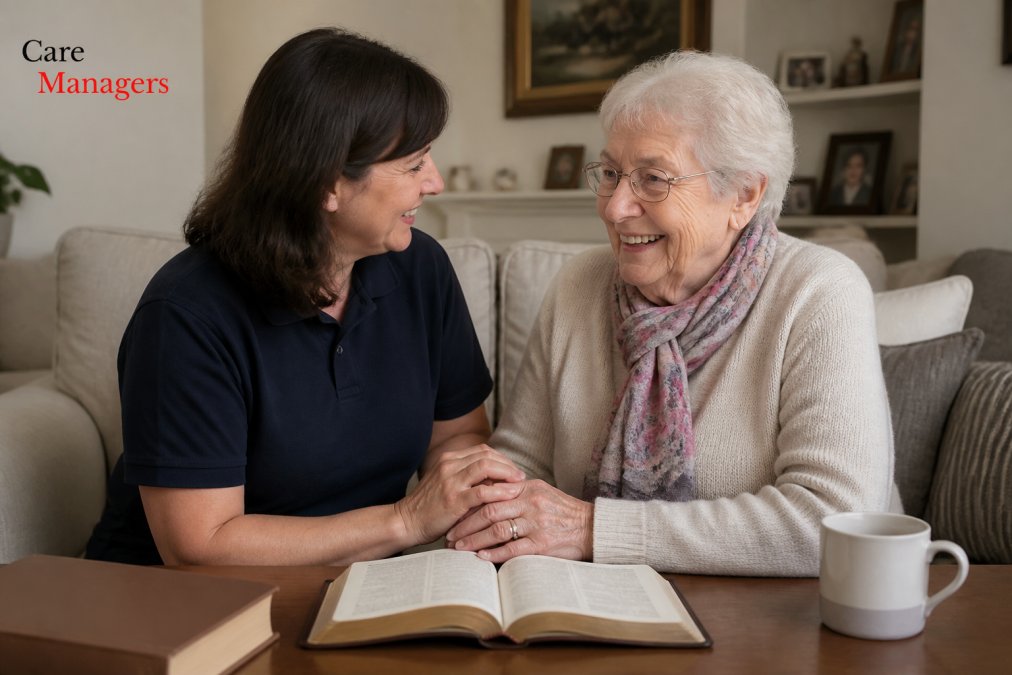
In practice, a Muslim client receives support from a carer who understands prayer times and can assist with ablutions. A Christian client has a carer who accompanies them to church services and respects their morning Bible reading routine. A Jewish client receives meals prepared according to dietary law by someone trained in kashrut practices. These are central to how the person experiences their own autonomy and wellbeing.
Faith based home care works best when the care provider has been specifically vetted for religious awareness and alignment. Your carer needs genuine familiarity with your faith’s practices and the maturity to support them without judgment or impatience.
How Faith Based Home Care Differs from Standard Home Care
Standard home care is task-focused. A carer arrives, completes assigned activities, personal hygiene, medication administration, meal preparation, and departs. The relationship is professional and bounded.
Faith based home care reframes this relationship. The carer is trained to understand that your spiritual practices aren’t optional extras; they’re foundational to who you are and how you want to live. That shift in perspective changes everything about the interaction.
Consider medication management. In standard home care, a carer ensures you take your pills at the right time. In faith based home care, a carer might say, "Your medication is due. Would you like to take it before or after your prayer time?" They’re working within your rhythm, not imposing a schedule.
The same applies to meal preparation. Faith based care means understanding that your dietary laws or religious practices shape what you can eat. A carer trained in faith based home care knows the difference between "vegetarian" and "kosher," between "no pork" and the full scope of halal requirements.
Companionship takes on deeper meaning too. A carer might join you for prayer, discuss scripture that’s meaningful to you, or help you stay connected to your faith community. The carer becomes a bridge to the spiritual life you want to maintain.
The core difference isn’t the tasks performed, it’s the mindset. Standard care asks, “What does this person need?” Faith based care asks, “Who is this person, and how do their beliefs shape what they need?”
Core Services: From Personal Care to Spiritual Support
Daily Living Assistance
Daily living assistance in a faith based context means supporting your independence in ways that respect your values and routines. This includes personal hygiene, dressing, toileting, and mobility support, delivered with awareness of your spiritual needs.
Some individuals have specific practices around cleanliness tied to their faith. A carer trained in faith based home care understands these practices are meaningful rituals that connect the person to their beliefs, not quirks to manage.
Meal preparation becomes culturally informed. A carer prepares meals that align with your dietary laws or religious practices, understanding fasting periods, feast days, and the spiritual significance of certain foods. For someone observing Ramadan, Lent, or other religious practices involving food, this informed support is invaluable.
Mobility support and assistance with activities of daily living are delivered with particular attention to dignity. A carer trained in person-centered, faith-based support works collaboratively, asking how you prefer things done and respecting your autonomy.

Dementia and Alzheimer’s Support
Dementia and Alzheimer’s care in a faith based framework recognises that cognitive decline doesn’t erase a person’s spiritual identity. Even as memory fades, many individuals retain deep emotional connections to their faith, prayer, hymns, or religious rituals.
This might mean playing familiar hymns or spiritual music that soothes and orients the person, or keeping prayer beads, scripture, or religious objects within easy reach. A person who can no longer remember their children’s names might still respond to a prayer they’ve known for sixty years. A carer sensitive to this reality protects access to these spiritual anchors, understanding them as essential to wellbeing.
Dementia care also means supporting the family’s spiritual needs. Spouses and adult children often experience profound spiritual questions as they watch a loved one decline. A faith based care provider recognises this and approaches the family with compassion.
Medication Management and Health Support
Medication management in faith based home care is more nuanced than standard care. Some individuals have religious practices around fasting or specific times of day when they prefer to take medication. Some have concerns about medication ingredients based on their faith. A carer trained in faith based care listens to these concerns respectfully and works collaboratively with the person and their healthcare provider.
Health support also means understanding how someone’s faith shapes their approach to illness and recovery. A faith based carer supports an integrated view where medical treatment and spiritual practice work together.
This is particularly important for end-of-life care. Many people want their final days to include spiritual practices, prayer, visits from clergy, and time for family rituals. A carer trained in faith based home care understands that these elements are central to a dignified death according to the person’s deepest values.
If a care provider dismisses or minimises your spiritual practices, or makes you feel rushed through prayer or religious observance, that’s a red flag. You deserve a carer who genuinely respects your faith.
How to Choose a Home Care Agency That Matches Your Faith
Choosing a home care agency requires evaluating whether the organisation understands and respects your spiritual life. You’re not just assessing clinical competence; you’re evaluating alignment with your deepest values.
Start by asking direct questions about faith based care training. Does the agency have specific training modules for carers working with clients of different faiths? Can they articulate what that training covers? A vague answer, "We’re culturally sensitive", isn’t enough. You need specifics about prayer times, dietary laws, and religious observances.
Ask about carer vetting and matching. How do they assess whether a carer is genuinely aligned with your faith values? Some agencies ask carers about their own faith background and willingness to support clients’ spiritual practices. Others ensure they match clients with carers who share their faith or have specific training in it.
Request references from clients with similar faith backgrounds. Ask those references specific questions: Did the carer understand your spiritual needs? Did they support your religious practices without judgment? Would you trust them with your loved one again?
Assess the agency’s communication systems. For faith based care, updates might include whether the carer supported your loved one’s attendance at religious services, or how they handled a particular spiritual concern. Can the agency provide this level of detail?
Call us for Free Assessment Today →
Look at the agency’s own values and mission. Do they articulate a commitment to faith based care, or is it something they’ve added on request? Organisations that have built faith based care into their core mission tend to approach it with more depth and intentionality.
[Faith based home care](/medication-administration-best-practice-uk-care/) agencies work best for individuals and families who want their care provider to understand and actively support their spiritual practices, not merely tolerate them. If your faith is central to your identity and daily life, faith based care is essential to feeling respected and supported at home.
CQC Registered Home Care Providers: What Registration Means
The Care Quality Commission (CQC) regulates home care services in England. If you’re receiving home care from an agency, that agency should be registered with the CQC.
CQC registration means the agency has undergone inspection and been assessed against five key domains: safety, effectiveness, responsiveness, caring, and well-led. Each domain receives a rating: Outstanding, Good, Requires Improvement, or Inadequate.
However, CQC registration doesn’t specifically validate faith based care practices. The CQC assesses whether an agency is safe, well-managed, and responsive to client needs. That’s where your own vetting comes in.
When evaluating a CQC registered home care provider for faith based care, use the registration as a baseline, not as complete assurance. Check their CQC rating, read inspection reports, and look at what inspectors noted about how the agency responds to individual client needs.
Care Managers operates with rigorous quality assurance standards alongside our faith based care approach. We understand that registration and compliance are necessary but not sufficient; genuine, compassionate, faith-aligned care requires ongoing commitment beyond regulatory minimums.
Vetting, Training, and Continuity of Care
The quality of faith based home care depends almost entirely on the carers delivering it. That’s why vetting and training are non-negotiable.
A strong vetting process should include background checks (DBS clearance), reference checks from previous employers, and assessment of the carer’s understanding of and commitment to person-centered care. For faith based care specifically, vetting should include questions about the carer’s own faith background, their experience supporting clients with different beliefs, and their willingness to support spiritual practices even if those practices aren’t their own.
Training should go beyond generic safeguarding and health and safety modules. Carers should receive training specific to the faiths they’ll be supporting. This might include understanding prayer times and practices, dietary requirements, religious observances, and how to communicate respectfully about spiritual matters.
Continuity of care is crucial. Many families report that the biggest frustration with home care is having a different carer arrive each week. For faith based care, this is especially problematic. A carer needs time to understand your spiritual practices, your preferences, and your values.
When choosing an agency, ask directly about their approach to continuity. Do they aim to assign the same carer to each client? What’s their staff retention rate? What happens if your regular carer is unavailable?
Before committing to an agency, ask to meet your assigned carer before the first care visit. A brief conversation can tell you whether this person understands your faith and is genuinely committed to supporting it.
Supporting Independence and Dignity at Home
The ultimate goal of faith based home care is to help you remain independent and dignified in your own home, living according to your values. That requires a carer who sees you as a whole person.
Independence means having choice and control over your daily life. It means your carer asks how you prefer things done, respects your routines, and doesn’t impose their own way of doing things. For someone whose faith structures their day, independence means your carer supports those rhythms.
Dignity means being treated with respect for your autonomy, your body, and your values. It means your carer doesn’t infantilise you or make you feel like a burden. It means they support your spiritual practices without judgment or impatience, understanding that your faith is a core part of who you are.
Many older adults worry that accepting home care means losing control. A carer who understands dignity and person-centered care works to prevent this. They support your independence by enabling you to do what you can do, assisting only where needed, and always explaining what they’re doing and why.
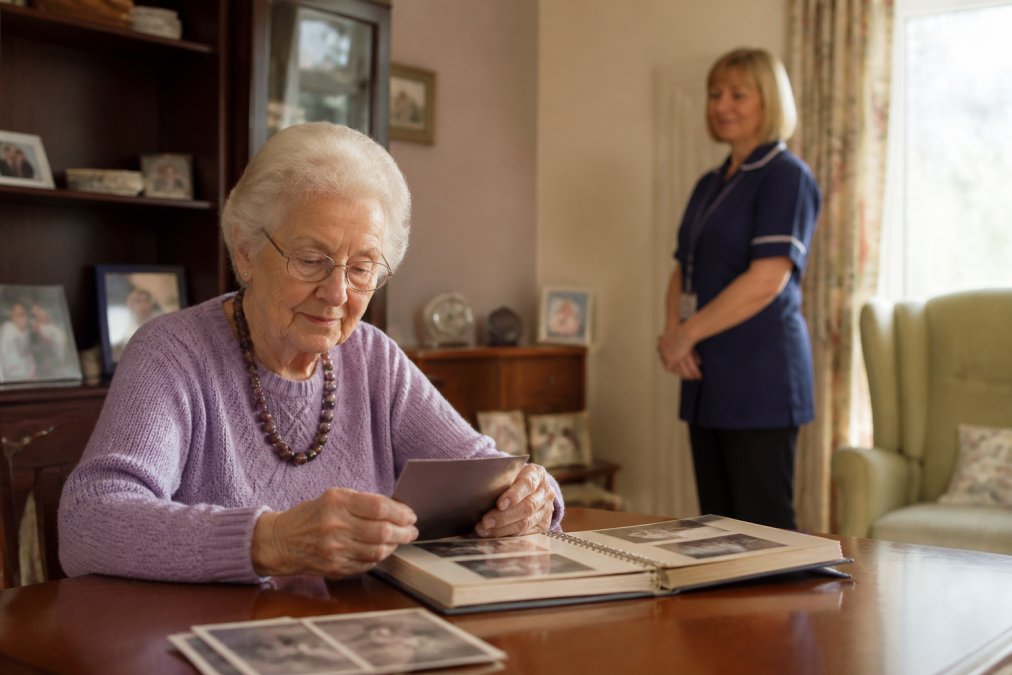
For individuals with dementia or advanced illness, independence looks different. It might mean supporting choices within a narrower range, or recognising that independence includes the right to refuse care. A carer trained in person-centered, faith-based care understands these nuances.
Spiritual independence is part of this too. Many older adults want to continue attending religious services, participating in faith community activities, or maintaining spiritual practices. A carer who supports this independence might help with transport to church, facilitate video calls with clergy, or create quiet space for prayer and reflection.
Choosing faith based home care is about finding a partner who understands that your spiritual life is woven through everything. You deserve a carer and an agency that recognises this, that supports your independence and dignity, and that approaches your faith with genuine respect.
Care Managers provides exactly this kind of support. Our faith-based home care options are built on tailored care plans that recognise your spiritual needs alongside your physical ones. We match carers with care for your values, provide ongoing quality assurance, and maintain reliable communication so you’re never left wondering whether your loved one’s spiritual life is being honoured. Our commitment to person-centered, compassionate care means you can trust that independence and dignity remain at the heart of everything we do. Explore our faith-based home care services and discover how we support families across South Wales and England in keeping their loved ones safe, supported, and living according to their deepest values.
Frequently Asked Questions
What are faith-based home care services?
Faith-based home care services provide personal care, daily living assistance, medication management, and companionship with an explicit commitment to honouring your spiritual beliefs and practices. Carers are trained to support prayer routines, religious dietary requirements, church attendance, and other practices central to your faith. These services recognise that wellbeing includes spiritual fulfilment, not just physical health. They're available as visiting care, live-in care, or respite care arrangements.
How do I choose a home care agency that respects my religious traditions?
Ask prospective agencies whether they offer caregiver matching based on shared faith or religious awareness. Request details about their vetting process and carer training in religious sensitivity. Discuss your specific needs: prayer times, dietary practices, worship attendance, and end-of-life preferences. Check whether they're CQC registered and ask for references from clients with similar faith backgrounds. A quality provider will listen carefully and be honest about what they can deliver.
Are CQC registered home care providers required for faith-based services?
CQC registration is a mark of quality assurance and regulatory compliance for home care providers in England. Whilst not every faith-based care service may be CQC registered, registration demonstrates that a provider meets Health and Social Care Act standards, undergoes regular inspections, and maintains safeguarding protocols. When choosing a home care agency, CQC registration provides an additional layer of confidence, though you should also verify a provider's specific experience with your faith community.
What happens if a care worker isn't a good fit for my family?
Reliable providers maintain continuity through careful matching and ongoing support. If a carer isn't working out, communicate this promptly to your care coordinator. Quality agencies prioritise consistency but will arrange a replacement if needed rather than leaving you without support. Ask potential providers upfront how they handle this situation and what their process is for resolving mismatches. Consistent, dignified care depends on both good matching and responsive management when adjustments are needed.
This article was written using GrandRanker