TL;DR:
- An emergency home care plan for the elderly is a structured record that ensures quick, appropriate help during crises. It should include personal details, medication lists, emergency contacts, legal documents, and clear procedures, updated every six months. Sharing this plan widely helps carers respond confidently and reduces delays in urgent and hospital discharge care.
An emergency home care plan for the elderly is a structured, accessible record that ensures quick, appropriate care during unexpected health or safety crises. Without one, families face critical delays at the worst possible moments. The NHS and leading care organisations recommend every elderly person living at home has a formal contingency care plan in place before a crisis occurs. This guide walks you through exactly what to include, how to organise it, and how to keep it working when it matters most.
What must an emergency home care plan for elderly relatives include?
A comprehensive emergency plan covers six essential categories of information. Miss any one of them and the plan loses its value in a real emergency.
The six categories are:
- Personal and medical details: full name, date of birth, NHS number, and current diagnoses
- Medication list: every medication with dosage, frequency, and prescribing GP
- Emergency contacts: GP surgery, specialist consultants, family members, and trusted neighbours
- Allergies and medical history: known drug reactions, previous surgeries, and relevant conditions
- Legal documents: lasting power of attorney, advance care directives, and DNACPR decisions
- Emergency procedures: clear “if this happens, do this” instructions for common scenarios such as falls, confusion, or chest pain
Each category serves a specific purpose. A carer arriving in a crisis cannot guess at medication doses or legal authority. Written, accessible records remove that guesswork entirely.
Medical details and medication records
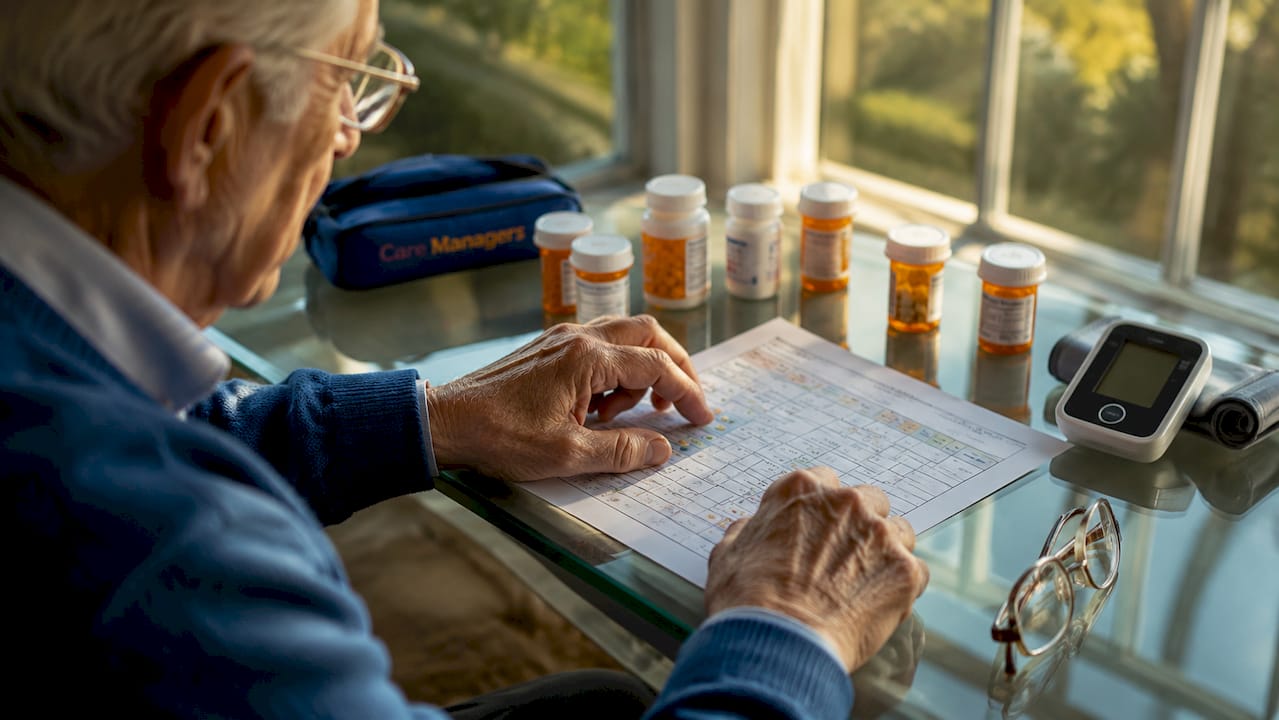
The medication list deserves particular care. Write the generic drug name alongside the brand name, since different pharmacies may use either. Include the time of day each dose is taken, and note what happens if a dose is missed. A carer unfamiliar with your relative’s routine needs this level of detail to act safely.
Legal documents and advance directives
Lasting power of attorney documents confirm who has legal authority to make decisions on your relative’s behalf. Advance care directives record your relative’s own wishes about treatment. Both documents must be stored with the plan, not locked away in a solicitor’s office. A care professional cannot act on documents they cannot access.
Pro Tip: Photograph every legal document and save the images to a secure cloud folder shared with two trusted family members. Physical copies can be lost in a house fire or flood.
How to organise and share the plan for real accessibility
A plan stored in a drawer no one knows about is no plan at all. Accessibility is critical to effective emergency response. The plan must be findable by anyone who might need it.
Store copies in the following places:
- A clearly labelled folder on the kitchen worktop or by the front door
- A digital copy in a shared cloud folder accessible to family members
- A copy held by the GP surgery
- A copy given to any regular care provider or district nurse
- A copy with a trusted neighbour who has a spare key
Sharing the plan with neighbours is the step most families skip. Yet a neighbour is often the first person on the scene after a fall or sudden illness. Giving them a copy costs nothing and could save a life.
Setting triggers for action
Defined response triggers prevent delays when something goes wrong. A trigger is a specific, observable event that prompts a named person to take a named action. For example: “If Mum does not answer her morning call by 9:30 AM, my sister calls the neighbour. If the neighbour gets no answer, she calls 999.”
Without written triggers, family members hesitate. They wonder whether they are overreacting. Written protocols remove that hesitation entirely.
Reviewing and updating the plan
Best practice requires a minimum review every 6 months, and immediately after any significant health change, hospital admission, or change in living circumstances. A medication list from 18 months ago may be dangerously out of date. Set a calendar reminder for every april and october to review every section.
Pro Tip: Attach a “last reviewed” date to the front page of the plan. Anyone picking it up in a crisis can immediately see whether the information is current.
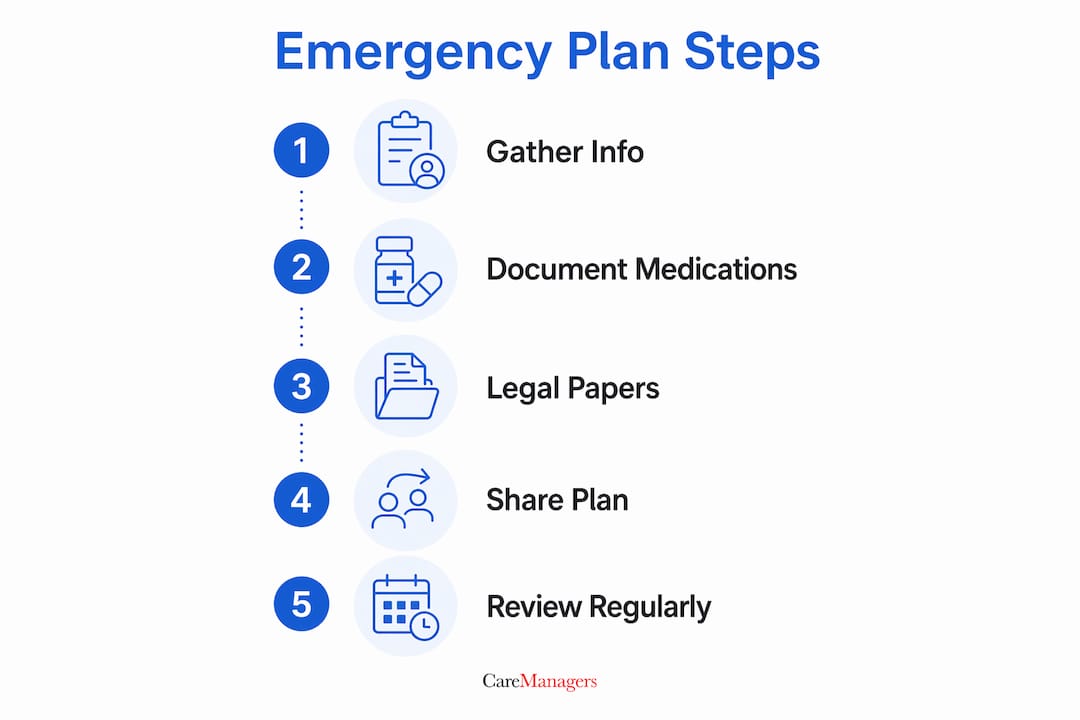
How to create a personalised plan step by step
Personalising the plan to your relative’s specific needs is what makes it genuinely useful. A generic template helps, but a carer needs to understand your relative as an individual.
Follow these steps:
- Assess health and mobility. List every current diagnosis, mobility aid, and communication need. Note whether your relative uses a hearing aid, walking frame, or stairlift.
- List required services and equipment. Include the names and contact numbers of district nurses, physiotherapists, and any equipment suppliers such as wheelchair or hospital bed providers.
- Plan for specific emergencies. Write separate procedures for the most likely scenarios: a fall, a sudden deterioration, a medication error, and a mental health crisis.
- Establish a check-in system. Daily calls or visits detect problems early and serve as the primary trigger mechanism for emergency action.
- Document daily routines and preferences. Note when your relative wakes, eats, and takes medication. Record food preferences, religious observances, and communication preferences. This information helps an unfamiliar carer provide continuity.
- Coordinate with healthcare professionals. Share a draft of the plan with the GP and any specialist involved in your relative’s care. Ask them to flag anything missing or inaccurate.
Home safety is part of the plan, not a separate concern. Clear pathways and accessible emergency numbers reduce the risk of falls and ensure your relative can call for help independently. A personal alarm or pendant device is worth including in the equipment list.
Understanding what a care plan means for your family before you start writing saves time and ensures you cover the right ground from the beginning.
Common mistakes families make with emergency care plans
Most plans fail not because they are poorly written, but because of predictable, avoidable errors.
- Outdated medication lists. A medication change that is not recorded in the plan creates a serious risk of error. Update the list at every GP appointment.
- Plans that no one can find. A plan filed in a home office or stored on a personal laptop that only one family member can access defeats its purpose entirely.
- Missing triggers. Families often omit clear action thresholds, which leads to delayed emergency response. Defining what “something is wrong” looks like in concrete, observable terms is the most important thing you can do.
- Rigid plans that cannot adapt. Your relative’s needs will change. A plan written for someone who was mobile two years ago may not reflect their current reality.
- Neglecting home safety. The plan should include a home safety checklist: working smoke alarms, clear floor paths, a charged mobile phone within reach, and emergency numbers displayed visibly.
“Emergency care plans should be living documents that allow carers to confidently step in by understanding unique habits and preferences, not rigid rulebooks.” — Stirling Carers Centre
This distinction matters. The goal is not a bureaucratic document. The goal is a tool that gives any carer, whether a family member or a professional, the confidence to act correctly and kindly.
How emergency plans support arranging urgent and live-in care
A well-prepared plan dramatically reduces the time and stress involved in arranging home care quickly for an elderly relative. When a crisis hits, care providers need specific information fast. A completed plan delivers it immediately.
Pre-prepared documentation expedites urgent care arrangements and supports smoother transitions after hospital stays. Families who have a plan in place before a hospital admission are significantly better placed to arrange appropriate discharge care without delay.
The plan supports different types of care arrangements:
- Urgent visiting care: short-notice daily visits from a professional carer to cover personal care, medication, and meals
- Live-in care after hospital discharge: a full-time carer who moves into the home to provide continuous support during recovery
- Respite care: temporary cover that allows family carers to rest, with the plan ensuring continuity for the incoming carer
- Specialist dementia care: carers who understand cognitive needs, supported by a plan that documents communication preferences and daily routines
The table below shows how plan documentation maps to care type requirements.
| Care type | Key plan information needed |
|---|---|
| Urgent visiting care | Medication list, daily routine, emergency contacts |
| Live-in care | Full personal history, preferences, legal documents |
| Hospital discharge care | Discharge summary, GP contacts, equipment needs |
| Dementia care | Communication preferences, triggers, daily structure |
Families exploring live-in care after hospital discharge find that a completed emergency plan halves the time spent briefing incoming carers. Every detail already written down is one less conversation to have under pressure.
Key takeaways
An effective emergency home care plan for elderly relatives requires six categories of documented information, clear response triggers, broad sharing with trusted contacts, and a minimum six-monthly review.
| Point | Details |
|---|---|
| Six essential categories | Include personal details, medications, contacts, allergies, legal documents, and emergency procedures. |
| Accessibility over storage | Share copies with the GP, neighbours, care providers, and family members, not just one location. |
| Defined triggers | Write specific observable events that prompt named people to take named actions without hesitation. |
| Regular review cycle | Review every 6 months and immediately after any health change or hospital admission. |
| Plan as a living document | Update routines, preferences, and contacts as your relative’s needs change over time. |
Why I think most families wait too long to write this plan
The families I speak with most often start thinking about an emergency care plan after a crisis, not before. A fall, a sudden hospitalisation, a diagnosis. That is understandable. Nobody wants to sit down and plan for the worst while their relative is well. But that is precisely when the plan is easiest to write and most likely to be accurate.
The other mistake I see regularly is treating the plan as a one-off task. Families spend a Sunday afternoon writing it, feel relieved, and then never look at it again. Two years later, the medication list is wrong, the GP has changed, and the neighbour listed as an emergency contact has moved away. The plan exists, but it no longer works.
What I have found genuinely useful is framing the plan as a conversation rather than a form. Sit with your relative and ask them directly: what do you want to happen if you have a fall? Who do you want called first? What would make you feel safe? Involving them in the process produces a better plan and, more importantly, gives them a sense of control over their own care. That matters enormously to people who worry about losing independence.
The plans that actually work in emergencies are the ones that have been tested. Walk through a scenario with your family once a year. Does everyone know where the plan is? Does everyone know their role? That rehearsal takes 20 minutes and is worth more than any template.
— Emm
How Caremanagers supports families with emergency home care
When a crisis arrives, having a plan is only half the picture. You also need a care provider who can respond quickly, understand your relative’s needs from the first visit, and deliver care that feels familiar rather than clinical.
Caremanagers specialises in home care services across South Wales and England, including urgent care arrangements, live-in support, hospital discharge care, and dementia care. Their team works directly from your emergency plan documentation, which means less time spent explaining and more time spent caring. Families who need to choose the right home care quickly will find Caremanagers’ personalised approach reduces both delay and distress. Contact Caremanagers to discuss your relative’s needs and get the right support in place before the next crisis arrives.
FAQ
What is an emergency home care plan for the elderly?
An emergency home care plan is a written record of an elderly person’s medical details, medication, contacts, and emergency procedures. It ensures any carer or responder can act quickly and correctly during a health or safety crisis.
How often should an elderly care emergency plan be reviewed?
Best practice recommends reviewing the plan every 6 months and immediately after any significant health change, hospital admission, or change in living circumstances.
Who should receive a copy of the emergency care plan?
Copies should go to the GP surgery, any regular care provider, trusted neighbours with a spare key, and all immediate family members. A plan that only one person can access is not effective in a crisis.
How does an emergency plan help with arranging care after a hospital stay?
A completed plan gives care providers the documentation they need immediately, which reduces delays in arranging live-in care or visiting care after discharge. Families with a plan in place arrange post-hospital support significantly faster than those without one.
Can I include my relative’s personal preferences in the plan?
Yes, and you should. Documenting daily routines, food preferences, communication needs, and personal habits helps unfamiliar carers provide continuity of care and treat your relative with dignity from the very first visit.