TL;DR:
- Shared care distributes caregiving responsibilities among family, friends, and professionals to support elderly individuals sustainably. Regular review, clear planning, and combining formal and informal support help prevent breakdowns and reduce family stress.
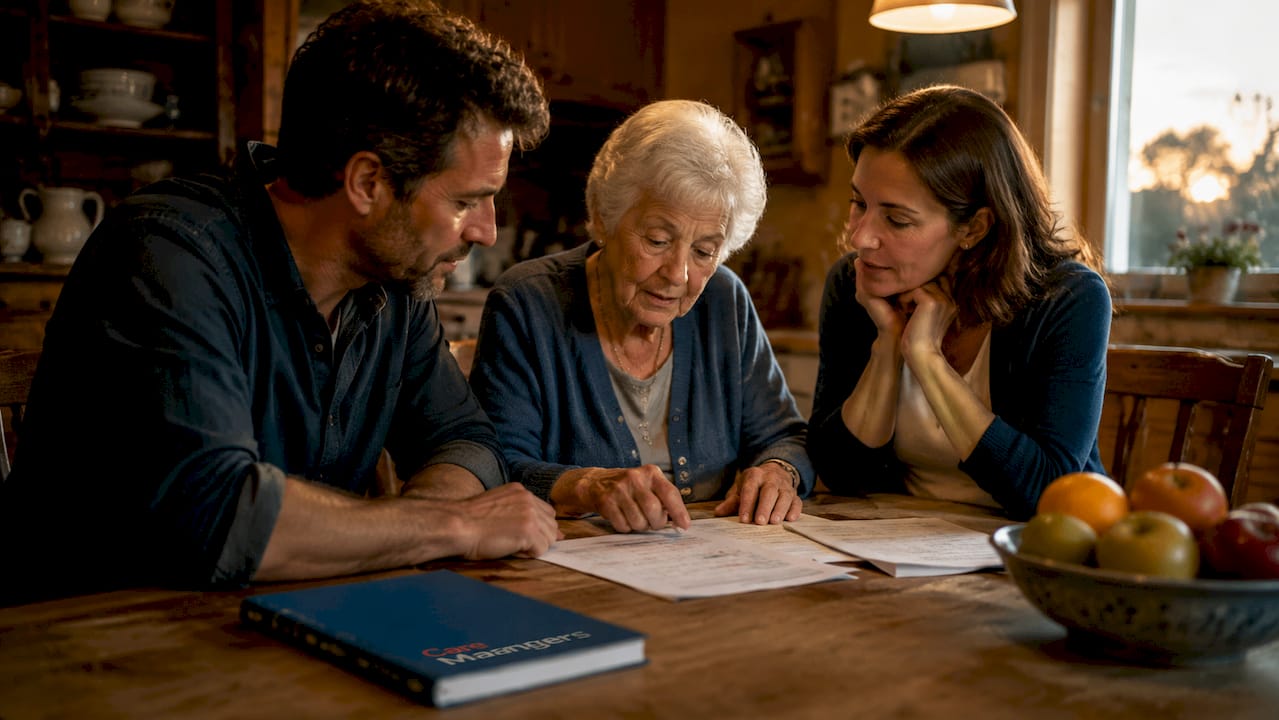
A shared care arrangement is a collaborative caregiving model that distributes responsibilities among family members, friends, and professional services to support elderly individuals consistently and sustainably. Unlike a single carer carrying all duties alone, this approach spreads the load across a coordinated team. Formal versions include Shared Lives schemes registered with the Care Quality Commission (CQC) and Homeshare programmes. Informal versions rely on family rotas and community networks. Understanding what a shared care arrangement involves helps families and care professionals build plans that protect both the person receiving care and those providing it.
What is a shared care arrangement and what models exist?
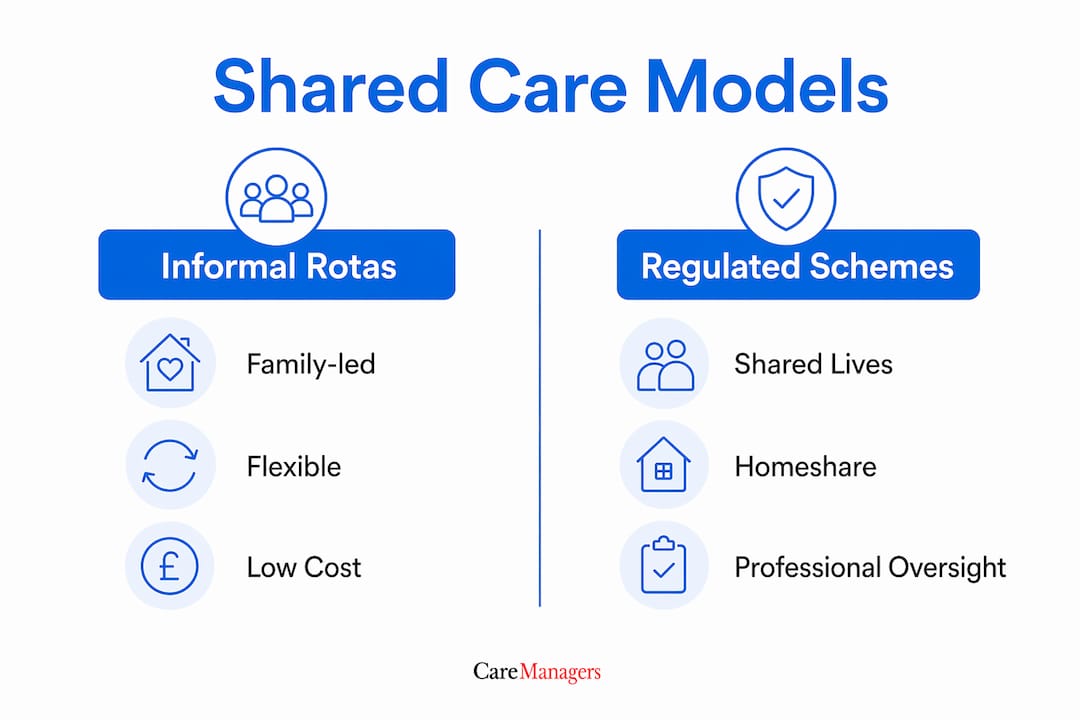
Shared care arrangements distribute caregiving roles among family, friends, and professionals to provide consistent and sustainable elder support. Three main models cover the majority of situations families encounter in England and Wales.

Informal family and friend rotas
The most common starting point is an informal rota. Family members agree on who covers which days, tasks, or overnight stays. This works well when several relatives live nearby and can share practical duties such as cooking, medication reminders, and hospital appointments. The arrangement costs nothing to set up, but it depends entirely on goodwill and availability.
Shared Lives schemes
Shared Lives schemes place an elderly person in a carer’s own home, either long term or for short respite stays. Coordinators match the individual carefully with a carer based on personality, interests, and care needs. The CQC regulates all Shared Lives schemes, which means safeguarding standards, regular reviews, and clear agreements are built into the model from the start. This formal structure makes it one of the most reliable options for families who need regulated oversight.
Homeshare programmes
Homeshare pairs an older person with a younger householder who provides around 10 hours of practical help per week, including cooking and shopping, in exchange for low-cost accommodation. Homeshare costs run at approximately £4–£6 per day, making it significantly more affordable than most formal care options. The focus is on companionship and low-level support rather than clinical care.
| Model | Oversight | Typical cost | Best suited to |
|---|---|---|---|
| Family rota | Informal, self-managed | Minimal | Families with nearby relatives |
| Shared Lives | CQC-regulated | Funded or means-tested | Those needing a home environment |
| Homeshare | Professional framework | £4–£6 per day | Low-level needs, companionship |
How do shared care arrangements benefit elderly individuals and families?
Shared care prevents carer burnout by distributing responsibilities across a team rather than placing them on one person. That single shift in thinking changes the entire experience of caring for an elderly relative.
The benefits extend well beyond reducing stress:
- Sustainability. Multiple carers mean that if one person falls ill or needs a break, care continues without crisis.
- Companionship. Homeshare and Shared Lives both provide regular social contact, which reduces isolation and supports mental wellbeing.
- Independence. Shared care supports ageing in place by providing just enough help to keep someone safe at home without moving them into residential care.
- Safety. More eyes on a person’s daily life means changes in health or behaviour are noticed sooner.
- Reduced family conflict. Clear role division prevents resentment building between relatives who feel they carry an unequal share.
Person-centred planning sits at the heart of effective shared care. When the arrangement is built around the individual’s preferences, routines, and goals rather than around what is convenient for carers, outcomes improve noticeably.
Pro Tip: Review the arrangement every three months rather than waiting for a problem to arise. Small adjustments made early prevent large crises later.
What professional and informal supports are integrated in shared care?
Effective shared care transcends single disease management and requires coordinated input from geriatric, primary care, and voluntary sectors. In practice, this means several types of support working alongside each other.
- Professional nursing and home care visits. Registered carers provide clinical tasks such as wound care, medication management, and personal care. These visits anchor the plan with professional accountability.
- Planned respite care. Short residential breaks or in-home respite give family carers dedicated recovery time. Caremanagers offers respite care services that slot directly into an existing shared care plan without disrupting the person’s routine.
- Voluntary and community-based support. Befriending services, community transport, and day centres fill social and practical gaps that professional services do not cover.
- Coordinated care plans. A written care plan shared among all parties records who does what, when, and how to escalate concerns. This document is the communication backbone of the whole arrangement.
The table below shows how these layers combine in a typical week.
| Support type | Who provides it | Frequency |
|---|---|---|
| Personal care and medication | Professional carer | Daily |
| Meals and companionship | Family member or Homesharer | Daily or alternate days |
| Social activities | Voluntary sector | Weekly |
| Clinical review | GP or community nurse | Monthly or as needed |
How can families implement and adapt shared care arrangements?
Flexible, evolving rotas outperform rigid fixed schedules because care needs change over time. A rota that worked six months ago may no longer reflect the person’s current health or the family’s capacity.
Practical steps for setting up a shared care plan:
- Start with an honest audit. List every care task required, then map who is realistically available to cover each one. Do not assign tasks based on guilt or obligation.
- Agree on communication channels. A shared group message thread or a simple notebook in the person’s home keeps everyone informed without requiring formal meetings.
- Build in overlap. Schedule brief handover periods so the incoming carer knows what happened during the previous shift.
- Document changes. When the person’s needs shift, update the written plan immediately rather than relying on verbal updates.
- Plan for absences. Identify a backup carer for every role before an absence happens, not during one.
Anticipatory planning is the single most important factor in preventing care fragmentation. Families who map out “what if” scenarios before a crisis occurs keep the arrangement stable far longer than those who react to problems as they arise.
Pro Tip: Assign one person as the care coordinator. This person does not need to do the most caring. They need to hold the overview, spot gaps, and keep communication flowing.
What are the limitations and safeguards in shared care arrangements?
Homeshare is a preventative arrangement, not a replacement for personal or clinical care. Families sometimes mistake its affordability for a complete care solution, which creates risk when needs escalate beyond what a Homesharer can safely provide.
Key limitations to understand:
- Homeshare cannot substitute for registered nursing or personal care.
- Informal family rotas have no regulatory oversight, which means safeguarding depends entirely on the family’s own awareness.
- Shared Lives placements require careful matching and may not be available in every area.
Safeguards within formal models address many of these gaps. Homeshare operates as a supported arrangement with professional oversight rather than a standard tenancy. Mediation protocols exist to handle mismatches safely, and written agreements set clear boundaries for both parties from the outset.
A shared care arrangement is only as safe as its weakest oversight point. Formal schemes like Shared Lives and Homeshare build safeguarding into their structure. Informal family rotas require families to create that structure themselves, with clear agreements, named contacts, and a plan for escalation.
Episodic crisis management is the most common failure in shared care. The best plans are anticipatory, integrative, and prevent fragmentation of informal caregiving before it occurs.
Key takeaways
A shared care arrangement works best when it combines regulated formal support with flexible informal networks, all anchored by a written plan that evolves with the person’s needs.
| Point | Details |
|---|---|
| Three core models | Informal rotas, Shared Lives (CQC-regulated), and Homeshare each suit different needs and budgets. |
| Burnout prevention | Distributing care across a team protects family carers and keeps the arrangement sustainable long term. |
| Homeshare has limits | At £4–£6 per day, Homeshare suits low-level needs but cannot replace clinical or personal care. |
| Anticipatory planning wins | Mapping “what if” scenarios before a crisis prevents care fragmentation and keeps the plan stable. |
| Written plans are non-negotiable | A shared care plan documenting roles, contacts, and escalation steps is the communication backbone of the whole arrangement. |
Why shared care is harder to get right than it looks
Families often come to shared care with the best intentions and still find it unravels within a few months. I have seen this pattern repeatedly, and the cause is almost always the same. The arrangement was built around what was convenient rather than what the person actually needed.
The models themselves are sound. Shared Lives is genuinely well-designed, and Homeshare fills a gap that formal services rarely touch. The problem is that families treat the initial setup as the finish line. Care needs shift, family circumstances change, and the rota that made sense in january looks nothing like what is needed by june.
The families who make shared care work long term treat it as a living plan. They review it regularly, they name a coordinator, and they do not wait for a crisis to prompt a conversation. They also know when to bring in professional support rather than stretching informal carers past their capacity. That combination of structure and flexibility is what separates arrangements that last from those that collapse under pressure.
If you are starting to explore shared care for an elderly relative, my strongest advice is this: write the plan down before you need it, not after.
— Emm
How Caremanagers supports families with shared care
Caremanagers provides professional home care services across South Wales and England that integrate directly with existing shared care arrangements. Whether your family already has an informal rota in place or you are building a plan from scratch, Caremanagers can provide the professional layer that keeps the arrangement safe and sustainable.
Services including dementia care, respite care, and hospital discharge support are designed to complement what family and community carers already provide. Caremanagers works with families to choose the right care for each stage of an elderly person’s needs, so the arrangement grows with them rather than breaking under pressure. Contact Caremanagers to discuss how professional home care can strengthen your shared care plan.
FAQ
What is a shared care arrangement for elderly people?
A shared care arrangement distributes caregiving responsibilities among family members, friends, and professional services to provide consistent, sustainable support for an elderly individual. It includes both informal family rotas and formal models such as Shared Lives and Homeshare.
How does a Shared Lives scheme differ from Homeshare?
Shared Lives places an elderly person in a carer’s regulated home environment with CQC oversight, while Homeshare pairs an older person with a householder who provides around 10 hours of practical help per week at approximately £4–£6 per day.
Can Homeshare replace professional care?
Homeshare is a preventative, supplemental arrangement suited to low-level needs and companionship. It cannot replace registered nursing, personal care, or clinical services.
How do families prevent shared care arrangements from breaking down?
Anticipatory planning, a named care coordinator, and a written plan that is reviewed regularly are the most effective ways to prevent care fragmentation and keep the arrangement stable as needs change.
Does shared care reduce carer burnout?
Shared care directly reduces burnout by distributing responsibilities across a team rather than concentrating them on one person, integrating professional nursing with informal social support for a sustainable long-term approach.