TL;DR:
- A specialist dementia home carer provides person-centered support with advanced skills in behavioral management and early health change detection.
- Verifying competencies, training credentials, and conducting structured interviews are essential to ensure quality care.
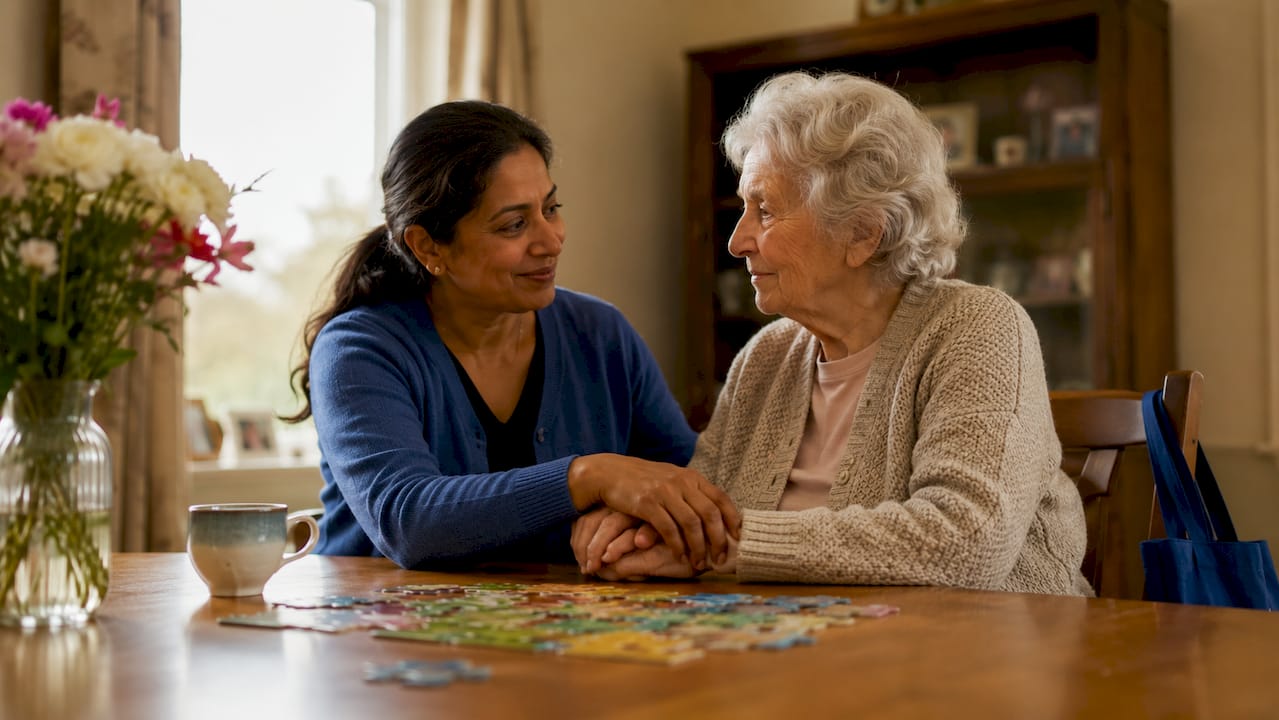
A specialist dementia home carer is a trained professional who provides dedicated, person-centred support to people living with dementia in their own home. Choosing the right person is one of the most consequential decisions a family can make. General home care covers practical tasks, but specialist dementia care addresses cognitive decline, behavioural changes, and emotional needs in ways that standard carers are not trained to handle. This guide explains what separates a specialist from a generalist, which qualities matter most, how to verify credentials, and how to avoid the mistakes that families most commonly make.
What distinguishes a specialist dementia home carer from a general home carer?
A specialist dementia carer holds knowledge and skills that go well beyond routine personal care. General home carers assist with washing, dressing, and meal preparation. Specialist dementia carers do all of that, and they also understand how dementia affects memory, perception, communication, and behaviour at each stage of the condition.

The most significant difference lies in behavioural understanding. A specialist carer recognises that agitation, withdrawal, or repetitive speech are often expressions of unmet physical or emotional needs, not simply symptoms to manage. Early detection of subtle changes in mood or behaviour is a primary quality marker that separates expert dementia care from general support. A carer who spots that your relative has become quieter than usual may be identifying the early signs of a urinary tract infection or dehydration before any other symptom appears.
Specialist carers also apply therapeutic communication techniques adapted to cognitive impairment. They use short sentences, calm tones, and non-verbal cues rather than correcting or arguing with the person in their care. This approach reduces distress and preserves dignity. Non-restraint care standards are fundamental to best practice, regardless of how severe behavioural symptoms become.
The role of a specialist dementia carer also extends into multidisciplinary collaboration. Multidisciplinary teams involving nurses, therapists, dietitians, and psychologists produce more responsive care plans. A specialist carer acts as the daily eyes and ears within that team, reporting changes that allow other professionals to adjust treatment promptly.
Key differences at a glance:
- Behavioural expertise: Interprets changed behaviour as communication rather than a problem to suppress
- Therapeutic communication: Uses dementia-specific language strategies to reduce confusion and distress
- Early symptom detection: Identifies physical health changes before they escalate
- Non-restraint approach: Manages even severe behavioural episodes without physical intervention
- Multidisciplinary input: Feeds observations into wider care teams to keep plans current
Pro Tip: Ask any prospective carer what they would do if your relative became very distressed at bedtime. A specialist will describe de-escalation techniques and environmental adjustments. A generalist will often describe calling a supervisor.
Which specialist qualities should you look for in a dementia home carer?
The most reliable indicator of a quality dementia carer is competency-based training, not attendance-based certificates. Only 20% of content taught in standard attendance-based dementia training is successfully applied in day-to-day care. That figure means a carer can sit through a full training day and still lack the practical skills to handle a real situation. Competency-based frameworks, such as the Certified Dementia Practitioner (CDP®) credential, require carers to demonstrate knowledge in action, not simply confirm they attended a session.
When evaluating a carer, look for these qualities in order of priority:
- Dementia-specific competency training. The CDP® framework covers dementia disease processes, therapeutic communication, and person-centred care principles. Ask whether training was assessed or simply attended.
- Emotional intelligence and patience. Dementia care requires the ability to remain calm when a person is frightened, confused, or resistant. Observe how a carer speaks about past clients and whether they describe behaviour with empathy or frustration.
- Behavioural insight. A skilled carer can explain what triggers distress for a specific individual and how they adapt their approach accordingly.
- Communication strategies. Look for knowledge of validation therapy, reminiscence techniques, and sensory approaches that reduce anxiety without medication.
- Observational reporting. The carer should be able to describe how they document and communicate changes in health or mood to family members and care coordinators.
Non-pharmacological approaches and personalised care strategies are more effective than medication alone for managing dementia symptoms at home. A carer who defaults to suggesting medication adjustments rather than environmental or communication changes is not applying specialist knowledge.
Pro Tip: During an interview, describe a specific scenario, such as a person refusing to eat. A specialist will suggest texture changes, familiar foods, or a calm mealtime routine. A generalist will often say they would “encourage” the person, which tells you very little.
How to verify training, certification, and experience
Verifying a carer’s credentials requires more than reading a CV. Families need to ask direct questions and know what answers indicate genuine specialist knowledge.
Care Certificate Standard 9 covers awareness of mental health and dementia effects, ensuring carers respond with understanding and appropriate communication adjustments. Standard 9 is a baseline, not a specialist qualification. A carer who cites only the Care Certificate as their dementia training has met the minimum threshold, not the specialist standard.
Key verification steps:
- Ask for the CDP® credential or equivalent. Confirm whether the qualification was competency-assessed or attendance-based. Request the issuing body’s name and check it independently.
- Request a training log. Specialist carers in ongoing professional development will have a record of courses, refreshers, and practice assessments completed within the last two years.
- Ask about non-restraint practice. A carer who cannot explain what non-restraint care means in practical terms has not received specialist training.
- Probe symptom monitoring knowledge. Ask how they would recognise and report signs of dehydration or infection in a person who cannot communicate verbally.
- Check agency standards. Agencies should be able to confirm which dementia-specific training framework their carers follow and how competency is assessed.
Red flags include vague references to “dementia awareness” without specifics, inability to name any communication strategy, and no evidence of ongoing professional development after initial qualification.
| Verification check | What a strong answer looks like |
|---|---|
| Training type | Competency-assessed, not attendance-only |
| Credential held | CDP® or equivalent assessed qualification |
| Non-restraint knowledge | Can describe specific de-escalation techniques |
| Symptom monitoring | Names specific signs and reporting process |
| Ongoing development | Training log updated within the last two years |
Step-by-step process for choosing the right specialist dementia home carer
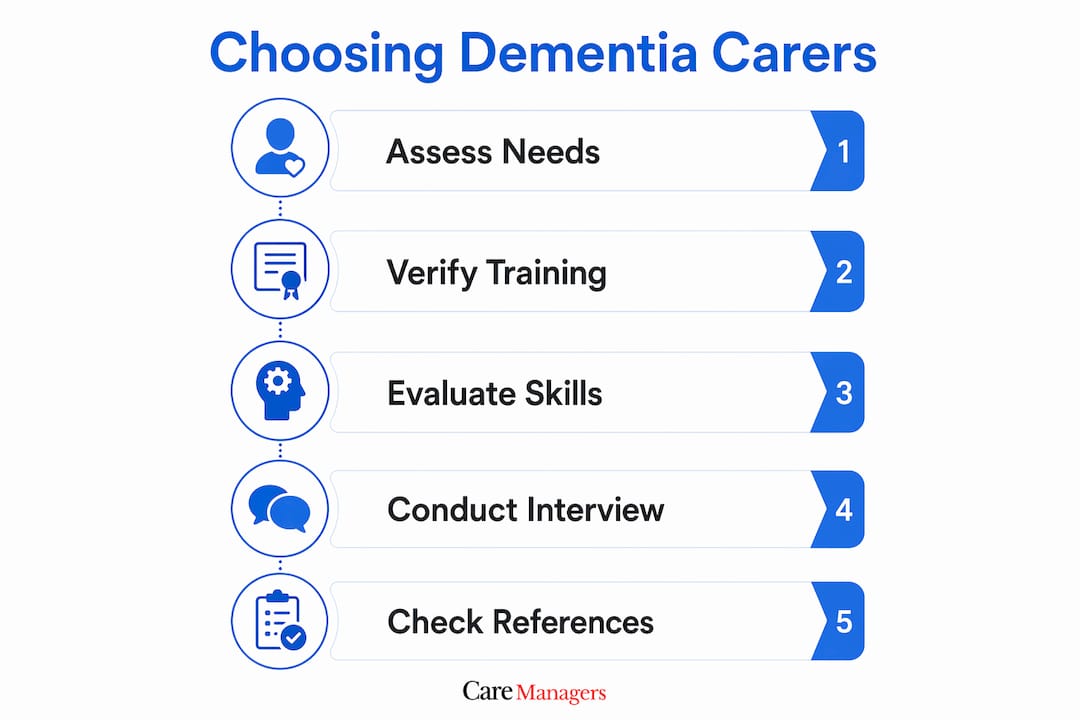
A structured approach reduces the risk of a poor match and gives you confidence in your final decision. Families who follow a clear process report better outcomes and fewer care breakdowns.
- Assess your relative’s needs professionally. Before contacting any agency, arrange a care needs assessment through your local authority or a private care manager. This produces a written record of cognitive, physical, and emotional needs that you can share with prospective carers.
- Research and shortlist providers. Look for agencies that explicitly state dementia specialisation and can name the training framework they use. Review dementia home care options to understand which type of support, whether visiting care or live-in care, best matches your relative’s stage of dementia.
- Interview with scenario-based questions. Generic questions produce generic answers. Ask carers to describe how they handled a specific behavioural challenge in a previous role. Listen for empathy, adaptability, and knowledge of dementia-specific techniques.
- Observe a trial interaction. Arrange a short introductory visit before committing to a care package. Watch how the carer greets your relative, whether they make eye contact, use the person’s name, and adjust their pace to the individual.
- Check references with targeted questions. Ask previous employers or families specifically about the carer’s ability to manage distress, detect health changes, and communicate proactively.
- Monitor quality once care begins. Set a review date within the first four weeks. Use a simple daily log to track your relative’s mood, appetite, sleep, and any incidents. Compare observations with the carer’s own reports to assess consistency and honesty.
Families who involve the person with dementia in care decisions, wherever possible, report stronger relationships between carer and client. Even a person with moderate dementia can express preferences about routines, food, and who they feel comfortable with.
Common challenges and mistakes when choosing dementia home carers
The most common mistake families make is treating a basic training certificate as proof of specialist competence. An attendance certificate confirms presence in a room. It does not confirm that the carer can apply what was taught when a person is distressed at 2AM.
A second frequent error is underestimating the importance of behavioural expertise. Families sometimes prioritise practical tasks, such as cooking and personal care, over the carer’s ability to manage anxiety, sundowning, or resistance to personal care. Behavioural challenges are the primary reason care arrangements break down. A carer who handles them well protects the entire care package.
Specialist dementia carers help families by providing clarity and proactive support, reducing the frustration and guilt that families often experience when they feel unable to monitor care quality themselves. Transparency in reporting is not a bonus feature. It is a core professional responsibility.
Other pitfalls to avoid:
- Ignoring communication quality. If a carer cannot explain clearly what happened during a visit, that is a warning sign about their observational skills and honesty.
- Excluding the person with dementia. Even in advanced stages, preferences can be observed through body language and emotional responses. Carers who ignore these signals are not practising person-centred dementia care.
- Accepting the first available carer. Availability is not a qualification. A short wait for the right specialist is preferable to an immediate start with the wrong one.
- Failing to review regularly. Dementia progresses. A care plan that was appropriate six months ago may no longer meet your relative’s needs. Schedule formal reviews every three months.
Families navigating common dementia caregiving challenges benefit most from carers who communicate proactively and adapt quickly to change.
Key takeaways
Choosing a specialist dementia home carer requires verifying competency-based training, assessing behavioural expertise, and following a structured selection process rather than relying on availability or basic certificates alone.
| Point | Details |
|---|---|
| Competency over attendance | Only 20% of attendance-based training content is applied in practice; seek assessed credentials like CDP®. |
| Behavioural expertise matters most | Carers who interpret behaviour as communication prevent care breakdowns more effectively than those focused on tasks alone. |
| Non-restraint is non-negotiable | Best-practice dementia care manages even severe behavioural episodes without physical restraint. |
| Verify, then trust | Check training logs, ask scenario-based questions, and observe a trial visit before committing. |
| Review regularly | Dementia progresses; care plans need formal review every three months to remain appropriate. |
What I have learned from watching families choose dementia carers
Families often tell me they wish someone had warned them earlier that a kind personality, while genuinely valuable, is not the same as specialist skill. I have seen carers who were warm, patient, and well-liked by the family, yet had no idea how to respond when the person they cared for became convinced it was 1962 and needed to collect their children from school. Warmth without knowledge leaves both the carer and the person with dementia without the tools they need.
The detail that surprises most families is how much early detection matters. Specialist carers who identify subtle changes in behaviour or mood often catch physical health problems, such as infections or dehydration, before any other professional does. That early call to a GP or district nurse can prevent a hospital admission. Preventing one hospital admission is worth more to a person with dementia than months of routine care, because hospitalisation accelerates cognitive decline in ways that are difficult to reverse.
My honest advice is to treat the interview process as seriously as you would hiring for any skilled professional role. Ask hard questions. Expect specific answers. And do not let guilt about the cost or the wait push you into accepting a carer who cannot demonstrate the knowledge your relative needs.
— Emm
How Caremanagers supports families finding specialist dementia carers
Caremanagers works with families across South Wales and England to match their relatives with carers who hold genuine dementia expertise, not just basic certificates.
The team at Caremanagers begins with a thorough assessment of your relative’s cognitive, physical, and emotional needs. That assessment drives the matching process, so the carer you receive has the specific skills your situation requires. Caremanagers verifies training standards, reviews competency records, and provides ongoing monitoring so families have clear, regular updates on care quality. Whether you need visiting dementia support or a full live-in arrangement, Caremanagers can guide you through every stage of the decision. Explore your specialist home care options and speak with the team about what your family needs.
FAQ
What is a specialist dementia home carer?
A specialist dementia home carer is a trained professional who provides dedicated in-home support for people living with dementia, using competency-based skills in behavioural management, therapeutic communication, and early health change detection.
How does a specialist dementia carer differ from a general home carer?
A specialist dementia carer holds dementia-specific training, such as the Certified Dementia Practitioner credential, and applies non-restraint care techniques and person-centred approaches that general home carers are not trained to use.
What qualifications should I look for when hiring a dementia caregiver?
Look for competency-assessed credentials like the CDP® framework rather than attendance-only certificates. Care Certificate Standard 9 is a baseline awareness qualification, not a specialist dementia qualification.
How do I know if a dementia carer is applying best practice?
A carer applying best practice will describe specific non-restraint de-escalation techniques, name communication strategies they use, and provide clear, proactive reports about changes in your relative’s mood or health.
Can non-pharmacological approaches really manage dementia symptoms at home?
Yes. Personalised non-pharmacological strategies are more effective than medication alone for managing behavioural dementia symptoms, making a specialist carer’s communication and environmental skills central to quality care.