TL;DR:
- Leg oedema in the elderly often indicates venous insufficiency, immobility, or systemic conditions like heart or kidney disease. Rapid detection of red flags and early intervention prevent serious complications such as DVT or heart failure. Proper assessment before treatment, including BP and medication review, is essential for safe management at home.
Leg oedema in the elderly most commonly reflects peripheral fluid accumulation from venous insufficiency, immobility, or heart and kidney disease — but it can also signal a deep vein thrombosis (DVT) or other serious condition that needs prompt medical attention. The immediate priorities are recognising red flags, starting safe home measures, and arranging a GP assessment. Do not wait weeks to see whether swelling resolves on its own.
What to do now (safe at home):
- Elevate the legs above hip level when resting, ideally for 30 minutes several times a day.
- Keep moving: short walks or seated calf exercises help the calf muscle pump fluid back up.
- Reduce dietary salt and avoid sitting or standing for long periods.
Seek urgent or emergency help immediately if you notice any of the following:
- Sudden breathlessness or chest pain alongside leg swelling.
- One leg that is swollen, hot, red, and painful (possible DVT).
- Fever, spreading redness, or warmth in the skin over the swollen area (possible infection or cellulitis).
Table of Contents
- When does leg swelling become an emergency?
- What leg oedema is and what carers will notice
- Common causes of swelling in elderly legs
- How clinicians evaluate leg swelling at a GP appointment
- Practical management: what you can do at home and when to expect more
- Why full assessment matters before treating older adults
- What to tell your GP and what to bring to the appointment
- Long-term prevention and daily self-care to reduce recurrence
- Key takeaways
- Why the standard advice on leg swelling often falls short for older adults
- How Caremanagers supports older adults managing leg oedema at home
- Useful sources and further reading
- FAQ
When does leg swelling become an emergency?
Swollen legs can range from a benign response to a hot day to a life-threatening cardiac or vascular event. Knowing which features demand a 999 call versus a same-day GP appointment can make a real difference.
Call 999 immediately for:
- Breathlessness or chest pain alongside new leg swelling (possible heart failure or pulmonary embolism).
- Sudden, severe swelling of both legs with no obvious cause.
- Signs of anaphylaxis or severe allergic reaction.
Contact your GP urgently or call NHS 111 for:
- One leg that is swollen, red, warm, and tender, especially after a period of immobility or long travel (DVT must be excluded).
- Fever above 38°C with redness spreading across the skin of the leg (cellulitis).
- Rapid worsening of swelling over 24–48 hours.
- Skin that is breaking down, weeping, or showing signs of ulceration.
- Swelling accompanied by reduced urine output or unexplained weight gain.
DVT deserves particular mention. A clot in the deep veins of the leg can travel to the lungs and cause a pulmonary embolism, which is potentially fatal. If one leg is noticeably more swollen than the other and the calf is tender to touch, treat this as urgent until a clinician says otherwise.

What leg oedema is and what carers will notice
Oedema is the medical term for fluid that has leaked out of the small blood vessels (capillaries) into the surrounding tissue. Normally, the body balances the fluid that filters out of capillaries with the fluid that the lymphatic and venous systems return to the circulation. When that balance breaks down — because venous pressure is too high, the lymphatic system is damaged, or proteins in the blood are too low — fluid accumulates in the tissues. Gravity pulls it downward, which is why the legs and ankles are almost always the first place it appears.
Typical signs to look for:
- Swelling of the ankles, lower legs, or feet that is worse by evening.
- Skin that looks shiny or stretched.
- Socks, shoes, or boots that feel tighter than usual.
- Skin discolouration: a brownish or reddish tinge around the ankles (lipodermatosclerosis in venous disease).
- Reduced ankle movement or a feeling of heaviness.
- Dents left in the skin after pressing (pitting oedema).
How to perform a simple pitting test at home
- Press your thumb gently but firmly into the skin over the shin bone (tibia) or the top of the foot.
- Hold the pressure for around 5 seconds.
- Release and look at the skin. If a dent (pit) remains for several seconds, this is pitting oedema.
- Safety note: do not press hard on fragile, broken, or very painful skin. If the skin looks thin or damaged, skip this test and report what you see to the GP instead.
Pitting vs non-pitting: Pitting oedema is the most common type and usually points to venous, cardiac, renal, or hepatic causes. Non-pitting oedema, where the skin springs back immediately, is more typical of lymphoedema or hypothyroidism. Bilateral swelling (both legs) tends to suggest a systemic cause such as heart failure or medication side effects. Unilateral swelling (one leg only) raises suspicion of DVT, a local infection, or a structural problem in that limb.
Common causes of swelling in elderly legs
Multiple causes often coexist in older adults. A person may have chronic venous insufficiency, take a calcium channel blocker, and spend most of the day in a chair — each factor amplifying the others. The table below summarises the most common causes and the clues that point to each.

| Cause | Key clues | Bilateral or unilateral? |
|---|---|---|
| Chronic venous insufficiency (CVI) | Varicose veins, brown skin discolouration around ankles, aching worse after standing | Usually bilateral |
| Heart failure | Breathlessness, fatigue, swelling worse when lying flat, raised neck veins | Bilateral |
| Kidney disease | Frothy urine, facial puffiness in the morning, reduced urine output | Bilateral |
| Liver disease (cirrhosis) | Abdominal swelling (ascites), jaundice, history of alcohol use | Bilateral |
| Lymphoedema | Non-pitting or firm swelling, skin thickening, history of cancer treatment or recurrent infections | Can be unilateral or bilateral |
| DVT | Sudden onset, one leg painful, red, warm, and swollen | Unilateral |
| Medication-related | Swelling started or worsened after a new prescription | Usually bilateral |
| Immobility / dependency oedema | Swelling in someone who sits or lies for most of the day; improves with elevation | Bilateral |
| Injury or local infection | Trauma, wound, redness, warmth, tenderness | Unilateral |
Medication-related oedema: what to check
Several commonly prescribed drug classes cause or worsen fluid retention in the legs. Calcium channel blockers such as amlodipine are among the most frequent culprits, as they dilate peripheral blood vessels and allow fluid to leak into tissues. Corticosteroids (such as prednisolone), NSAIDs (such as ibuprofen), and some antidepressants can also cause peripheral swelling. If swelling appeared or worsened shortly after a new medicine was started, bring this to your GP’s attention — a simple prescription change may resolve the problem.
Lifestyle factors including high salt intake, obesity, and prolonged inactivity are also significant drivers of peripheral swelling, particularly in older adults whose calf muscle pump is already less efficient. An estimated 400,000 people in the UK have chronic leg oedema, with venous disease and lymphoedema being among the most common underlying causes — both frequently under-recognised and undertreated.
How clinicians evaluate leg swelling at a GP appointment
Understanding what the GP will ask and examine helps you prepare a useful account and reduces the chance of important details being missed.
What the GP will want to know
- When did the swelling start, and has it come on gradually or suddenly?
- Is it one leg or both? Is it worse at certain times of day?
- Is there any pain, tenderness, or warmth in the leg?
- Any breathlessness, chest pain, or reduced exercise tolerance?
- Recent long-haul travel, surgery, or prolonged bed rest?
- Any unexplained weight gain in recent weeks?
- Current medications, including over-the-counter drugs and supplements.
- Any history of DVT, cancer, heart disease, kidney or liver problems.
- Any wounds, skin changes, or previous leg ulcers.
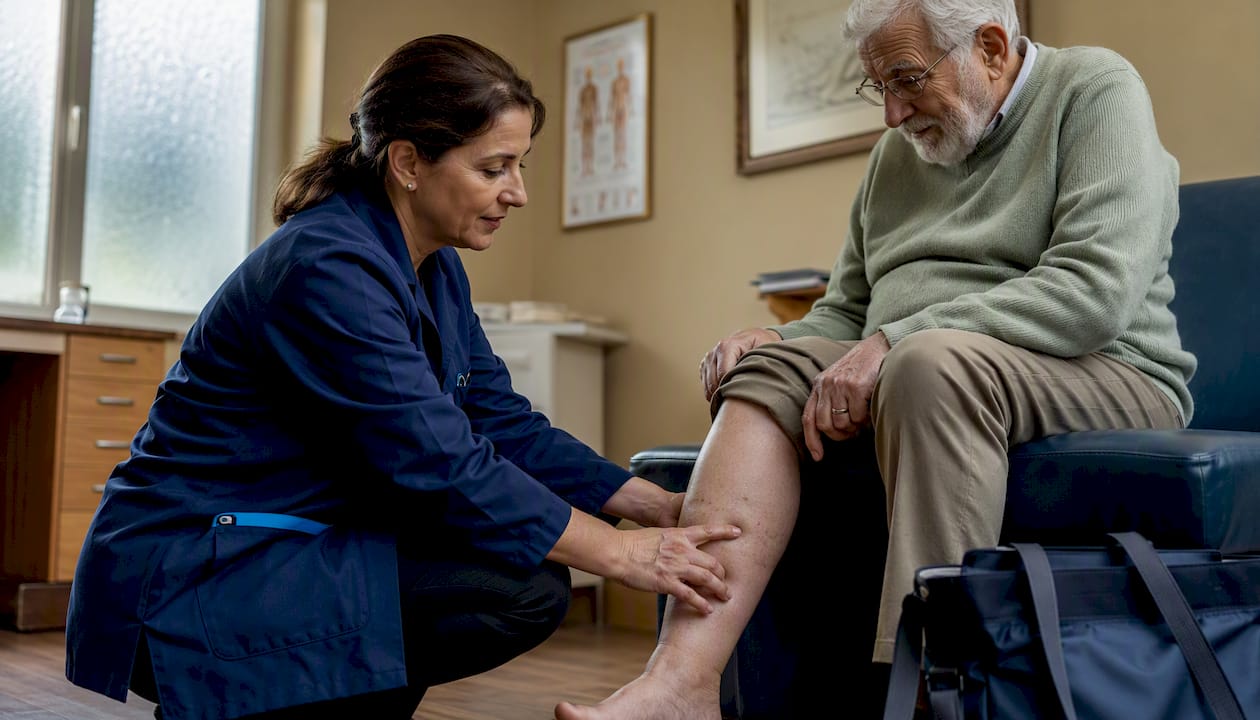
What the clinician will examine
| Examination | What it checks |
|---|---|
| Pitting test | Confirms oedema and gives a rough severity grade |
| Foot and ankle pulses | Screens for arterial disease before any compression is considered |
| Calf tenderness | Raises or lowers suspicion of DVT |
| Skin inspection | Looks for discolouration, thickening, ulceration, or infection |
| Abdominal examination | Checks for ascites (fluid in the abdomen) suggesting liver disease |
| Blood pressure and heart rate | Screens for cardiac causes |
| Neck vein inspection | Raised jugular venous pressure points to heart failure |
Likely investigations
| Test | Why it is ordered |
|---|---|
| U&Es (urea and electrolytes) | Checks kidney function |
| LFTs (liver function tests) | Screens for liver disease |
| BNP or NT-proBNP | Elevated levels indicate heart failure |
| Full blood count | Checks for anaemia or infection |
| D-dimer blood test | If DVT is suspected; a negative result largely excludes it |
| Duplex ultrasound | Confirms or excludes DVT; also assesses venous reflux |
| ABPI (ankle-brachial pressure index) | Measures arterial blood flow; required before compression therapy |
| ECG and echocardiogram | Assesses heart structure and function if cardiac cause is suspected |
Vascular referral is appropriate when there are symptomatic varicose veins, active or healed venous leg ulcers, significant skin changes, or recurrent superficial thrombosis. An abnormal ABPI result (below 0.6) requires urgent vascular review and stops compression therapy from being started.
Practical management: what you can do at home and when to expect more
Safe self-care measures to start now
- Leg elevation: rest with legs raised above hip level for at least 30 minutes, three or four times a day. Propping the foot of the bed by a few inches overnight also helps.
- Calf exercises: seated ankle circles and heel raises pump fluid back up the leg even when walking is limited.
- Reduce dietary salt: aim for no more than 6g per day (roughly one teaspoon). Processed foods, tinned soups, and ready meals are the biggest sources.
- Skin care: moisturise the legs daily with an unperfumed emollient to prevent dryness and cracking, which can allow infection in.
- Footwear: wear well-fitting shoes or slippers; avoid tight socks with constrictive bands around the calf.
- Weight management: where relevant, even modest weight reduction reduces the load on the venous and lymphatic systems.
Compression stockings: who benefits and who should not use them
Compression stockings are one of the most effective conservative treatments for venous oedema, but they must be used safely. Before applying any compression garment, an ABPI measurement is required to check that arterial blood flow to the foot is adequate. An ABPI below 0.6 is a contraindication to compression and requires urgent vascular referral. Stockings should be measured and fitted by a trained professional; an ill-fitting garment can cause pressure damage, particularly in older adults with fragile skin.
Medicines: when diuretics help and when they cause harm
Diuretics (water tablets) such as furosemide are sometimes prescribed for leg swelling, but geriatric medicine experts caution against their reflexive use in older adults with bilateral oedema. In someone whose swelling is caused by venous insufficiency or immobility rather than systemic fluid overload, diuretics will not address the underlying problem and carry real risks: dehydration, acute kidney injury, electrolyte disturbances (particularly low potassium and sodium), and falls. If a clinician does prescribe a diuretic, renal function and electrolytes should be monitored closely.
When specialist referral is needed
- Vascular clinic: for arterial disease, venous reflux, or leg ulcers.
- Lymphoedema services: for chronic, non-pitting swelling or skin thickening. Lymphoedema requires lifelong management including skin care, lymphatic drainage, compression, and exercise.
- Cardiology: if heart failure is confirmed or suspected.
- Renal or hepatology: for kidney or liver disease driving the oedema.
Specialist treatments include multilayer compression bandaging, manual lymphatic drainage, intermittent pneumatic compression, and, in complex cases, surgical options — all delivered by specialist teams.
Pro Tip: Before any compression garment is applied, confirm that an ABPI check has been done. Ask the GP or nurse to document the result. Also request a full medication review to identify any drugs that may be causing or worsening the swelling, and inspect the skin over the legs daily for new cracks, blisters, or redness.
Why full assessment matters before treating older adults
Chronic oedema affects an estimated 400,000 people in the UK, placing a significant burden on community nursing and GP services. Despite this scale, both venous disease and lymphoedema remain under-recognised, and older patients are frequently given diuretics as a first response without a thorough assessment of the underlying cause.
The risks of that approach are well-documented in geriatric medicine. Diuretics prescribed without evaluating cardiac, renal, and hepatic function can cause acute kidney injury, dangerous electrolyte shifts, and falls in people who are already at risk. Polypharmacy compounds the problem: an older person taking five or more medicines is more likely to be on a drug that is itself causing the swelling, making medication review a logical first step before adding another prescription.
A checklist for families to raise at the GP appointment:
- Has a full medication review been done to identify drugs that may be causing the swelling?
- Has an ABPI or Doppler assessment been arranged before any compression is prescribed?
- Has lymphoedema been considered, and is a referral to a lymphoedema specialist appropriate?
- Are renal function and electrolytes being monitored if a diuretic has been started?
- Is there a clear plan for skin care and monitoring while waiting for specialist input?
Community lymphoedema and vascular services are under strain in many parts of the UK, and waiting times for specialist referral can be lengthy. While waiting, consistent skin care, safe elevation, and compression (if ABPI-cleared) remain the most protective measures available.
What to tell your GP and what to bring to the appointment
A well-prepared GP appointment is more likely to result in the right tests and a clear management plan. The following checklist covers what to bring and what to say.
Bring with you:
- A written list of all current medications, including doses and how long each has been taken.
- A note of when the swelling first appeared and how it has changed.
- Photographs of the leg(s) taken over several days, showing the extent of swelling and any skin changes.
- Recent blood pressure readings if you have a home monitor.
- A note of any breathlessness, chest symptoms, or changes in urine output.
- Your weight over the past few weeks if you have been monitoring it.
Questions to ask the clinician:
- What do you think is the most likely cause of the swelling?
- Which tests will you arrange, and how soon will results be back?
- Is it safe for me to use compression stockings, and has my arterial circulation been checked?
- Are any of my current medicines likely to be making the swelling worse?
- What should I monitor at home, and when should I contact you again?
- Will I need a referral to a specialist, and if so, how long is the wait likely to be?
What to expect at the appointment: the GP will typically examine both legs, check pulses, and may order blood tests (including kidney function, BNP, and a full blood count) at the first visit. If DVT is suspected, you may be sent for a D-dimer blood test or a duplex ultrasound the same day. Compression will not be prescribed until arterial disease has been excluded.
Long-term prevention and daily self-care to reduce recurrence
Preventing recurrence is largely about consistency. The habits that reduce oedema in the short term are the same ones that protect against skin breakdown, infection, and worsening venous disease over months and years.
Daily habits that make a real difference:
- Walk for at least 10–15 minutes, several times a day, even if it is just around the house. Short, frequent movement is more effective than one long walk.
- Do seated calf pumping exercises (pushing the foot up and down) whenever you are sitting for extended periods, such as during meals or television.
- Keep salt intake low and stay well hydrated; dehydration paradoxically worsens fluid retention.
- Moisturise the legs every day with an emollient such as Diprobase or Doublebase to maintain skin integrity.
- Inspect the skin daily for cracks, blisters, or redness, particularly between the toes and around the ankles.
- Sleep or rest with the foot of the bed slightly elevated.
Safe use of compression stockings for prevention
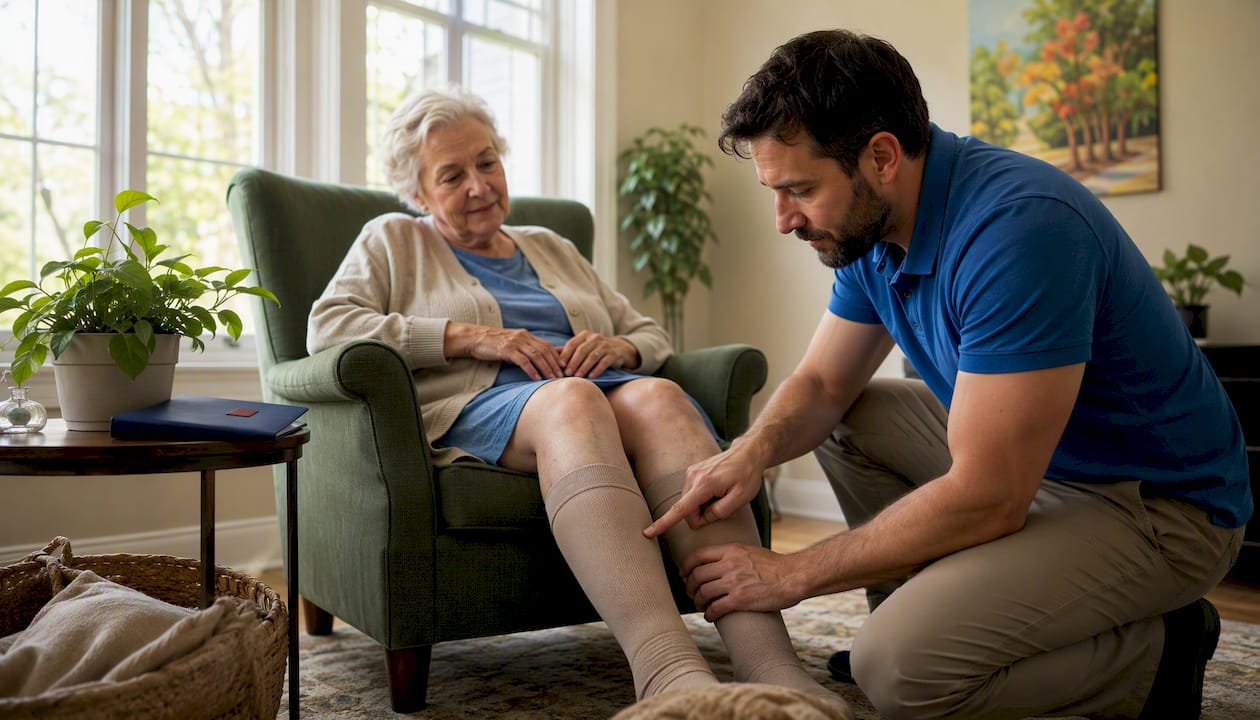
Compression stockings worn consistently during waking hours are one of the most effective tools for preventing recurrent venous oedema. They should be put on first thing in the morning, before the legs have had time to swell, and removed at bedtime. Donning aids (stocking applicators) are widely available from pharmacies and make the process much easier for people with limited hand strength or mobility. Stockings should be replaced every three to six months as the elastic loses its effectiveness.
Pro Tip: If the person you care for has limited mobility, help them perform seated calf pumping exercises twice a day: ask them to push their toes up toward the ceiling, then point them down, repeating 10–15 times each session. Keep a simple swelling log — note the leg circumference at the ankle each morning and record any skin changes. Bring this log to every GP or nurse appointment; it gives clinicians a clear picture of trends that a single snapshot cannot provide.
Key takeaways
Leg oedema in older adults most often reflects venous insufficiency, immobility, or a systemic condition such as heart failure, and safe management always begins with identifying the cause before starting diuretics or compression.
| Point | Details |
|---|---|
| Recognise red flags immediately | Sudden unilateral painful swelling, breathlessness, chest pain, or fever needs urgent or emergency care. |
| Arrange GP assessment promptly | Persistent or worsening swelling needs blood tests, ABPI, and a medication review before any treatment. |
| Avoid diuretics without evaluation | Diuretics can cause kidney injury and falls in older adults if prescribed without assessing the underlying cause. |
| Compression requires an ABPI check | Never apply compression stockings without confirming arterial blood flow; an ABPI below 0.6 is a contraindication. |
| Caremanagers supports daily management | Home care from Caremanagers can assist with skin care, mobility, and safe garment application after clinical clearance. |
Why the standard advice on leg swelling often falls short for older adults
The conventional approach to swollen legs in older people tends to follow a predictable path: prescribe a diuretic, advise elevation, and wait. What that approach misses is the complexity that almost always underlies oedema in this age group. Venous insufficiency, lymphatic failure, cardiac dysfunction, medication side effects, and immobility rarely arrive alone. They layer on top of each other, and treating one without addressing the others produces, at best, partial improvement.
What strikes me most in reviewing the clinical literature is how consistently the evidence warns against reflexive diuretic prescribing in older adults, and how consistently it still happens. The risks are not theoretical: dehydration in an older person with borderline renal function can tip into acute kidney injury within days. A falls risk that was manageable becomes serious when someone is getting up repeatedly in the night to use the bathroom. These are predictable, preventable harms.
The other gap is compression. Compression stockings are genuinely effective for venous oedema, but they are also genuinely dangerous if applied to a leg with significant arterial disease. The ABPI check that should precede every compression prescription is not a bureaucratic formality; it is a safety step that protects the limb. Carers who push for this check before stockings are applied are doing exactly the right thing.
The most useful thing a carer can do is arrive at the GP appointment prepared: a medication list, a swelling log, photographs, and a clear account of when symptoms started. That preparation shifts the consultation from a brief visual assessment to a structured clinical review, and it is the single biggest factor in getting the right tests ordered at the first visit.
How Caremanagers supports older adults managing leg oedema at home
Managing leg oedema day to day involves far more than a single GP appointment. It requires consistent skin care, help with mobility, safe application of compression garments once clinically cleared, and someone to notice when things are changing. That is where professional home care makes a practical difference.
Caremanagers provides personalised home care services across South Wales and England, including personal care, live-in support, and hospital discharge care. For someone returning home after a hospital admission for heart failure or a DVT, a structured care package can bridge the gap between discharge and full recovery, with carers helping to maintain the daily routines that reduce the risk of recurrence. Where cognitive impairment makes self-care difficult, Caremanagers’ dementia care teams can support safe adherence to skin care and mobility routines.
Choosing the right home care for an elderly relative is easier with a provider that understands the clinical context. Caremanagers works alongside GP and specialist teams, and can help families put a care plan in place that fits the clinical pathway rather than running alongside it. To arrange a no-obligation assessment, contact Caremanagers directly through the website or call the team to discuss what level of support would suit your situation.
Useful sources and further reading
The following UK sources provide authoritative guidance for carers and older adults seeking more detail on specific aspects of leg oedema.
- NHS: swollen ankles, feet and legs (oedema) — patient-facing guidance on causes, red flags, and when to seek care. The best starting point for anyone newly dealing with leg swelling.
- NHS: lymphoedema — clear explanation of lymphoedema symptoms, diagnosis, and treatment options, including where to find specialist services.
- Oxford Health NHS Foundation Trust: chronic oedema pathway — clinical pathway used by community nursing teams; useful for understanding what a structured assessment involves and what ABPI results mean.
- British Heart Foundation: swollen ankles and feet — explains the link between heart conditions, lifestyle factors, and leg swelling; helpful for families managing heart failure alongside oedema.
- British Journal of Nursing: assessing and managing lower limb oedema — nursing-focused clinical review on assessment, lymphoedema management, and referral criteria.
For local referral information, contact your GP surgery or call NHS 111. They can direct you to community nursing services, lymphoedema clinics, and vascular teams in your area.
This article provides general health information and is not a substitute for professional medical advice. Always consult your GP or a qualified clinician about your specific situation, and check current NHS guidance for the most up-to-date recommendations.
FAQ
What are the most common causes of swollen legs in older people?
The most common causes are chronic venous insufficiency, heart failure, kidney disease, lymphoedema, medication side effects (particularly calcium channel blockers such as amlodipine), and prolonged immobility. Multiple causes often coexist in older adults.
Can heart problems cause leg oedema?
Yes. Heart failure reduces the heart’s ability to pump blood efficiently, causing fluid to back up in the veins and leak into the tissues of the legs and ankles. Breathlessness, fatigue, and swelling that worsens when lying flat are typical accompanying signs.
Which medicines commonly cause fluid retention in the legs?
Calcium channel blockers (such as amlodipine), corticosteroids, and NSAIDs are among the most frequent causes of medication-related leg swelling. If swelling started or worsened after a new prescription, ask your GP to review the medication list.
Is it normal for elderly people to have swollen legs near the end of life?
Leg swelling is common in the final weeks and months of life, often reflecting reduced circulation, immobility, low albumin levels, or organ failure. Comfort-focused care at this stage prioritises skin protection, gentle positioning, and symptom relief rather than aggressive treatment.
When should leg swelling in an older person be treated as an emergency?
Call 999 if there is breathlessness or chest pain alongside new leg swelling. Contact a GP urgently or call NHS 111 if one leg is suddenly swollen, hot, red, and painful (possible DVT), or if there is fever with spreading redness over the skin.