
TL;DR:
- Live-in dementia care involves a full-time professional living with the person, offering personalized support and companionship. Families should understand the carer’s boundaries, prepare their home accordingly, and plan for changing needs to ensure safe, effective care. Costs vary from £1,400 to £1,700 weekly, with funding options like NHS Continuing Healthcare available.
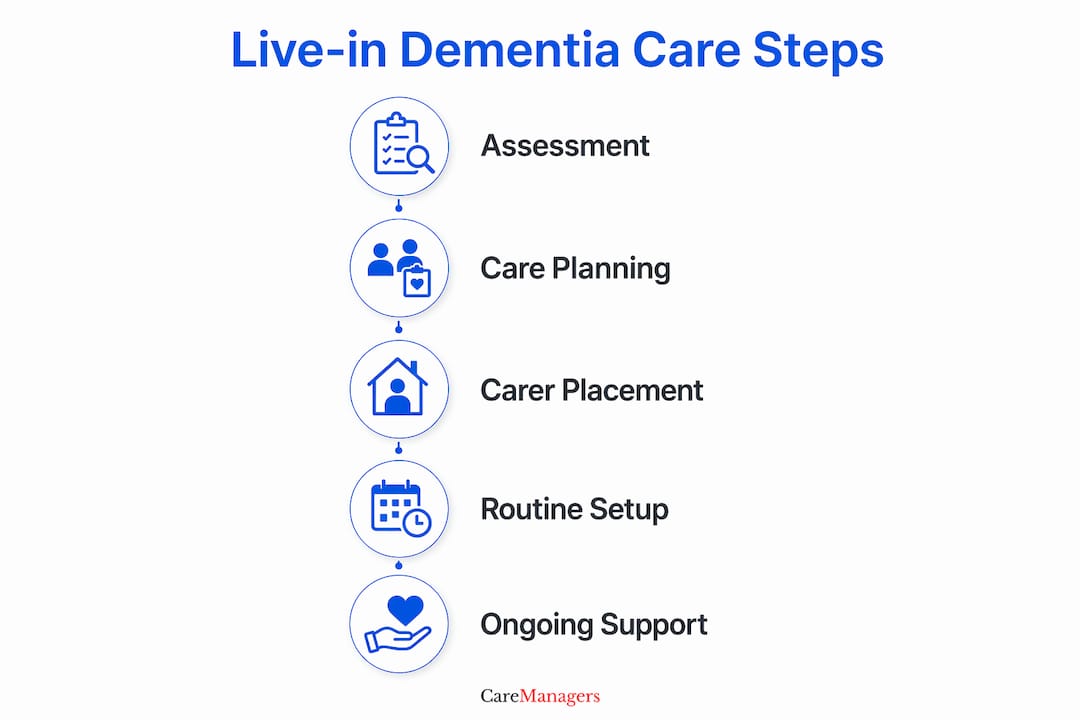
Live-in dementia care is defined as the full-time presence of a professional carer in the person’s home, providing personalised support, companionship, and personal care around the clock. This arrangement differs from visiting care in one critical way: the carer lives with the person, making continuity and familiarity the foundation of every day. Families considering this option often ask the same questions. What will the carer actually do? How do you prepare your home? What does it cost? This guide answers all of those questions directly, drawing on current UK care standards and the experience of Caremanagers in supporting families across South Wales and England. Understanding live-in care expectations from the outset helps you make confident, informed decisions.
What does a live-in dementia carer do each day?
A live-in dementia carer provides personal care, companionship, medication prompting, and light housekeeping, but does not perform nursing procedures or heavy manual handling. That distinction matters enormously for families setting expectations. Knowing exactly where the boundaries lie prevents misunderstandings and protects both the person with dementia and the carer.
The typical daily duties of a live-in carer include:
- Personal care: washing, dressing, oral hygiene, toileting support, and grooming
- Medication prompting: reminding the person to take prescribed medicines at the correct times
- Meal preparation: planning and cooking nutritious meals suited to dietary needs and preferences
- Companionship: conversation, gentle activities, reading, music, and emotional reassurance
- Light housekeeping: washing up, laundry, tidying, and keeping the living space clean and safe
- Monitoring: observing changes in mood, behaviour, or physical health and reporting them to the family or agency
What a carer does not do is equally important. Carer role boundaries exclude wound care, catheter management, two-person transfers, and deep cleaning. These tasks require nursing staff or specialist support. Families who expect a carer to cover clinical procedures will find the arrangement strained quickly.
Rest is also a legal requirement, not a preference. Carers are entitled to a minimum two-hour break each day and undisturbed sleep at night, unless a waking night arrangement has been specifically agreed and funded. This protects the carer’s health and, by extension, the quality of care your relative receives.
Pro Tip: Agree a clear daily schedule with the agency before the carer starts. A written routine reduces ambiguity, supports the person with dementia through predictability, and gives the carer a practical framework for each shift.
How should you prepare your home for a live-in carer?
Preparing your home properly is the single most practical step you can take before a carer arrives. A well-prepared environment protects the carer’s wellbeing and supports the person with dementia through a settled, familiar setting.
Follow these steps to get the home ready:
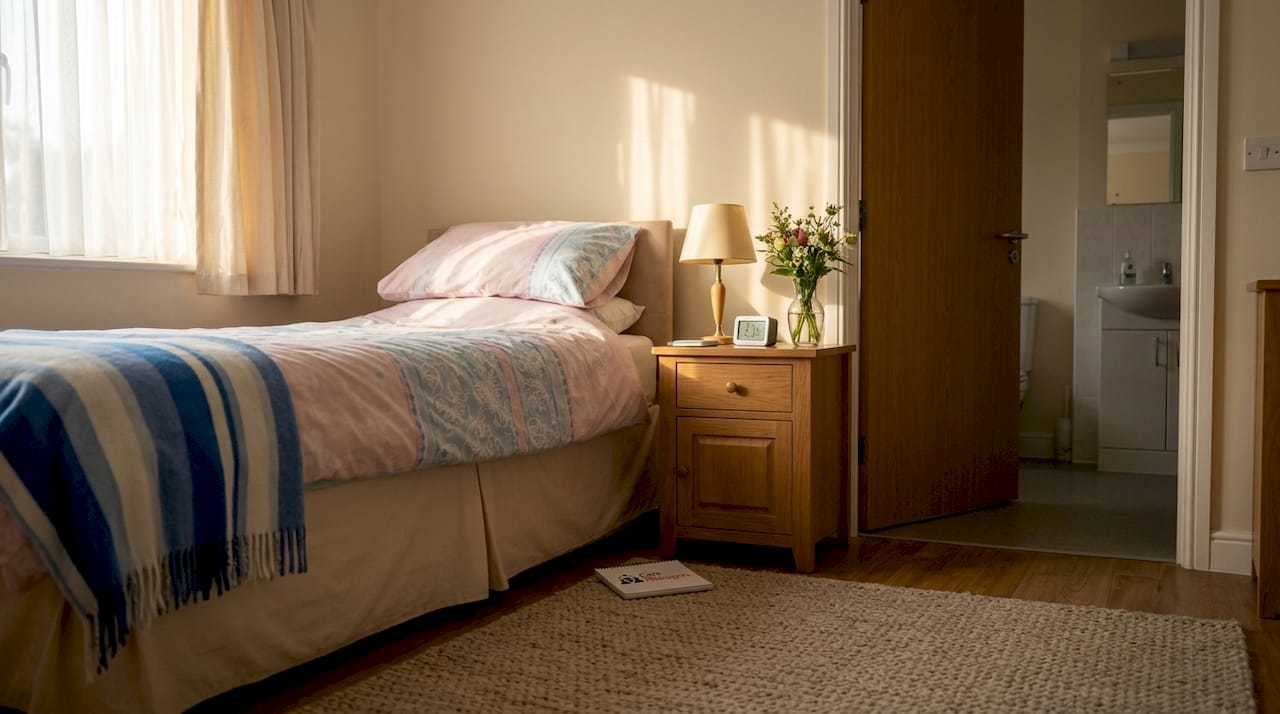
- Provide a private bedroom. The carer needs their own room with a lockable door, adequate storage, and reasonable comfort. This is not optional. It is a standard requirement for any live-in placement.
- Arrange bathroom and kitchen access. The carer must be able to use bathroom facilities and prepare their own meals. Families should either provide meals or budget for food costs of approximately £30–£40 per week.
- Check heating, lighting, and safety. Ensure the home is warm, well-lit, and free from trip hazards. Loose rugs, cluttered hallways, and poor lighting are common risks in dementia care settings.
- Make dementia-friendly adaptations. Label cupboards and drawers with pictures or words. Keep familiar objects in their usual places. Consistent visual cues reduce confusion and anxiety for the person with dementia.
- Complete the agency’s home assessment. Caremanagers and most reputable agencies conduct a home visit before placing a carer. This assessment identifies risks, confirms the home meets required standards, and tailors the care plan to the individual.
Familiar surroundings actively reduce confusion and support emotional stability for people with dementia. Keeping the home environment consistent is not just about comfort. It is a direct part of the care itself.
Pro Tip: Walk through the home as if you have dementia. Look for anything that could cause confusion or danger: mirrors that cause distress, unlocked medicine cabinets, or exits that need securing. An occupational therapist can carry out a formal assessment if needed.
What challenges should families expect in live-in dementia care?
Live-in dementia care is genuinely demanding, and families who go in with clear eyes fare far better than those who expect it to run without difficulty. The challenges are real, but most are manageable with the right planning.
The most common difficulties include:
- Carer fatigue and burnout. Dementia care is emotionally and physically exhausting. Ignoring carer respite leads to sudden staff changes, which disrupts the continuity that is critical for dementia care effectiveness. Plan for regular relief carers from the outset.
- Behavioural challenges. Dementia can cause aggression, night-time wandering, repetitive questioning, and distress. Carers trained in dementia-specific techniques manage these episodes more effectively, but some situations require professional clinical intervention.
- Carer turnover. When carers leave, the person with dementia loses a familiar face. This can cause significant distress. Choosing an agency with strong retention and good carer support structures reduces this risk.
- Evolving care needs. Dementia is progressive. A care plan that works well today may be insufficient in six months. Families need to review arrangements regularly and plan for increasing needs.
- Limits of live-in care for late-stage dementia. Two-person hoisting and severe agitation often exceed what a single live-in carer can safely manage. At this stage, a care home with specialist equipment and multiple staff may become necessary.
Families also frequently misunderstand the distinction between companionship care and complex clinical support. A live-in carer provides the former. When clinical needs escalate, the care model must change accordingly.
“Planning for evolving needs and arranging relief carers proactively improves care continuity and reduces family stress. The families who struggle most are those who wait for a crisis before making changes.” — Full-time home support guidance
Reputable agencies provide ongoing supervision and training for their carers, including regular care plan reviews, dementia-specific training, and emergency support. This structure is what separates a well-managed placement from an ad-hoc arrangement. Ask any agency you consider how they support their carers between visits.
What does live-in dementia care cost in the UK?
Live-in dementia care costs between £1,400 and £1,700 per week in the UK, depending on the level of need, the region, and the complexity of the care package. That figure is not fixed. Several variables shift it up or down.
| Care package type | Typical weekly cost | Key features |
|---|---|---|
| Standard live-in care | £1,400–£1,500 | Personal care, companionship, light housekeeping |
| Complex dementia care | £1,500–£1,700 | Tier-3 dementia training, behavioural support |
| Waking night care | Additional cost | Carer remains awake overnight for safety |
| Two-carer package | Higher rate | Required for hoisting or high-risk situations |
Specialist dementia care at the higher end of the range reflects Tier-3 training requirements and the additional skill needed to manage complex behavioural presentations. That premium is justified. An undertrained carer in a complex dementia situation creates risk for everyone.
Funding options worth exploring include self-funding, local council support following a needs assessment, and NHS Continuing Healthcare (NHS CHC). NHS CHC is a fully funded package for people whose primary need is a health need rather than a social care need. Eligibility is assessed by a clinical team and is not means-tested. Many families are unaware of this route, and it is worth requesting a formal assessment if your relative’s needs are significant.
For a detailed breakdown of dementia care costs at home, Caremanagers provides clear guidance on what to expect at each stage of care. Comparing live-in care costs with residential or nursing home fees is also worthwhile. Specialist dementia care homes provide secure units and nursing teams that are unavailable in a home setting, but the weekly cost is often comparable to or higher than live-in care. The right choice depends on clinical need, not cost alone.
Key takeaways
Live-in dementia care works best when families understand the carer’s role, prepare the home properly, plan for evolving needs, and explore all available funding routes before a crisis forces a decision.
| Point | Details |
|---|---|
| Carer role has clear limits | Carers provide personal care and companionship but not nursing procedures or two-person transfers. |
| Rest breaks are a legal requirement | Carers must have a minimum two-hour daily break and undisturbed sleep unless waking nights are funded. |
| Home preparation is part of the care | A private bedroom, food provision, and dementia-friendly adaptations are required before a carer starts. |
| Costs range from £1,400 to £1,700 weekly | NHS Continuing Healthcare and local council funding can reduce or eliminate out-of-pocket costs. |
| Late-stage dementia may need a different setting | Two-person hoisting and severe agitation often exceed live-in care capacity and require specialist care homes. |
What I have learned about live-in dementia care after years of supporting families
The families who manage live-in dementia care well share one quality: they plan for the hard parts before they arrive. They do not wait until the carer is exhausted or the person with dementia has deteriorated significantly before asking for help. They build in relief carers from the start, review the care plan every few months, and stay in close contact with the agency.
The thing most families get wrong is treating the carer as a fixed resource rather than a person with limits. A carer who feels supported, rested, and respected delivers far better care. That is not sentiment. It is practical reality. When carers burn out and leave, the person with dementia loses consistency, and consistency is one of the most powerful tools in dementia care.
Familiar surroundings and known routines genuinely reduce anxiety and confusion for people with dementia. Staying at home, with the same carer, in the same bedroom, with the same morning routine, is not just emotionally preferable. It is clinically beneficial. Families sometimes feel guilty about not moving a relative into a care home sooner. Often, staying at home with the right support is the better option for longer than families realise.
The other thing I would say plainly: do not wait for a crisis. The families who contact Caremanagers after a fall, a hospital admission, or a carer walking out are always in a harder position than those who plan ahead. Start the conversation early. Get the assessment done. Know what your options are before you need them urgently.
— Emm
How Caremanagers can help you arrange live-in dementia care
Arranging live-in dementia care is a significant decision, and you do not have to work it out alone. Caremanagers specialises in home care services for people with dementia across South Wales and England, matching families with experienced, trained carers who understand the specific demands of dementia care.

Every placement begins with a thorough home assessment and a personalised care plan built around the individual’s routines, preferences, and clinical needs. Caremanagers also provides ongoing supervision, regular care plan reviews, and relief carer cover so that continuity is never left to chance. If you are ready to explore your options or simply want to ask questions, the live-in care guide for families is a good starting point. Alternatively, contact Caremanagers directly to arrange a no-obligation assessment.
FAQ
What does a live-in dementia carer do?
A live-in dementia carer provides personal care, medication prompting, meal preparation, companionship, and light housekeeping. They do not perform nursing procedures, wound care, or two-person manual transfers.
How much does live-in dementia care cost per week in the UK?
Live-in dementia care costs between £1,400 and £1,700 per week in the UK, depending on the complexity of care needed and the region. Specialist dementia packages requiring Tier-3 trained carers sit at the higher end of that range.
Can live-in care support someone with late-stage dementia?
Live-in care becomes less suitable as dementia progresses to late stages. Two-person hoisting requirements and severe behavioural challenges often exceed what a single carer can safely manage, and a specialist care home may be more appropriate.
Is live-in dementia care funded by the NHS?
NHS Continuing Healthcare can fully fund live-in dementia care for people whose primary need is a health need. Eligibility is assessed by a clinical team and is not means-tested. Local council funding is also available following a needs assessment for those who qualify.
How do I prepare my home for a live-in carer?
Provide the carer with a private bedroom, bathroom access, and either meals or a food budget of around £30–£40 per week. Remove trip hazards, improve lighting, and add dementia-friendly labels and visual cues throughout the home before the carer arrives.