TL;DR:
- Palliative home care provides medical and supportive services in a person’s own home at any illness stage to improve comfort and quality of life. It involves a multidisciplinary team supporting physical, emotional, and practical needs, and begins with early referrals for better outcomes. Families should plan carefully, assess needs early, clarify funding, and seek professional help without delay.
Palliative home care is defined as specialist medical and supportive care delivered in a person’s own home, aimed at relieving symptoms and improving quality of life for those living with serious illness. Unlike hospice, which focuses on the final months of life, palliative care can begin at any stage of a diagnosis and runs alongside curative treatment. A coordinated team of doctors, nurses, social workers, chaplains, and home caregivers works together to address physical, emotional, and practical needs. The goal is not to replace medical treatment. The goal is to make life at home as comfortable and dignified as possible, for both the person who is unwell and the family around them.
What is palliative home care and who does it help?
Palliative home care is specialist support for people living with serious, chronic, or life-limiting conditions in their own homes. Conditions commonly supported include cancer, dementia, COPD, heart failure, kidney disease, and motor neurone disease. The care is not reserved for people who are dying. It is appropriate at any point after a serious diagnosis, including during active treatment.

One of the most persistent misconceptions about palliative care is that accepting it means giving up. Early palliative support is directly linked to better patient outcomes and higher satisfaction. Families who access it early report less crisis-driven decision-making and more time to focus on what matters most.
The conditions that qualify for palliative home care include:
- Cancer at any stage, including during chemotherapy or radiotherapy
- Dementia, where dementia support at home addresses both cognitive and physical decline
- COPD and chronic heart failure, where breathlessness and fatigue are the dominant symptoms
- Kidney disease requiring symptom management without dialysis
- Neurological conditions such as Parkinson’s disease or multiple sclerosis
- Any serious illness where symptoms significantly affect daily life
Timing matters. Early referrals enable families to document personal values and advance care plans while the person is still able to make decisions. Waiting until a crisis point reduces the options available and increases pressure on everyone involved.
What services does palliative home care provide?
Palliative home care covers a wide range of medical, emotional, and practical support. Clinical visits address symptoms such as pain, nausea, fatigue, breathlessness, and anxiety. In-person visits and telehealth check-ins from doctors, nurse practitioners, and social workers are all part of the standard model. Spiritual support from chaplains is also available for those who want it.
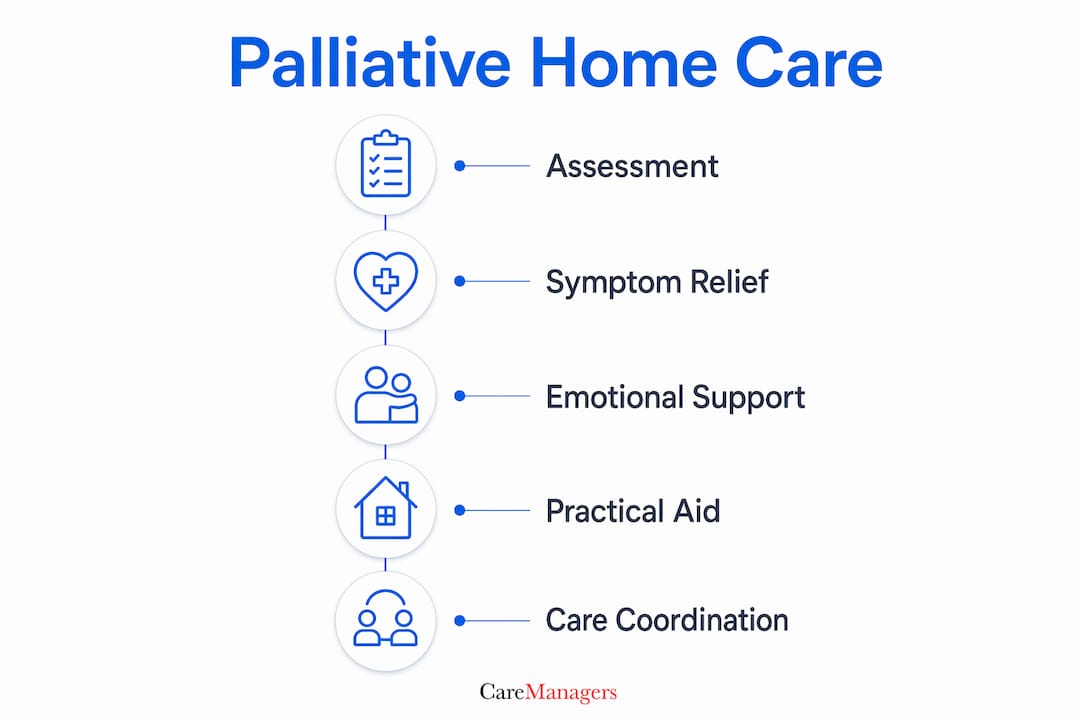
Beyond clinical care, the practical and emotional dimensions are just as significant. Social workers help families navigate benefits, housing concerns, and emotional strain. Chaplains offer non-religious as well as religious support. Care coordinators liaise with GPs, hospital teams, and community nurses to keep everyone aligned.
Non-medical caregivers fill the gaps between clinical visits. They assist with personal care, meal preparation, mobility, and companionship. Sustained human presence creates comfort and normalcy at home in a way that intermittent clinical visits cannot replicate. This daily consistency is what makes home-based care feel genuinely supportive rather than transactional.
Pro Tip: Ask your care coordinator specifically about out-of-hours telephone support. Many palliative home care teams offer round-the-clock phone access, which can prevent unnecessary emergency admissions and give families confidence at night.
The services typically included in a palliative home care package are:
- Symptom management: pain relief, anti-nausea medication, breathlessness support
- Emotional and psychological support: counselling, social work, and family guidance
- Spiritual care: chaplaincy services for those who want them
- Personal care: washing, dressing, and mobility assistance
- Practical help: meal preparation, light household tasks, and companionship
- Care coordination: communication between GPs, specialists, and community teams
- Telehealth support: phone or video check-ins between in-person visits
How does palliative care differ from hospice and home health care?
The difference between palliative care, hospice care, and home health care confuses many families. Understanding the distinctions helps you choose the right support at the right time.
Hospice care focuses specifically on comfort and dignity in the final six months of life, typically when curative treatments have stopped. It is a defined benefit with a specific eligibility threshold. Palliative care carries no such restriction. It can run alongside chemotherapy, surgery, or any other active treatment from the point of diagnosis onwards.
Home health care is different again. It is short-term, recovery-focused support after a hospital stay or procedure. A person recovering from a hip replacement might receive home health nursing for a few weeks. That is not palliative care. Palliative care is ongoing and adjusts as the illness progresses.
| Care type | When it applies | Can coexist with treatment? | Focus |
|---|---|---|---|
| Palliative home care | Any stage of serious illness | Yes | Symptom relief and quality of life |
| Hospice care | Final 6 months, curative treatment stopped | No | Comfort and dignity at end of life |
| Home health care | Short-term recovery after hospital | Yes | Rehabilitation and recovery |
| End-of-life care at home | Final weeks or months | No | Symptom relief, peace, and family support |
The practical takeaway is straightforward. If your loved one has a serious diagnosis and is still receiving treatment, palliative home care is the appropriate option. Hospice becomes relevant only when curative treatment ends and the prognosis is six months or less.
What practical challenges should families expect?
Managing palliative care at home is rewarding, but it comes with real logistical and emotional demands. Families who go in prepared cope significantly better than those who do not.
The first challenge is caregiver consistency. Reliable non-medical caregivers are the backbone of sustainable home palliative care. Clinical teams visit intermittently. The person who helps with washing, meals, and companionship every day is often a paid carer or a family member. Without that consistent presence, the whole arrangement becomes fragile.
The second challenge is financial. Palliative home care billing is fragmented by service. Doctor visits, nursing, and social work are billed separately, unlike the bundled hospice benefit. Families need to understand what their insurance or local authority funding covers before care begins, not after. A home care funding guide can help clarify what financial support is available.
The practical steps that make the biggest difference are:
- Assess care needs early. Use a formal home care assessment to identify what support is needed before a crisis forces the issue.
- Secure reliable daily caregiving. Identify whether family members, professional carers, or a combination will provide daily support.
- Clarify funding. Contact your local authority and insurance provider to understand what is covered and what requires private funding.
- Document wishes. Complete advance care planning documents while your loved one can still express preferences clearly.
- Build in respite. Family caregivers need regular breaks. Respite care prevents burnout and keeps the care arrangement sustainable.
Pro Tip: Family caregivers often underestimate their own need for support. Accessing caregiver support resources early, before exhaustion sets in, protects both the carer and the person receiving care.
Emotional strain on family members is real and often underacknowledged. Watching a loved one manage a serious illness at home is hard. Naming that difficulty and seeking support for it is not a sign of weakness. It is what makes long-term home care possible.
How do you begin palliative home care for a loved one?
Starting palliative home care is more straightforward than most families expect. A referral from a GP or hospital specialist is the usual starting point. Care typically begins within 24–48 hours of a referral being accepted, which means the process moves quickly once it is initiated.
The key steps to getting started are:
- Speak to your GP or specialist. Ask directly for a palliative care referral. Many families do not realise they can request this themselves.
- Assess needs and preferences. A care coordinator will visit to understand the person’s symptoms, daily routine, and personal wishes.
- Build the care team. Identify which clinical roles are needed alongside non-medical caregiving support.
- Coordinate communication. Establish a clear point of contact between the palliative team, the GP, and the family.
- Review and adjust regularly. Palliative care needs change as illness progresses. Schedule regular reviews to keep the plan current.
Understanding why home care matters for families helps frame the conversation with healthcare providers. When families can articulate what they need, referrals happen faster and care plans are more accurate.
Key takeaways
Palliative home care is specialist support for serious illness at any stage, delivered at home by a coordinated team, and it can run alongside curative treatment.
| Point | Details |
|---|---|
| Not just end-of-life | Palliative care begins at any stage of diagnosis, not only when curative treatment stops. |
| Multidisciplinary team | Doctors, nurses, social workers, chaplains, and caregivers all contribute to home-based care. |
| Distinct from hospice | Hospice applies when prognosis is six months or less; palliative care carries no such restriction. |
| Financial planning matters | Billing is fragmented by service, so families must clarify funding before care begins. |
| Start early | Early referrals allow advance care planning and reduce crisis-driven decision-making. |
What families often overlook about palliative home care
The families I have seen navigate palliative home care most successfully share one trait: they started the conversation earlier than felt comfortable. There is a natural human instinct to avoid discussing palliative options because it feels like an admission that things are getting worse. In my experience, the opposite is true. Raising the subject early gives families more choices, not fewer.
The role of daily companionship is consistently underestimated. Clinical teams provide expertise, but it is the person who sits with your loved one during the afternoon, helps them eat lunch, and notices when something has changed who makes the most immediate difference to quality of life. That sustained presence is not a luxury. It is the foundation the rest of the care plan rests on.
I also think the emotional cost to family caregivers is still not taken seriously enough. Caring for someone you love through a serious illness is one of the hardest things a person can do. Seeking professional support, whether through a care agency or a counsellor, is not stepping back. It is what allows you to stay present for the long term.
The most important thing I would say to any family reading this is: do not wait for a crisis to ask for help. The earlier you engage with palliative home care, the more it can do.
— Emm
How Caremanagers supports palliative home care at home
Caremanagers specialises in home care services across South Wales and England, including personal care, companionship, and live-in support for people living with serious illness. The team works alongside clinical palliative care providers to fill the daily gaps that medical visits cannot cover.
Whether your family needs help with personal care, meal preparation, or simply having a reliable and compassionate presence at home, Caremanagers can help you build a care arrangement that works. Families navigating palliative care for the first time will find the team approachable and experienced in choosing the right home care for complex needs. Contact Caremanagers to discuss a personalised plan that fits your loved one’s condition, preferences, and daily routine.
FAQ
What is palliative home care?
Palliative home care is specialist medical and supportive care delivered in a person’s own home to relieve symptoms and improve quality of life for those with serious illness. It can begin at any stage of a diagnosis and runs alongside curative treatment.
Is palliative care the same as hospice care?
Palliative care and hospice care are not the same. Hospice applies specifically when a person has a prognosis of six months or less and has stopped curative treatment, while palliative care carries no such restriction.
When should a family consider palliative home care?
Families should consider palliative home care as soon as a serious or chronic illness is diagnosed, not only at end of life. Early referrals allow advance care planning and reduce pressure on families during later stages of illness.
Who makes up a palliative home care team?
A palliative home care team typically includes doctors, nurse practitioners, nurses, social workers, chaplains, and non-medical caregivers, with care often starting within 24–48 hours of a referral.
How is palliative home care funded in the UK?
Palliative home care is billed by individual service rather than as a single bundled benefit, so families need to check what their local authority, NHS funding, or private insurance covers before care begins.