
Table of Contents
- Types of Professional Home Care Services
- How to Assess Home Care Needs for Elderly Relatives
- Key Questions to Ask Home Care Agencies
- How to Find Private Home Care for Overnight Support
- Funding and Paying for Home Care
- What Makes Professional Home Care Different
- Conclusion
Last Updated: August 24, 2026
Types of Professional Home Care Services
Professional home care services come in different shapes depending on what your loved one needs. Some people need a carer popping in a few times a week for personal care. Others need someone there round the clock. Understanding these options is the first step toward finding the right fit.
Visiting Care and Personal Support
Visiting care, sometimes called domiciliary care, means a carer comes to your home for scheduled visits. These might be 30 minutes, an hour, or several hours depending on what’s required. The carer helps with personal care (washing, dressing, toileting), medication reminders, meal preparation, light housekeeping, or just companionship.
This model works well when someone can manage parts of their day independently but needs help with specific tasks. A person recovering from surgery, managing arthritis, or living with early-stage dementia often fits this pattern. The carer leaves after their shift, and your loved one has the rest of their day to themselves.
The flexibility is a real advantage. You’re not paying for 24/7 support if you don’t need it. The continuity matters too, many agencies try to send the same carer each time, so your relative builds a relationship with someone who learns their routines and preferences.
Ask agencies whether they guarantee the same carer for each visit. Consistency reduces anxiety and means the carer understands your loved one’s specific needs without starting from scratch each time.
Live-In Care and Round-the-Clock Support
Live-in care means a carer moves into your home and provides support around the clock. They’re there for early mornings, mealtimes, evenings, and nights. This isn’t hotel-style service, the carer has a bedroom and shares the living space, but they’re on call whenever needed.
This approach suits people with complex care needs, advanced dementia, or those who need help at unpredictable times. Someone with Parkinson’s might need assistance with movement at any hour. A person with dementia might wake confused in the night. Live-in care provides that continuous presence.
The emotional benefit is significant. Your loved one isn’t alone, which reduces falls, wandering, and the panic that can come with confusion. For family members, it’s transformative, you’re not juggling multiple shifts or worrying about gaps in coverage.
Live-in carers typically work on a shift basis (perhaps 5 days on, 2 days off) or a live-in rotation where they’re part of a team. Either way, there’s continuity because the same person knows the household, the routines, the quirks.
Specialist Care for Complex Conditions
Some people need more than general personal care. They need nursing knowledge, medical training, or specific expertise. This includes people with dementia who display challenging behaviour, those recovering from stroke, individuals with Parkinson’s or motor neurone disease, or anyone with complex medical needs.
Specialist carers have training in the condition they’re supporting. A dementia care specialist understands the psychology of confusion, how to communicate with someone who’s lost language, how to keep someone safe when their judgement has changed. A carer trained in post-stroke recovery knows about mobility, communication difficulties, and emotional changes.
This level of care often combines visiting support with occasional overnight care, or it might be full-time live-in. The cost is higher because the expertise is deeper, but the difference in quality of life can be enormous.
Care Managers offers specialist support for complex conditions, including dementia care tailored to individual behaviours and medical needs. The focus is on maintaining dignity whilst managing the condition itself.
How to Assess Home Care Needs for Elderly Relatives
Before you start looking at agencies, you need clarity on what your relative actually needs. This isn’t about guessing, it’s about observing their current abilities and being honest about what’s changing.
Understanding Current Abilities and Daily Routines
Start by watching a typical day. What can your relative do independently? What do they struggle with? Can they get out of bed, shower, dress themselves? Can they prepare a meal, take their medications on time, manage their finances?
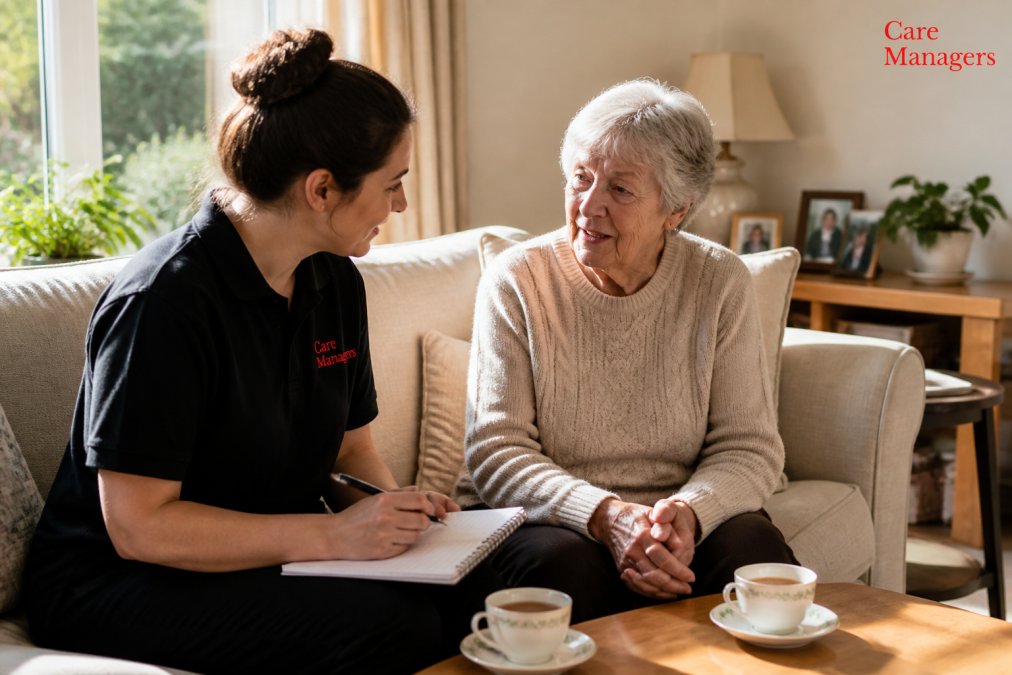
Pay attention to the routines that matter to them. Some people are early risers who want breakfast at 6am. Others sleep late. Some have specific dietary needs or preferences. Someone might have a daily walk they treasure, or a hobby they’ve done for 40 years. The best care plans work around these, not against them.
Ask yourself:
- What tasks have they stopped doing because they can’t manage them anymore?
- What do they do slowly or with difficulty?
- Are they forgetting things, appointments, whether they’ve taken medication, to eat?
- Are they isolating because getting out is too hard?
- Have they had falls or near-misses?
This isn’t about being clinical. It’s about understanding the person, not just the disability.
Identifying Medical and Personal Care Requirements
Now look at the medical side. Does your relative have diagnoses that affect daily life? Are they on medications that need managing? Do they have mobility issues, continence problems, or pain that affects what they can do?
Talk to their GP or any specialists they see. Ask specifically: what help would make the biggest difference? Some people need help with medications because they’re on several and the timing matters. Others need physical support with mobility. Some need reminders to eat or drink because they forget they’re hungry.
Write down:
- Current diagnoses and how they affect daily life
- Medications and whether they need reminding or help administering
- Any mobility aids they use (walker, wheelchair, grab rails)
- Continence issues and what support is needed
- Pain or discomfort that affects their activities
- Any cognitive changes (memory, confusion, decision-making)
This information becomes the foundation of a care plan. A good care agency will use it to match the right carer and set realistic expectations.
If your relative has dementia, Parkinson’s, or a condition that causes unpredictable behaviour, tell the agency explicitly. Carers need training for this, and the wrong match can escalate problems rather than solve them.
::: at-home lab testing.
Key Questions to Ask Home Care Agencies
Not all agencies are the same. Some are larger corporate operations. Others are small, local, family-run businesses. Some specialise in specific conditions. The questions you ask separate the ones that will genuinely support your relative from the ones that just send whoever’s available.
Vetting, Training, and Continuity of Care

Ask directly: how do you vet your carers? Do they have enhanced DBS checks (gov.uk)? How often are these renewed? What training do they have beyond basic care certificates?
For dementia or complex conditions, ask about specific training. Has the carer been trained in dementia care, Parkinson’s support, or whatever condition your relative has? Training matters. A carer without dementia training can inadvertently increase confusion and distress.
Ask about continuity. Will the same carer come each time, or will it be different people? If it’s different people, how do they ensure handover of information? Some agencies have a system where the previous carer writes notes for the next one. Others use apps so carers can see what happened in previous shifts.
How do they handle sickness or holidays? If your regular carer is ill, who covers? Is it someone your relative knows, or a stranger? The better agencies have a small pool of familiar backup carers.
Communication, Updates, and Flexibility
Ask how you’ll stay informed. Will the carer call you after each visit? Will there be a written log you can access? Some agencies use apps where you can see real-time updates. Others prefer phone calls.
This matters more than it sounds. If your mum has a fall, you want to know immediately. If she’s refusing to eat, you need to know so you can problem-solve with the carer. Communication gaps create anxiety and missed problems.
Call us for Free Assessment Today →
Ask about flexibility. What happens if your relative’s needs change? If they suddenly need more hours, can the agency increase visits? If they have a hospital appointment, can the carer adjust the schedule? Life is unpredictable, especially with health conditions. You need an agency that can adapt.
Ask what happens if there’s a problem. If your relative isn’t happy with the carer, what’s the process? Can you request a change? How quickly? A good agency treats this seriously because the relationship between carer and client is everything.
How to Find Private Home Care for Overnight Support
If you need someone in your home overnight, whether it’s occasional respite or regular support, the process is slightly different from daytime care. You’re inviting someone into your home during vulnerable hours, so the vetting and relationship-building matter even more.
Start by contacting local agencies and asking specifically about overnight availability. Not all offer this. Some do occasional overnight respite (a night or two when you need a break). Others provide regular overnight support as part of a live-in arrangement.
Ask about the carer’s experience with overnight care. It’s different from daytime work. A carer needs to be alert to sounds and changes whilst also respecting your relative’s sleep. They need to manage toileting at night, respond to confusion or distress, and handle emergencies without panicking.
For overnight care, the personality fit is crucial. Your relative is in a vulnerable state, often confused or anxious at night. They need someone calm, patient, and who understands that night-time is different from daytime.
Meet potential carers before they start. Some agencies will arrange a trial shift. Use this time to see how your relative responds. Do they seem comfortable? Does the carer handle night-time confusion well? Is there a rapport?
Ask about monitoring. How will you know your relative is safe during the night? Some carers check in regularly. Others use monitoring systems. Discuss what feels right for your situation.
Funding and Paying for Home Care
This is where many families get stuck. Professional home care costs money, and it’s not always clear who pays or what help is available.
If your relative is over 65 and has low income and savings, they may qualify for support from their local authority (gov.uk). The process involves a care needs assessment and a financial assessment. Contact your local council’s adult social care team to explore this. They can tell you whether your relative qualifies and what the process looks like.
If your relative doesn’t qualify for council support, or if they want to top up their care, you’ll be paying privately. Costs vary depending on whether it’s visiting care or live-in support, the level of complexity, and your location. Some agencies publish pricing; others ask you to call for a quote.
Many families use a combination. Perhaps the local authority funds basic personal care, and the family pays for additional hours or specialist support.
Some people use personal health budgets if they’re eligible (the NHS). This is money the NHS allocates for health-related care, which can sometimes be used flexibly for home support.
Ask agencies about their payment terms. Do they invoice monthly? Do they require a deposit? Can you pause or reduce hours temporarily if needed?
:::takeaway
The funding landscape is complex, but it’s worth exploring all options. A conversation with your council’s adult social care team costs nothing and might reveal support you didn’t know existed.
What Makes Professional Home Care Different
Professional home care isn’t the same as asking a family member or a friend to help, and it’s not the same as moving someone into a care home.
When you hire professional carers, you’re getting trained staff who understand safeguarding, dignity, and person-centred care. They have DBS checks, training in health and safety, and accountability to an agency. If something goes wrong, there’s a process. If your relative isn’t happy, you can request a change.
Professional care also means your relative can stay in their own home. They keep their independence, their routines, their possessions, and their identity. For many people, this is the difference between a good quality of life and a decline.
The carer brings expertise. They know how to help someone with mobility safely, how to communicate with someone with dementia, how to spot signs of infection or decline. A family member, however loving, might not.
Professional care also protects family relationships. When adult children become primary carers, it changes the dynamic. Having a professional carer means you can be a son or daughter again, not a nurse. You can focus on the emotional relationship rather than the physical care.
Care Managers provides professional home care with a focus on tailored care plans and reliable communication. The emphasis is on maintaining your relative’s independence and dignity whilst giving families genuine peace of mind. Services include personal care, medication management, companionship, and specialist support for complex conditions like dementia.
Finding the right professional home care services requires understanding what your relative needs, asking the right questions of agencies, and being clear about funding. The goal isn’t perfect care, it’s care that works for your relative’s life, delivered by someone they trust, with support and communication that give you confidence.
Book a call with Care Managers to discuss your relative’s needs and explore how tailored home care can support them to remain safe, comfortable, and independent at home.
Frequently Asked Questions
What is the difference between visiting care and live-in care?
Visiting care involves a carer coming to your home for scheduled periods, typically ranging from a few hours to several visits per week, for tasks like personal care, medication management, and companionship. Live-in care provides 24-hour support with a carer residing in your home, offering round-the-clock assistance and ideal for those needing constant supervision or complex care. The choice depends on your care needs, independence level, and preference for continuous presence versus scheduled support.
How do I find a reputable professional home care provider?
Start by asking your GP, local authority, or social services for recommendations. Check whether providers are regulated by the Care Quality Commission (CQC) and review their inspection reports. Ask potential agencies about carer vetting processes, including DBS checks, training qualifications, and how they match carers to clients. Request references from current clients, clarify their continuity-of-care policies, and ensure they have clear communication channels for updates and concerns.
What training and qualifications should professional home carers have?
Professional home carers should hold relevant qualifications such as Health and Social Care qualifications or equivalent. They should have completed safeguarding and health and safety training, and for specialist roles (dementia, complex medical care), additional certified training is essential. Ask prospective agencies about their induction programmes, ongoing professional development, and whether their staff hold current first aid certification. Proper training ensures carers can handle your specific needs safely and compassionately.
Can I receive financial support to help pay for home care services?
Financial support for home care varies depending on your circumstances. If you have been assessed as needing social care, your local authority may contribute towards costs based on a financial assessment. Some individuals may qualify for Attendance Allowance or Personal Independence Payment if they have eligible disabilities. You can also explore options like using savings, pension income, or arranging a financial assessment with your local authority. Contact your local social services or a care advisor to understand what support you may be eligible for.
This article was written using GrandRanker