Table of Contents
- Home Care vs Nursing Home: Key Differences at a Glance
- What Is Home Care?
- What Is a Nursing Home?
- Levels of Care: Residential vs Nursing Care
- How to Find Private Home Care for Overnight Support
- Understanding Your Local Authority Care Needs Assessment
- Making the Right Choice: Home Care or Nursing Home?
- Conclusion
Last Updated: August 25, 2026
Home Care vs Nursing Home: Key Differences at a Glance
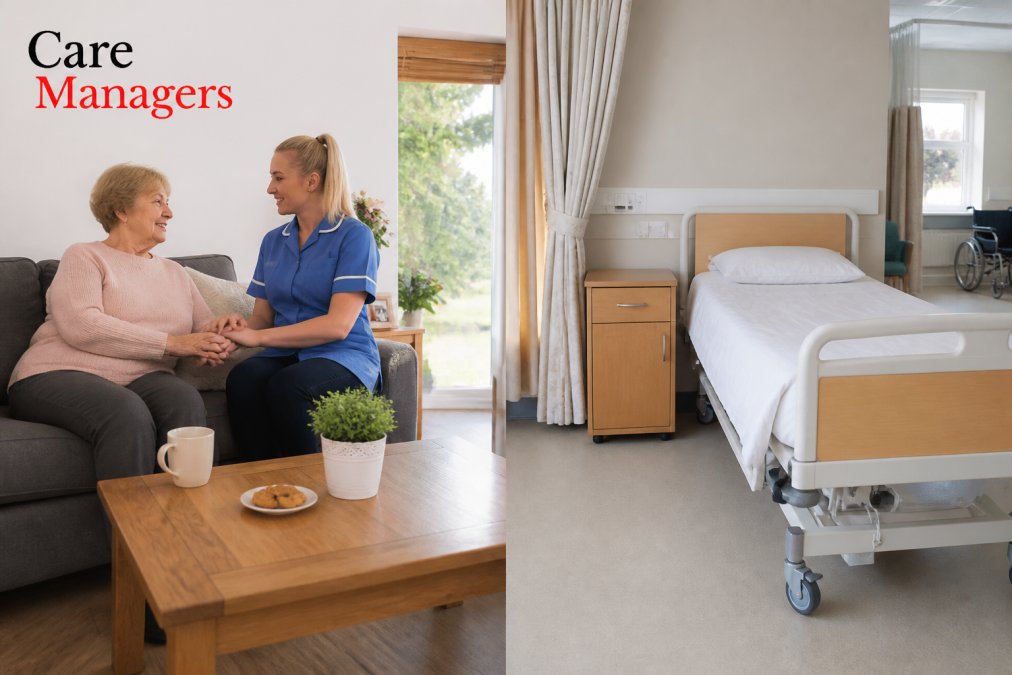
Choosing between home care and a nursing home is one of the most significant decisions families face when supporting an ageing relative or managing a chronic condition. Home care allows individuals to remain in their own homes with professional support arriving at scheduled times, whilst a nursing home provides round-the-clock residential care in a dedicated facility with on-site medical staff.
This guide from Care Managers explores both options in detail, helping you understand the practical, emotional, and financial implications of each choice.
| Aspect | Home Care | Nursing Home |
|---|---|---|
| Setting | Your own home | Residential facility |
| Daily living support | Yes, scheduled visits | 24/7 on-site |
| Qualified nursing staff | On-call or visiting | On-site, always available |
| Cost structure | Hourly or weekly rates | Weekly residential fees |
| Independence level | High, you set routines | Shared routines, communal living |
| Flexibility | Very flexible scheduling | Fixed daily schedule |
| Social interaction | Depends on visitors | Built-in community |
| Medical oversight | Visiting nurse or GP-led | Dedicated nursing team |
What Is Home Care?
Home care is professional support delivered in your own home, enabling you to maintain your familiar surroundings whilst receiving help with daily living activities. A care assistant visits at agreed times to provide personal care, medication management, meal preparation, household tasks, and companionship. The frequency and type of support depend entirely on your assessed needs.
The defining feature of home care is autonomy. You remain the householder. Your routines, preferences, and choices shape how care is delivered. If you prefer breakfast at 7 a.m. rather than 8 a.m., that’s your decision. Home care also scales, you might start with three hours per week and gradually increase to overnight support as needs change.
However, home care has limits. If you require constant medical supervision, complex wound care, or 24-hour monitoring that a visiting carer cannot provide, home care may not be safe or appropriate. Similarly, if you live alone and fall at night, no one is there to help immediately.
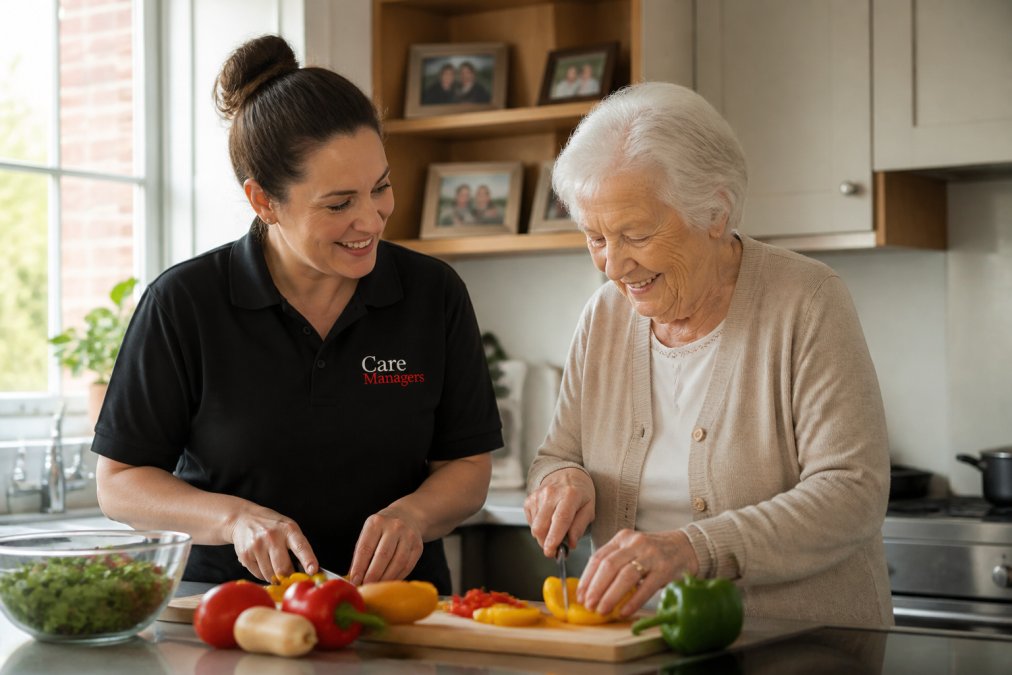
Care Managers offers tailored home care plans across South Wales and England, with flexible visiting care, overnight support, and live-in options designed around your individual routines and preferences.
What Is a Nursing Home?
A nursing home is a residential facility where residents live permanently or long-term, receiving 24/7 care from a team of qualified nurses and care assistants. A nursing home has registered nurses on duty at all times to manage medications, monitor health conditions, and respond to medical emergencies. Residents have their own rooms or shared accommodation, meals are provided communally, and there is a structured daily schedule of activities and care routines.
Nursing homes are regulated by the Care Quality Commission (CQC) and must meet strict standards for staffing, hygiene, safety, and care quality (cqc.org.uk). Each resident receives a care plan based on their assessed needs, and nursing staff monitor health changes, manage complex medications, and coordinate with GPs and specialists. For people with advanced dementia, Parkinson’s disease, or multiple medical conditions, this level of professional oversight provides essential safety.
The residential environment also offers built-in social interaction. For people who live alone or whose homes are no longer suitable for their care needs, this community aspect can reduce isolation and provide meaningful engagement.
The trade-off is significant. Entering a nursing home means leaving your own home, adapting to shared routines, and accepting less control over daily choices.
Levels of Care: Residential vs Nursing Care
Understanding the distinction between residential and nursing care is essential, because it determines which setting is appropriate for your needs and what qualifications staff must hold.
Residential care (sometimes called a care home) provides personal care, help with bathing, dressing, toileting, and daily living activities, but does not include nursing care. Staff are care assistants, not nurses. Residential care suits people who need support with personal care but don’t require constant medical supervision or complex medication management.
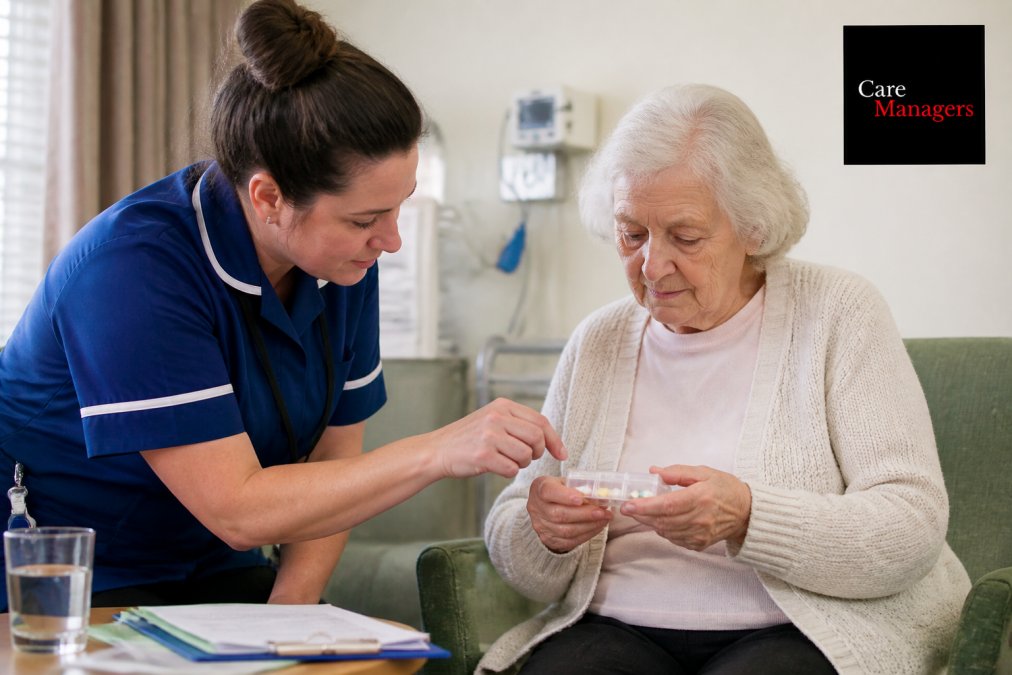
Nursing care includes everything residential care provides, plus registered nursing support. Qualified nurses administer medications, manage catheters, monitor blood pressure and blood sugar, provide wound care, and respond to acute health changes. A nursing home must have a registered manager (usually a nurse) and sufficient nursing staff on duty 24/7. Nursing care is essential for people with dementia, Parkinson’s disease, stroke recovery, palliative care, or multiple chronic conditions.
For home care, the equivalent distinction is whether you need a care assistant (who provides personal care and companionship) or a visiting nurse (who can administer medications, manage medical equipment, and monitor health). Many people use both.
How to Find Private Home Care for Overnight Support
Finding reliable overnight home care requires a clear assessment of your needs and a systematic approach to selecting a provider. Overnight care can mean waking night care (a carer present and awake to respond to needs) or sleeping night care (a carer present but sleeping, available if you need help).
Step 1: Define Your Needs
Before contacting providers, be clear about what overnight support means for you. Do you need someone to help you to the toilet at night? Are you worried about falls? Do you take medications that must be managed at specific times? This clarity helps agencies match you with suitable carers.
Step 2: Check the Provider’s Registration and Credentials
Home care agencies must be registered with the CQC if they provide regulated activities (personal care). Check their CQC registration and read their latest inspection report. Look for ratings of "Good" or "Outstanding." Ask about staff training, specifically dementia care training, safeguarding training, and medication management certification if relevant. home safety equipment.
Step 3: Request References and Ask About Continuity
One of the biggest frustrations families report is staff turnover. Ask the agency how long their carers typically stay and whether they assign the same carer to the same client.
Step 4: Discuss Training and Specialist Needs
If you have dementia, Parkinson’s disease, or another condition requiring specialist knowledge, confirm the agency has carers trained in that area.
Step 5: Arrange a Trial Period
Before committing to long-term overnight care, ask if the agency offers a short trial period.
Understanding Your Local Authority Care Needs Assessment
If you’re considering care, whether home care or a nursing home, you may be eligible for local authority funding or support. This begins with a care needs assessment, a formal evaluation by your local authority’s social care team.
A care needs assessment examines your physical health, mental health, social support, housing, and ability to manage daily living activities. The assessor (usually a social worker or occupational therapist) visits your home, talks to you and your family, and produces a detailed report. This assessment is free and is your right under the Health and Social Care Act 2008 (Regulated Activities) Regulations 2014 (legislation.gov.uk).
The assessment determines what support you need to stay safe and maintain independence, whether you’re eligible for local authority funding, and what you’re expected to contribute financially (means-tested).
Your local authority must complete the assessment within a reasonable timeframe (typically 4-6 weeks) (gov.uk). You’re entitled to a copy of the report and should have the chance to comment on it. If you disagree with the assessment, you can request a review.
Call us for Free Assessment Today →
The assessment doesn’t automatically lead to funded care; it determines eligibility. Local authorities have an "eligibility threshold." Generally, you must have needs in at least two of these areas: managing personal hygiene, managing continence, preparing food, managing nutrition, maintaining a safe environment, or managing health and medication. If your needs are lower, you may not meet the threshold, though you can still arrange and pay for private care.
After assessment, your local authority produces a care and support plan outlining your needs, the support available, and any funding the council will provide.
Making the Right Choice: Home Care or Nursing Home?
The decision between home care and a nursing home is deeply personal and depends on your health, living situation, family support, preferences, and financial circumstances. Neither choice is universally "better"; the right answer is the one that matches your needs and values.
Choose home care if:
You want to remain in your own home and have the physical and cognitive ability to do so safely. Home care suits people with manageable health conditions, good family support, and a strong desire for independence. If your home is suitable (accessible, safe, with space for carers to work), home care preserves the autonomy and dignity many people deeply value. It’s also flexible, you can adjust support as needs change, and it’s often easier to reverse or reduce than moving into residential care.
Home care is also the better choice if you have specific preferences that matter to you: particular meal times, religious observances, or daily routines, because your carer works around your life rather than fitting you into an institution’s schedule.
Choose a nursing home if:
Your medical needs require 24/7 nursing oversight. If you have advanced dementia with behavioural changes, complex medication regimens, or conditions like Parkinson’s or stroke recovery requiring constant monitoring, a nursing home’s on-site nursing team provides safety and expertise that visiting care cannot match. Nursing homes are also appropriate if your home is unsuitable for care or if you live alone with no family support and need the security of on-site staff and community.
A nursing home is also worth considering if you’re emotionally struggling with isolation. The built-in community and activities can significantly improve mental health and quality of life.
The middle ground: Overnight or live-in home care
Many people benefit from a hybrid approach. You remain in your own home but have a carer present overnight (waking or sleeping night care) or even live-in support. This provides security and medical oversight whilst preserving your independence and home environment.
Financial and emotional considerations
Cost matters, but it shouldn’t be the only factor. Some families can afford private home care; others rely on local authority funding (which may be limited). Get quotes from multiple providers and understand what’s included.
Emotionally, consider the transition carefully. Moving to a nursing home involves leaving your home, adapting to new routines, and accepting loss of control. For some people, this transition is necessary and ultimately beneficial. For others, it causes depression and decline. If home care is viable, it often preserves wellbeing better than residential care.
The role of a care assessment
Before deciding, request a formal care needs assessment from your local authority. This gives you an objective picture of what support you actually need, what’s safe, and what funding might be available.
Conclusion
Home care and nursing homes serve different needs, and the right choice depends on your health, independence, preferences, and circumstances. Home care preserves autonomy and allows you to remain in familiar surroundings, but requires suitable housing, manageable health conditions, and often significant coordination. Nursing homes provide 24/7 medical oversight and built-in community, but involve leaving your home and adapting to shared routines.
If you’re exploring home care options, Care Managers provides tailored care plans, professional staffing solutions, and specialist services including dementia care, faith-based home care, and live-in support across South Wales and England. Our approach prioritises your independence, dignity, and individual preferences, ensuring genuine peace of mind for you and your family.
Book a call with Care Managers to discuss your specific needs and explore how our services can support you or your loved one to remain safe, comfortable, and independent at home.
=== FAQ ANSWERS (audit these too, same rules) ===
[1] Q: What is the main difference between home care and a nursing home?A: Home care provides personal care, companionship, and daily living support in your own home, delivered by care assistants and carers. A nursing home offers 24/7 residential care with qualified nurses on staff to provide medical support, medication management, and clinical oversight. Home care prioritises independence and remaining in familiar surroundings, whilst nursing homes provide a structured care environment with round-the-clock professional medical staff. [2] Q: How do I determine if my loved one needs nursing care or home care?
A: A local authority care needs assessment evaluates your loved one’s physical, emotional, and medical requirements. If they need medication management, wound care, or ongoing health monitoring by a qualified nurse, nursing care may be necessary. If they require help with bathing, dressing, meals, and companionship but are generally stable medically, home care may be suitable. A care assessment provides a professional recommendation based on their specific circumstances. [3] Q: Can home care provide the same level of medical support as a nursing home?
A: Home care typically focuses on personal care and daily living activities. Whilst some home care services include medication assistance and health monitoring, they do not provide the same clinical oversight as nursing homes. Nursing homes employ qualified nurses for complex health needs, wound care, and medical emergencies. If your loved one has advanced medical conditions, dementia requiring specialist care, or complex medication needs, nursing care may offer more appropriate support. [4] Q: What are the benefits of remaining in one’s own home for care?
A: Home care allows people to maintain independence, stay in familiar surroundings, and preserve their personal routines and preferences. It reduces the emotional impact of relocation and supports mental well-being through social interaction with family and community. Home care is often more flexible and personalised to individual needs. For many, remaining at home provides dignity, autonomy, and continuity of life, which can significantly improve quality of life and overall wellbeing.
Frequently Asked Questions
What is the main difference between home care and a nursing home?
Home care provides personal care, companionship, and daily living support in your own home, delivered by care assistants and carers. A nursing home offers 24/7 residential care with qualified nurses on staff to provide medical support, medication management, and clinical oversight. Home care prioritises independence and remaining in familiar surroundings, whilst nursing homes provide a structured care environment with round-the-clock professional medical staff.
How do I determine if my loved one needs nursing care or home care?
A local authority care needs assessment evaluates your loved one's physical, emotional, and medical requirements. If they need medication management, wound care, or ongoing health monitoring by a qualified nurse, nursing care may be necessary. If they require help with bathing, dressing, meals, and companionship but are generally stable medically, home care may be suitable. A care assessment provides a professional recommendation based on their specific circumstances.
Can home care provide the same level of medical support as a nursing home?
Home care typically focuses on personal care and daily living activities. Whilst some home care services include medication assistance and health monitoring, they do not provide the same clinical oversight as nursing homes. Nursing homes employ qualified nurses for complex health needs, wound care, and medical emergencies. If your loved one has advanced medical conditions, dementia requiring specialist care, or complex medication needs, nursing care may offer more appropriate support.
What are the benefits of remaining in one's own home for care?
Home care allows people to maintain independence, stay in familiar surroundings, and preserve their personal routines and preferences. It reduces the emotional impact of relocation and supports mental well-being through social interaction with family and community. Home care is often more flexible and personalised to individual needs. For many, remaining at home provides dignity, autonomy, and continuity of life, which can significantly improve quality of life and overall wellbeing.
This article was written using GrandRanker