TL;DR:
- Recognizing when dementia care needs change involves observing physical, cognitive, and daily living signs early. Families should request timely assessments and adapt care plans before emergencies occur. Ongoing monitoring and professional support help maintain safety and quality of life as the condition progresses.
Recognising that dementia care needs are changing is defined as identifying the point at which current support no longer meets a person’s physical, cognitive, or emotional requirements. Dementia is a progressive condition, and the care someone needs in the early stages will rarely be sufficient two or three years later. The Alzheimer’s Society recommends that people with dementia receive a GP review at least every 12 months, or sooner when health changes significantly. For families, learning to spot the signs early, request the right assessments, and adapt care plans accordingly is the most direct way to protect a loved one’s quality of life and safety.
What are the signs that dementia care needs are increasing?
The clearest signs that dementia care needs are changing fall into three broad categories: physical, cognitive, and daily living. Spotting them early gives you time to act before a crisis forces the decision.
Physical signs are often the most visible. Watch for:
- Frequent falls or unsteady walking that was not present before
- Difficulty swallowing, significant weight loss, or refusal to eat
- Missed or incorrectly taken medication
- Incontinence that is new or worsening
- Repeated hospital admissions or emergency calls
Repeated crises and hospital admissions are a strong signal that current care arrangements are no longer adequate. Each admission that could have been prevented points to a gap in daily support.
Cognitive and behavioural changes are equally telling. Increased confusion about time or place, persistent wandering, sudden aggression, or significant withdrawal from activities the person once enjoyed all indicate that needs have shifted. These changes can be distressing to witness, and they often appear gradually rather than overnight.
Daily living difficulties are the third category. Struggles with personal hygiene, dressing, preparing food, or managing finances suggest that the person requires more hands-on assistance than they currently receive. When someone who previously managed their morning routine now needs prompting for every step, the level of care must be reassessed.
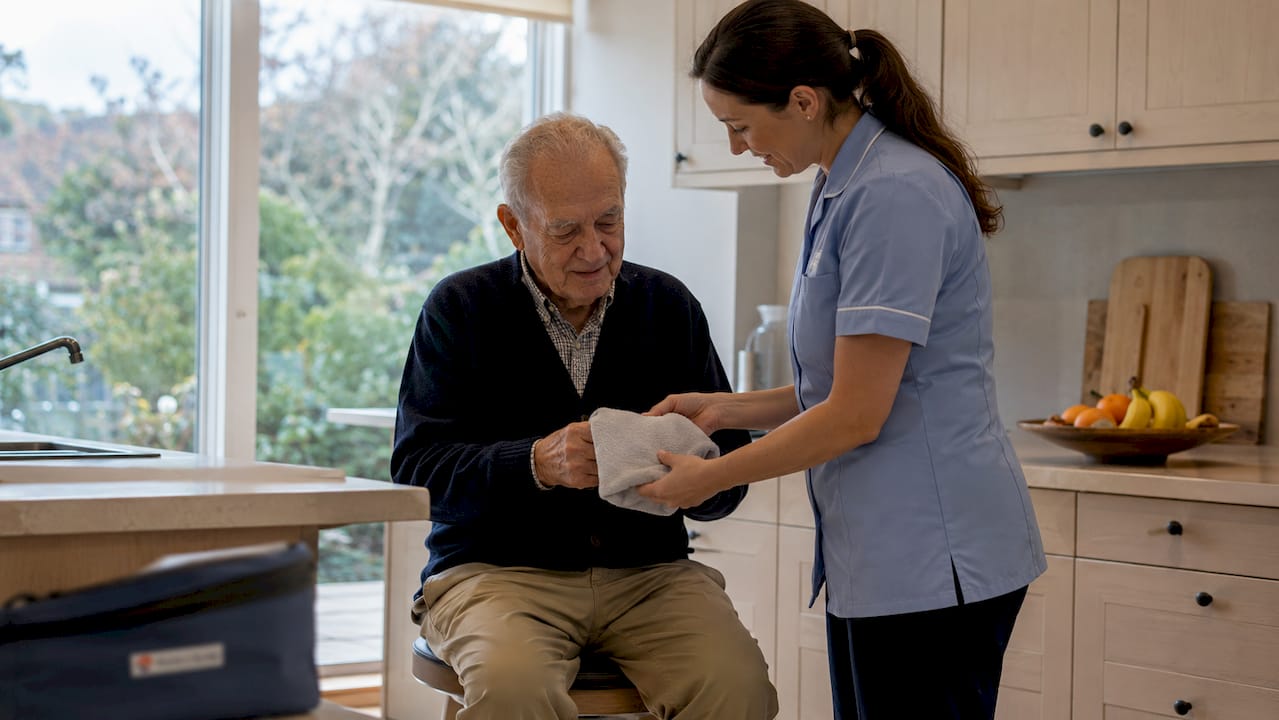
One category that families often overlook is carer strain. When you, as the primary carer, feel exhausted, anxious, or unable to meet the person’s needs safely, that is itself a sign that care needs are increasing. Your capacity is part of the care equation.
Pro Tip: Keep a brief daily log noting incidents, changes in behaviour, and any concerns. A written record is far more persuasive during a formal assessment than a general impression, and it helps you spot patterns you might otherwise miss.
One critical distinction: not every sudden change signals dementia progression. Behavioural changes can mask treatable conditions such as urinary tract infections, dehydration, pain, or medication side effects. Always seek a GP review before concluding that the dementia itself has worsened.
How to carry out or request a dementia care needs assessment
A care needs assessment is the formal process through which a local authority or NHS body evaluates what support a person with dementia requires. Any adult can request one, and the person with dementia or their family can initiate it directly with the local council.
The process typically follows these steps:
- Contact your local authority’s adult social care team to request a needs assessment.
- A social worker or occupational therapist visits to evaluate daily living needs, safety risks, and current support.
- The assessor produces a care and support plan outlining recommended services.
- A financial assessment (means test) determines how much the person contributes to care costs.
- If needs are complex or primarily health-related, the GP or social worker can refer for NHS Continuing Healthcare (CHC) eligibility screening.
Timelines matter. Local authority assessments typically take 4–6 weeks, while CHC eligibility decisions should be made within 28 days. Request early, before needs become urgent.
The financial assessment uses a means test. In England, the threshold is £23,250 in savings and assets. The value of the home is usually excluded from the calculation if a spouse or partner still lives there, though the rules are complex and early financial advice is strongly recommended.
| Assessment type | Who carries it out | Typical timeline |
|---|---|---|
| Local authority needs assessment | Social worker or OT | 4–6 weeks |
| NHS Continuing Healthcare (CHC) | Multidisciplinary NHS team | Within 28 days |
| Carer’s assessment | Local authority | Separate from the person’s assessment |
| Financial means test | Local authority finance team | Follows the needs assessment |
Pro Tip: During the assessment, be specific and honest about what you can no longer manage. Carers who clearly state their limits trigger a legal duty for the local authority to arrange formal support. Underplaying difficulties can result in inadequate provision.
How to adapt and update dementia care plans when needs change
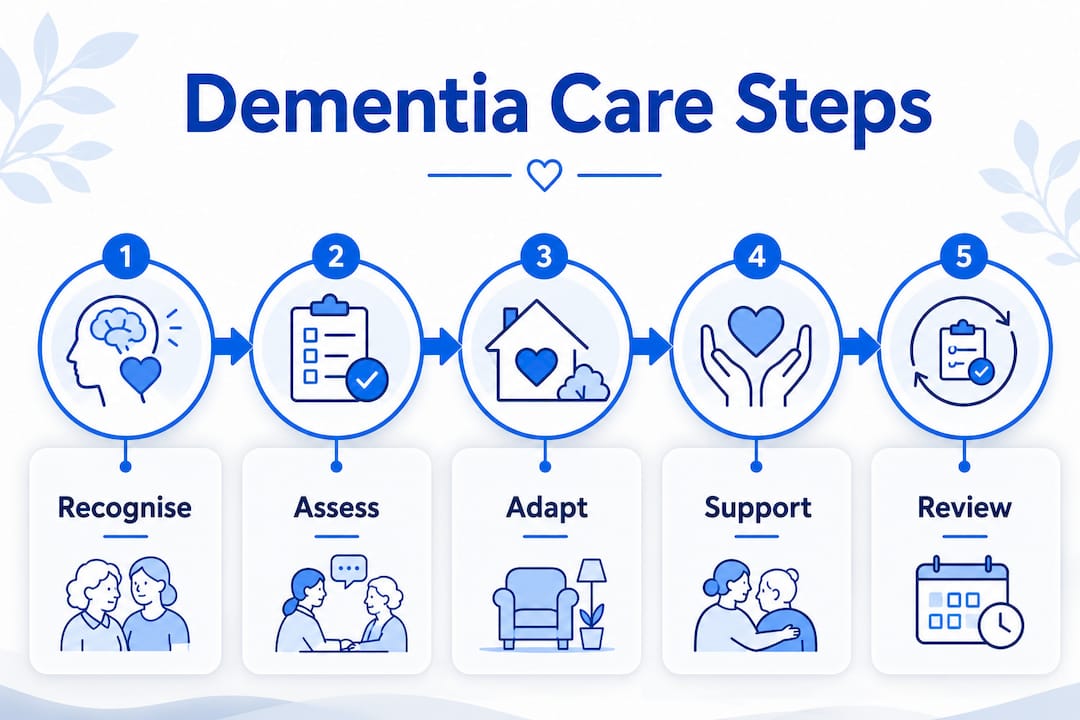
A care plan is not a fixed document. It should be reviewed regularly and updated whenever a significant change occurs, whether that is a fall, a hospital admission, or a noticeable shift in behaviour.
The most effective reviews involve a multidisciplinary approach. That means the GP, social worker, community mental health team, and family members all contributing their observations. No single professional sees the full picture. Your daily observations as a family carer carry genuine clinical weight, so bring your written log to every review meeting.
When updating a care plan, the options for increasing support include:
- Increasing the frequency or duration of home care visits
- Adding overnight or live-in care for safety and personal care needs
- Introducing specialist dementia home care from trained carers
- Arranging regular respite care to give family carers a break
- Referring to community services such as day centres or memory cafés
- Considering residential dementia care when home-based support is no longer sufficient
The question of when to move from home care to residential care is one of the hardest families face. The answer is not a fixed threshold. It is reached when the combination of home care, family support, and community services can no longer keep the person safe and comfortable. Specialist dementia care homes offer dementia-friendly design, trained staff, and structured activities that can genuinely improve wellbeing at that stage.
Pro Tip: When adjusting care, aim to preserve as much independence as possible. Offer choices rather than taking over tasks entirely. A person with dementia who retains some control over their day experiences better mood and less agitation, which makes care easier for everyone.
What challenges arise when dementia care needs change?
Adapting to changing dementia care needs is rarely straightforward. Families face a consistent set of obstacles, and knowing them in advance makes them easier to manage.
Carer fatigue is the most common barrier. Family carers often absorb increasing demands gradually, without realising how much their own health and wellbeing has deteriorated. Carers are entitled to their own needs assessment from the local authority, separate from the assessment of the person they care for. This is not a luxury. It is a legal right, and it can unlock practical support.
Delays in the system frustrate many families. Assessment waiting times, funding disputes, and gaps between services can leave people in unsafe situations. The most effective response is to document everything, follow up in writing, and ask the GP to flag urgency when health is at risk.
Resistance from the person with dementia is another common challenge. Someone who has always valued their independence may refuse additional help. Introducing changes gradually, framing them as practical rather than care-related, and involving the person in decisions where possible all reduce resistance.
Misreading the cause of decline leads families to accept deterioration that is actually treatable. Sudden deterioration is often caused by secondary conditions such as urinary tract infections, dehydration, pain, or medication side effects. Rule these out with a GP before concluding that the dementia has progressed.
Pro Tip: Connect with a local or national carer support network such as Carers UK or the Alzheimer’s Society helpline. Speaking with others who have navigated the same system provides both practical guidance and emotional relief that professionals alone cannot offer.
What support services are available when dementia care needs increase?
The range of services available to support a person with dementia at home is broader than most families realise. The key is knowing what exists and how to access it.
Home care services form the foundation. Agencies providing carers with specific dementia training can assist with personal care, medication management, meal preparation, and companionship. As needs increase, live-in dementia care provides round-the-clock support without requiring a move to residential care.
NHS community services are available through GP referral. GPs can refer people with dementia to speech and language therapy, physiotherapy, community mental health teams (CMHTs), and social prescribing link workers. These services address specific needs that home carers cannot cover alone.
Respite and day care give family carers essential breaks. Day centres offer structured activities and social contact for the person with dementia, while overnight or short-stay respite care allows carers to rest or manage their own health.
Technology and home adaptations extend safety at home. Telecare systems, GPS trackers, automatic medication dispensers, and grab rails all reduce risk without restricting independence.
| Service type | Primary benefit | How to access |
|---|---|---|
| Home care with dementia training | Personal care and daily support | Private agency or local authority |
| Live-in care | 24-hour support at home | Private agency or Caremanagers |
| NHS community services | Therapy and mental health support | GP referral |
| Day centre or respite care | Carer breaks and social stimulation | Local authority or charity |
| Telecare and home adaptations | Safety and independence at home | Occupational therapist or local authority |
When home-based services are no longer sufficient, residential dementia care provides a safer environment with specialist staff and dementia-friendly surroundings. The decision to move is significant, but it is sometimes the most compassionate choice available.
Key takeaways
Recognising when dementia care needs are changing requires consistent observation, formal assessment, and a willingness to adapt the care plan before a crisis forces the issue.
| Point | Details |
|---|---|
| Watch for early warning signs | Physical changes, daily living difficulties, and carer strain all signal that a reassessment is needed. |
| Request assessments promptly | Local authority assessments take 4–6 weeks; request early before needs become urgent. |
| Rule out treatable causes | Sudden decline may reflect infection, dehydration, or medication issues rather than dementia progression. |
| Update care plans regularly | Review after every significant change and involve the GP, social worker, and family in the process. |
| Know your rights as a carer | Carers are entitled to their own needs assessment, which can unlock separate support packages. |
What I have learned from watching families navigate this
There is a pattern I see repeatedly. Families wait too long. Not because they do not care, but because recognising that a loved one needs more help feels like admitting defeat. The person with dementia resists it. The family resists it. And by the time everyone agrees that change is necessary, a crisis has already happened.
The families who manage this best are the ones who treat care planning as an ongoing conversation rather than a one-off decision. They keep notes. They attend GP reviews. They ask the uncomfortable questions before the situation forces those questions on them. They also look after themselves, which is not a soft suggestion. A carer who is burnt out cannot provide good care, and the person with dementia suffers as a result.
The other thing I would say is this: do not accept a sudden decline without questioning it. I have seen families grieve what they believed was a permanent deterioration, only to find that a treated infection restored much of the person’s previous function. Advocate for a medical review every time something changes sharply.
Dementia care is not a straight line downward. There are plateaus, there are good periods, and there are setbacks that are reversible. Your job as a family carer is to stay observant, stay connected to the right professionals, and stay honest about what you can and cannot manage. That is not a small thing. It is the most important work you will do.
— Emm
How Caremanagers supports families through changing dementia care needs
When you recognise that a loved one’s dementia care needs have shifted, knowing where to turn next makes all the difference.

Caremanagers specialises in dementia support at home across South Wales and England, providing trained carers who understand how to adapt support as needs evolve. Whether you need to increase visit frequency, arrange live-in care, or plan a transition from family-led support to professional care, Caremanagers builds a plan around the individual. Their team works alongside families, GPs, and social workers to make sure nothing falls through the gaps. Explore the full range of home care services and find the right level of support for where your loved one is now.
FAQ
What are the first signs that dementia care needs are changing?
The earliest signs include increased falls, difficulty with personal hygiene, missed medication, and growing confusion about familiar routines. Carer exhaustion is also a reliable indicator that current support is no longer sufficient.
Who can request a dementia care needs assessment?
Any adult, including the person with dementia or a family member, can request a needs assessment from the local authority’s adult social care team. The GP can also initiate a referral, particularly for NHS Continuing Healthcare eligibility.
How long does a dementia care needs assessment take?
Local authority assessments typically take 4–6 weeks, while NHS Continuing Healthcare decisions should be reached within 28 days. Requesting early reduces the risk of a gap in care.
Can sudden changes in dementia always be attributed to the condition progressing?
No. Sudden deterioration is frequently caused by treatable conditions such as urinary tract infections, dehydration, or medication side effects. A GP review should always be the first step when a sharp change occurs.
Are family carers entitled to their own assessment?
Yes. Carers have a legal right to their own needs assessment from the local authority, separate from the assessment of the person they support. This can result in a personalised support package to help sustain the caring role.