TL;DR:
- Person-centred care focuses on treating each individual as a whole person and involving them in decision-making. It improves health outcomes, satisfaction, and preserves dignity while requiring cultural change and commitment from organizations. Families can support this approach by asking care providers about individual preferences and insisting on shared care plans.
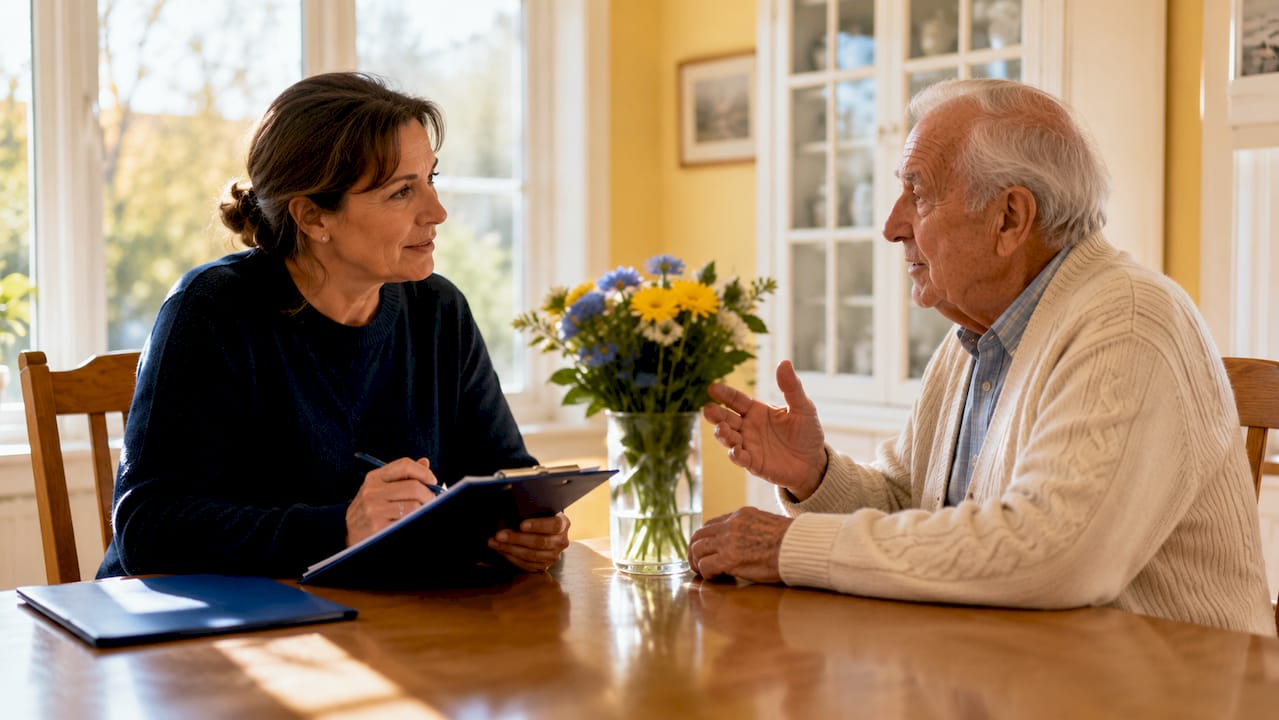
Person-centred care is defined as an approach to health and social care that places the individual at the centre of every decision, actively respecting their preferences, needs, and values. The Australian Commission on Safety and Quality in Health Care describes it as treating each person as an individual human being, fostering trust and mutual respect, and working together to make care decisions. This is not simply about being kind. It is a co-produced process that determines what matters most to the person and their carers, then shapes every aspect of care around that. Whether you are a family member supporting an elderly relative or a professional working in health and social care, understanding this approach changes how you see and deliver care.
What is person-centred care and why does it matter?
Person-centred care puts the individual, not the condition, at the heart of every interaction. A person with dementia is not defined by their diagnosis. A person recovering from a stroke is not simply a clinical case. This approach recognises that each individual brings their own history, preferences, relationships, and goals to any care situation.
The World Health Organization and the NHS both use this framework as a foundation for modern health policy. The WHO’s integrated people-centred care framework calls for health systems designed around people rather than diseases, with coordinated, safe, and effective care that supports carers alongside patients. That shift, from disease management to person-first thinking, is what separates person-centred care from older models.
For families, this matters in a very practical way. When your relative’s care is shaped around what they value, whether that is staying in their own home, maintaining a daily routine, or keeping close to family, outcomes improve. Care feels less like something done to them and more like something done with them.
What are the core principles of person-centred care?
The principles of person-centred care form a clear framework that any care professional or family member can recognise and apply. BMJ Health Careers outlines six key behaviours that embody this approach in practice. These move from foundational respect through to active emotional support and self-management.
The core principles include:
- Respect for individuality. Treat the person as a whole human being, not a set of symptoms or a care need category.
- Active listening. Give the person time and space to express what matters to them, without rushing or assuming.
- Clear, accessible information. Share information in plain language the person can understand and act on.
- Shared decision-making. Involve the person and their family in every significant care decision, not just the final one.
- Promoting self-management. Support the person to do as much as they are able and want to do for themselves.
- Emotional and social support. Recognise that wellbeing extends beyond physical health to relationships, identity, and purpose.
The Care Quality Commission (CQC) assesses care services in England against a “caring” standard that directly reflects these principles. CQC’s caring question evaluates whether staff show compassion, dignity, and respect, promote independence and choice, and respond to individual needs. NICE guidance aligns with these same expectations. This means person-centred care is not just good practice. It is a regulatory requirement.
Pro Tip: When visiting a care provider, ask directly how they record and act on a person’s individual preferences. A provider who cannot answer clearly is unlikely to be practising genuine person-centred care.
Person-centred, patient-centred, or people-centred: what is the difference?
These three terms are often used interchangeably, but they describe meaningfully different things. Understanding the distinction helps families and professionals choose the right language and the right approach.
| Term | Focus | Scope |
|---|---|---|
| Patient-centred care | The clinical interaction between patient and clinician | Individual appointment or episode of care |
| Person-centred care | The whole individual, including identity, relationships, and life goals | Ongoing care across settings and time |
| People-centred care | System-level design that coordinates care around populations | Health system reform and service planning |
Patient-centred care is largely about improving the quality of clinical encounters. It asks whether the patient felt heard during a consultation. Person-centred care goes further. It asks whether the entire care experience reflects who the person is and what they want from life. The WHO’s integrated people-centred care model extends this further still, calling for system redesign so that coordination, continuity, and carer support are built into how health services operate.
In UK policy and practice, “person-centred” is now the preferred term. It signals a broader commitment than patient-centred care alone and applies equally in home care, hospital settings, and social care. The NHS, CQC, and NICE all use person-centred language in their standards and guidance.
How is person-centred care put into practice in the NHS?
Knowing the principles is one thing. Applying them in a real care setting requires specific tools and processes. The NHS has developed a clear operational approach built around personalised care and support planning.
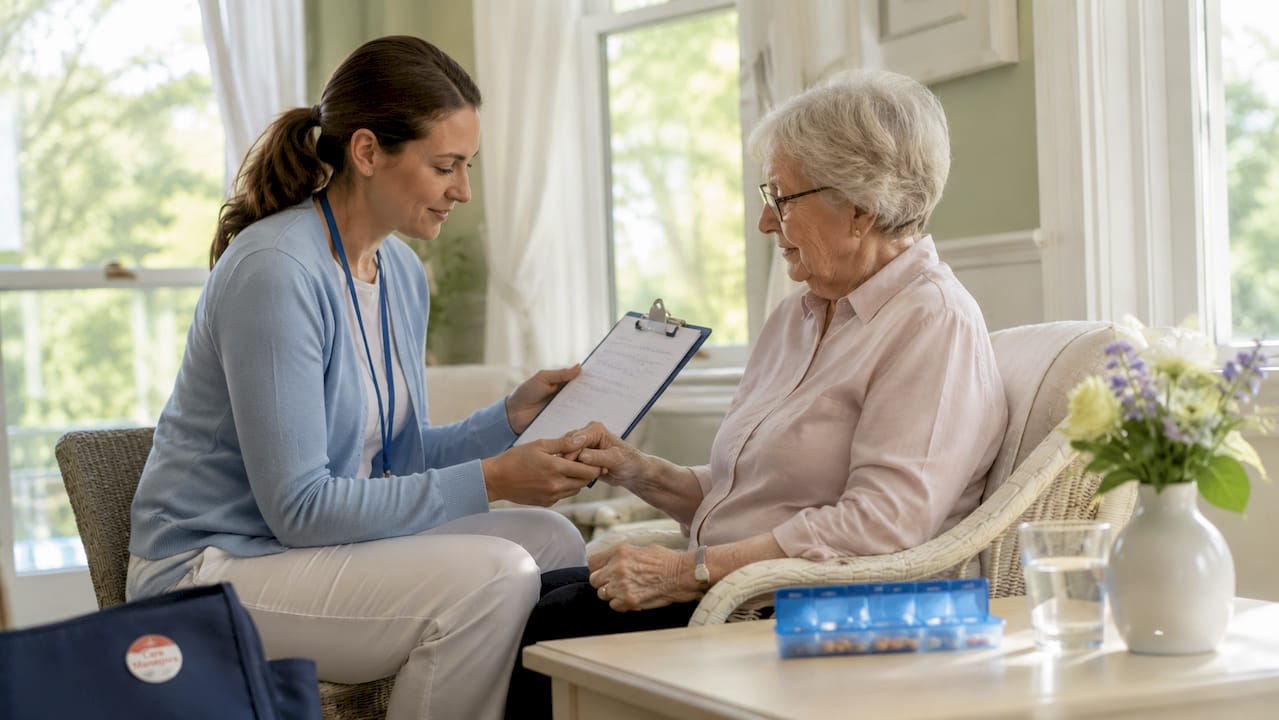
- Create a single shared care plan. The NHS personalised care and support plan is developed with the person and their carers, not for them. It records strengths, needs, goals, and the responsibilities of each professional involved.
- Capture ‘About Me’ information. This section records what matters to the person: their daily routines, communication preferences, relationships, and what a good day looks like for them. It is the foundation of genuinely tailored care.
- Share the plan across all teams. A single shared plan prevents fragmented care. When a district nurse, a GP, and a home care worker all see the same document, priorities are not lost between handovers.
- Set goals together. Goals should reflect what the person wants to achieve, not what professionals think is clinically appropriate. A person may prioritise attending a grandchild’s birthday over a physiotherapy target.
- Review and update regularly. Needs and preferences change. The plan should be a living document, revisited with the person and their carers at agreed intervals.
Pro Tip: If your relative is being discharged from hospital, ask the ward team whether a personalised care and support plan has been completed. If not, request one before discharge. It significantly reduces the risk of care gaps at home. You can read more about this in our hospital discharge planning guide.
What are the benefits of person-centred care?
The benefits of person-centred care are well documented across health and social care settings. They extend to the person receiving care, to their family, and to the professionals delivering it.
For the person receiving care, the most direct benefits are:
- Better health outcomes. Care tailored to individual needs and goals produces more relevant interventions and stronger engagement with treatment.
- Greater satisfaction. People who feel heard and respected report significantly higher satisfaction with their care experience.
- Preserved independence and dignity. Supporting self-management and choice keeps people active participants in their own lives rather than passive recipients of care.
- Reduced anxiety. When people understand their care and trust those delivering it, stress and uncertainty decrease.
For families, person-centred care means being recognised as partners rather than bystanders. Your knowledge of your relative, their history, their preferences, and their fears, is treated as clinically relevant information. That recognition changes the dynamic of every conversation with a care team.
For professionals, the benefits are equally real. Staff who practise person-centred care report greater job satisfaction and a stronger sense of purpose. The CQC caring standard reflects this: compassionate, dignified care is not only better for patients but sustains the professionals who deliver it. Understanding why home care matters for families helps illustrate how these benefits play out in everyday settings.
What challenges arise when implementing person-centred care?
Person-centred care is straightforward in principle and genuinely difficult to sustain in practice. The most common failure is treating it as a checklist rather than a culture. The Australian Commission on Safety and Quality in Health Care is explicit: person-centred care requires shared responsibility across all levels of an organisation, alongside monitoring and feedback mechanisms to hold teams accountable.
The key challenges include:
- Checklist compliance without culture change. Completing a care plan form is not the same as genuinely co-producing it. Without staff capability building and leadership commitment, the paperwork exists but the practice does not.
- Balancing risk and individual preference. When a person chooses something that carries risk, such as living alone or refusing a particular treatment, professionals and families must respect that choice while managing safety. NICE guidance on family involvement highlights the need to clarify roles clearly, especially when supporting older adults.
- Maintaining continuity across teams. When care involves multiple professionals across different organisations, communication breaks down. A shared care plan reduces this risk but only if every team member actually uses it.
- Sustaining the approach over time. Person-centred care is not a one-off intervention. It requires ongoing attention, regular review, and a leadership culture that treats it as non-negotiable rather than aspirational.
Organisations that succeed embed person-centred values into recruitment, training, supervision, and performance review. Those that fail treat it as a policy document rather than a daily practice.
Key takeaways
Person-centred care is the most effective approach to health and social care because it aligns every decision with the individual’s own values, goals, and preferences, producing better outcomes for people, families, and professionals alike.
| Point | Details |
|---|---|
| Core definition | Person-centred care treats the individual as a whole person, not a condition, and involves them in every care decision. |
| Six key principles | Respect, active listening, clear information, shared decisions, self-management, and emotional support form the foundation. |
| NHS implementation | A single shared personalised care and support plan, co-produced with the person and carers, is the operational standard. |
| Regulatory backing | CQC and NICE both require compassionate, dignified, person-centred care as part of their assessment frameworks in England. |
| Common pitfall | Ticking boxes without building staff capability and organisational culture undermines the entire approach. |
Why I believe person-centred care is the most important shift in modern healthcare
Having worked closely with families navigating home care, hospital discharge, and dementia support, I have seen what happens when care is genuinely person-centred and when it is not. The difference is not subtle. When a care worker knows that a person likes their tea strong, prefers to get dressed before breakfast, and finds loud voices distressing, the entire atmosphere of care changes. The person relaxes. The family trusts. The professional feels effective.
What strikes me most is how rarely this requires extra time or resources. It requires attention. It requires asking the right questions and actually recording the answers somewhere everyone can see them. The NHS personalised care and support plan exists precisely for this reason, yet many families I speak with have never heard of it.
The uncomfortable truth is that person-centred care fails most often not because of bad intentions but because of weak culture. Staff who are trained to follow procedures rather than to listen will follow procedures. Leadership that rewards throughput over relationship will get throughput. Changing that takes deliberate effort at every level of an organisation.
My strong view is that families should not wait for the system to get this right. Ask questions. Insist on being included. Know your relative’s rights. The principles of person-centred care give you the language and the authority to do exactly that.
— Emm
How Caremanagers delivers person-centred home care
Caremanagers provides personalised home care services across South Wales and England, built around the principles described in this article. Every care plan is developed with the person and their family, capturing individual preferences, daily routines, and personal goals before any care begins. Whether you need support following a hospital discharge, specialist dementia care, or regular respite for a family carer, Caremanagers matches each client with a care worker whose approach fits their needs. Families are treated as partners throughout, not as an afterthought. If you are thinking about choosing home care for an elderly relative, Caremanagers is ready to talk through your options with no pressure and no jargon.
FAQ
What is the simple definition of person-centred care?
Person-centred care is an approach that places the individual at the centre of all care decisions, respecting their preferences, values, and needs. The Australian Commission on Safety and Quality in Health Care defines it as treating each person as an individual human being and working together to make care decisions.
How does person-centred care differ from patient-centred care?
Patient-centred care focuses on improving the quality of individual clinical interactions. Person-centred care takes a broader view, addressing the whole person across all settings and over time, including their identity, relationships, and life goals.
What do the NHS and CQC expect from person-centred care?
The NHS requires a single shared personalised care and support plan co-produced with the person and their carers. The CQC assesses care services against a caring standard that includes compassion, dignity, respect, and promotion of independence and individual choice.
Why do organisations struggle to implement person-centred care?
The most common failure is treating person-centred care as a compliance checklist rather than a genuine cultural commitment. The Australian Commission on Safety and Quality in Health Care identifies the need for shared responsibility, staff capability building, and active monitoring to sustain the approach.
How can families support person-centred care for a relative?
Families can ask care providers how they record and act on individual preferences, request a personalised care and support plan, and ensure their relative’s goals and values are documented and shared across all care teams. Being present and vocal in care conversations is both your right and your relative’s protection.