A hospital discharge care plan is the structured set of instructions, services, and responsibilities that ensures a patient recovers safely at home after leaving hospital. Without one, the risks are stark. Nearly 1 in 5 patients are readmitted within 30 days due to preventable gaps in planning. This guide walks you through every stage of the process, from the first discharge assessment during admission to managing your loved one’s first weeks at home. Whether you are coordinating with NHS discharge teams, home health agencies, or managing care yourself, this is what you need to know.
What is the hospital discharge assessment process?
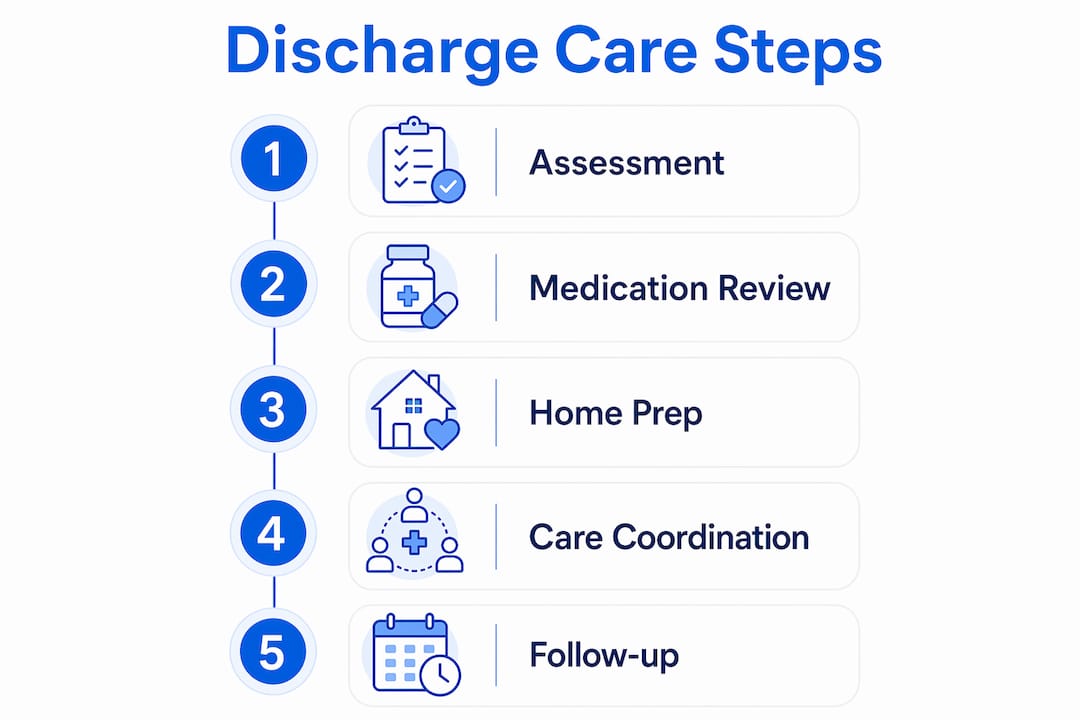
The discharge assessment is the clinical and social evaluation that shapes the entire care plan. Assessment begins within 24–48 hours of hospital admission, not at the point of discharge. That timing matters because it gives the care team enough runway to arrange services, equipment, and support before the patient leaves.
The assessment covers three areas: functional ability (can the patient walk, dress, or manage stairs?), cognitive status (do they understand their medication or care instructions?), and social circumstances (who is at home, and is the home safe?). A hospital case manager or social worker typically leads this process, working alongside the clinical team.

Social determinants of health such as unsafe housing, limited transport, and lack of caregiver support are formally evaluated as readmission risk factors. This is not a box-ticking exercise. A patient returning to a home with no stair rail, no carer, and no GP follow-up booked is at serious risk regardless of how well the clinical treatment went.
Hospitals also carry a legal obligation here. Under CMS guidance, recommended services must be realistically available, not simply listed on a discharge summary. The hospital must account for insurance coverage, transport, and the patient’s actual ability to access care.
Key questions to ask during the discharge assessment:
- What is the patient’s current level of independence for daily tasks?
- What home modifications or equipment are needed before discharge?
- Which services, such as physiotherapy or district nursing, have been confirmed and booked?
- What is the plan if the patient’s condition deteriorates at home?
- Has the family caregiver been included in the planning conversation?
Pro Tip: If your relative is admitted under “observation status” rather than as a formal inpatient, you may not be automatically entitled to discharge planning coordination. Ask the ward sister or case manager directly to confirm what support is available.
How to coordinate medications, appointments, and home health services
Coordination is where most discharge plans fall apart. The paperwork looks complete, but the appointments have not been confirmed, the medication list has not been reconciled, and the home health visit is scheduled for day five rather than day one.
Follow this sequence to close those gaps:
-
Request full medication reconciliation before leaving hospital. Ask the pharmacist or nurse to walk through every medication, including any changes made during the stay. Medication reconciliation before discharge reduces the risk of errors that lead directly to complications or readmission. Write down the name, dose, timing, and purpose of each medicine.
-
Book the GP or specialist follow-up before the patient leaves the ward. First follow-up appointments should be secured within 3–10 days of discharge. Do not assume the hospital has done this. Call the GP surgery yourself to confirm.
-
Schedule home health visits for the first 24–48 hours at home. Early home health visits within this window stabilise care and catch problems before they escalate. If a district nurse, physiotherapist, or occupational therapist is involved, confirm the exact date and time before discharge day.
-
Liaise with the community pharmacy. Confirm that all prescribed medications are in stock and can be collected or delivered on the day of discharge. Some specialist medications require advance ordering.
-
Clarify who to call in an emergency. Get a named contact at the GP surgery, the ward, and any community nursing team. A discharge summary alone is not enough. Requesting clear contact instructions is one of the most practical steps families can take.
Pro Tip: Create a single A4 sheet with the patient’s current medication list, GP contact, next appointment date, and the name of their community nurse. Keep one copy in the home and photograph it on your phone. This saves critical minutes in an emergency.
How to prepare your home for a safe recovery
The home environment is the most controllable variable in post-discharge recovery. A well-prepared space reduces falls, supports independence, and makes the daily care routine manageable for everyone involved.
Home modifications such as stair safety measures and shower benches directly reduce the risk of complications after discharge. An occupational therapist can carry out a formal home assessment, but there is much you can do in advance.
Common home adjustments to consider:
- Install grab rails in the bathroom and beside the toilet
- Place a shower bench or non-slip mat in the bath or shower
- Clear walkways of rugs, cables, and clutter that could cause a fall
- Move frequently used items to waist height to avoid bending or reaching
- Arrange a ground-floor sleeping area if stairs are not yet safe to use
- Ensure adequate lighting in hallways and on staircases
Beyond the physical environment, a written daily care schedule is one of the most effective tools you can create. Syncing medication schedules, therapy sessions, and home health visits in a written plan improves adherence and outcomes. The schedule should cover morning and evening routines, meal times, medication timings, therapy exercises, and rest periods.
| Task | Responsibility |
|---|---|
| Morning medication | Family caregiver or district nurse |
| Personal care and washing | Home care worker or family member |
| Physiotherapy exercises | Patient with family supervision |
| Evening medication | Family caregiver |
| Weekly wound check | District nurse |
Involve every person who will be providing care in creating this schedule. When roles are unclear, tasks get missed. A shared written plan removes ambiguity and gives everyone, including the patient, a clear picture of each day.
What common post-discharge complications should you watch for?
The first 30 days at home are the highest-risk period. Approximately 20% of patients are readmitted within this window, and most of those readmissions are preventable. Knowing what to look for is as important as any medication or appointment.
Watch closely for these warning signs:
- Signs of infection: redness, swelling, warmth, or discharge around a wound; fever above 38°C; increased confusion in older patients
- Medication side effects: unusual drowsiness, nausea, dizziness, or changes in behaviour that began after a new prescription
- Breathing difficulties: any new shortness of breath, especially after cardiac or respiratory procedures
- Falls or mobility decline: a sudden drop in the patient’s ability to walk or transfer safely
- Dehydration: dark urine, dry mouth, or confusion, particularly in elderly patients who may not feel thirsty
“The most dangerous moment in a patient’s recovery is often not in the hospital. It is the first week at home, when symptoms are easy to dismiss and help feels far away.”
When you notice any of these signs, do not wait for the next scheduled appointment. Contact the GP, district nurse, or NHS 111 the same day. Escalating early is not an overreaction. It is the right call.
Maintaining regular communication with the care team throughout the first month is not optional. Check in with the GP after the first follow-up appointment. Report any changes in the patient’s condition to the community nurse. Keep a brief written log of symptoms, medication changes, and any concerns. This record becomes invaluable if the patient does need to return to hospital.
Key takeaways
A thorough hospital discharge care plan, built on early assessment, confirmed services, and a prepared home environment, is the single most effective way to prevent readmission within the first 30 days.
| Point | Details |
|---|---|
| Start planning at admission | Discharge assessment begins within 24–48 hours of admission, not at the point of leaving. |
| Confirm every service before discharge | Do not assume appointments or home visits are booked. Verify each one directly. |
| Reconcile medications before leaving | Request a full medication review and written instructions before the patient departs the ward. |
| Prepare the home in advance | Install grab rails, clear walkways, and create a written daily care schedule before the patient arrives home. |
| Know the warning signs | Monitor for infection, medication side effects, and falls during the first 30 days and escalate concerns promptly. |
Why discharge planning is the part families get wrong most often
I have seen families receive a discharge summary, assume everything is in order, and then spend the first week at home scrambling to find out who the community nurse is, whether the medication is the right dose, and why the physiotherapy referral was never sent. The paperwork looked complete. The reality was not.
The uncomfortable truth about discharge planning is that hospitals are under pressure to free up beds quickly. That pressure does not always translate into thorough coordination. Families who advocate clearly during the hospital stay, who ask for named contacts, confirmed appointments, and written medication lists, get better outcomes. Those who wait to be told what to do often find the gaps only after the patient is home.
What I have found actually works is treating the discharge assessment as the foundation of everything. The discharge evaluation builds a clinical and psychosocial blueprint that should guide every decision from that point forward. If the assessment is thorough, the rest of the plan has a solid base. If it is rushed or incomplete, every subsequent step is built on uncertainty.
My advice to any family reading this: attend the discharge planning meeting if one is offered. If it is not offered, ask for it. Bring a list of questions. Do not leave the ward without knowing who to call if something goes wrong at home. That single piece of information has prevented more readmissions than any medication review I have ever seen.
You can find practical guidance on creating and managing written home care plans on the Caremanagers blog, which covers a range of topics relevant to families supporting loved ones through recovery.
— Emm
How Caremanagers supports families through hospital discharge
[IMAGE:cta_image]Returning home from hospital should feel like a relief, not the start of a new set of worries. Caremanagers provides professional home care support for families across South Wales and England, including Cardiff and Bristol, helping to coordinate the transition from hospital to home with care that is tailored to each individual. From arranging live-in support and personal care to helping families put a structured daily care routine in place, the Caremanagers team works alongside NHS discharge teams and families to fill the gaps that discharge summaries leave behind. If you are preparing for a loved one’s return home and want expert guidance on what comes next, get in touch with Caremanagers to discuss a personalised plan.
FAQ
What is a discharge assessment in hospital?
A discharge assessment is a clinical and social evaluation completed within 24–48 hours of hospital admission. It identifies the patient’s functional, cognitive, and social needs to inform the care plan before they leave hospital.
How soon should a follow-up appointment be booked after discharge?
The first follow-up with a GP or specialist should be secured within 3–10 days of discharge. Families should confirm this appointment directly with the surgery before the patient leaves the ward.
What are the most common post-discharge complications at home?
The most common complications include infection at wound sites, medication errors, falls, dehydration, and breathing difficulties. These risks are highest in the first 30 days and require close monitoring by the family caregiver.
What should a hospital discharge checklist for patients include?
A discharge checklist should cover confirmed follow-up appointments, a reconciled medication list with written instructions, scheduled home health visits, home safety modifications, and named contacts for the GP and community nursing team.
Who is part of the post-discharge care team?
The post-discharge care team typically includes the GP, district nurse, physiotherapist, occupational therapist, community pharmacist, and family caregivers. In some cases, a professional care manager or home care worker is also involved to support daily routines and personal care.