Last Updated: November 23, 2026
Quick Summary
Overcoming fear of falling in older adults starts with understanding your personal fall risks, then rebuilding strength and balance through gradual, safe exercise. Making your home safer and managing post-fall anxiety also help break the cycle of avoidance and weakness. Speak to your GP or a physiotherapist before starting a new routine.
- Ask a pharmacist or GP to review medicines that can cause dizziness or drowsiness.
- Practise sit-to-stand and heel raises near a sturdy chair, 5 to 8 repetitions, twice a day.
- Use night lights on the route to the bathroom and remove loose rugs and clutter.
- Try slow breathing: breathe in for four counts and out for six, several times a day.
- Seek prompt advice if you have fallen recently or feel dizzy when you stand up.
Table of Contents
- Why the Fear of Falling Takes Hold and How Common It Is
- Recognising the Cycle of Avoidance, Inactivity and Weakness
- Step 1: Get a Clear Picture of Your Personal Fall Risks
- Step 2: Build Strength and Balance With Safe Exercises
- Step 3: Make the Home Safer With a Home Safety Assessment
- Step 4: Manage Anxiety and Recognise the Signs of Post-Fall Anxiety
- Booking Your First Conversation About Support at Home
- Frequently Asked Questions
Why the Fear of Falling Takes Hold and How Common It Is
Fear of falling is more common than many people realise, and it can affect older adults who have never actually fallen. NHS guidance on preventing falls in older people
The fear often starts after a close call, a bad fall, or a fall experienced by a friend or relative.
Here is what often drives it:
- A fall or near miss, even a minor one
- Changes in balance, strength, or vision
- Worry about injury, especially broken bones
- Seeing someone else fall or struggle
- Feeling unsteady on stairs, wet floors, or uneven ground
Fear is a natural response. The goal is not to remove caution entirely, but to stop it from shrinking your world.
Recognising the Cycle of Avoidance, Inactivity and Weakness
Fear of falling can start a cycle that makes falls more likely over time. Here is how it often works:
- Worry leads you to avoid walking, stairs, or certain rooms.
- Less activity means muscles and balance weaken.
- Weaker muscles make you feel more unsteady.
- The unsteadiness increases the fear, and the cycle repeats.
Breaking this cycle is the key. Small, safe steps back into daily activity are usually more helpful than waiting until you feel fully confident.
Watch for these early signs:
- Holding onto furniture when walking indoors
- Avoiding the stairs or the bathroom at night
- Stopping social outings or walks you used to enjoy
- Relying on someone else for tasks you could manage before
Step 1: Get a Clear Picture of Your Personal Fall Risks
Start by understanding what raises your own risk. Fall risk is rarely caused by one thing alone.
Consider these common factors:
- Medicines: Some medicines can cause dizziness or drowsiness. Ask a pharmacist or GP to review your list.
- Vision and hearing: Out-of-date glasses or hearing loss can affect balance and awareness.
- Health conditions: Conditions affecting blood pressure, heart rhythm, or joints can play a part.
- Feet and footwear: Loose slippers or worn soles increase the chance of slipping.
- Past falls: Note when and where any previous falls happened.
A GP, pharmacist, or physiotherapist can help you review these areas. If you have fallen recently, or feel dizzy when you stand up, speak to a healthcare professional promptly.
Step 2: Build Strength and Balance With Safe Exercises
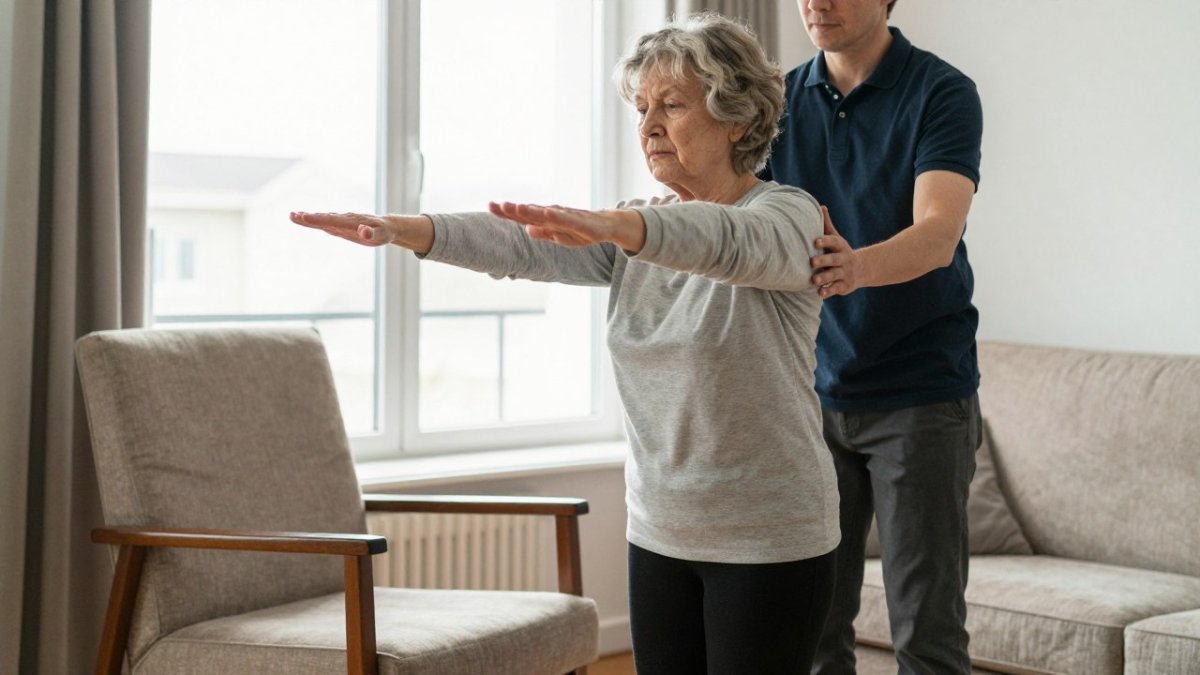
Regular, gentle exercise can help rebuild confidence and may reduce fear of falling. Strength and balance work together, so it helps to train both. The aim is not to push yourself hard, but to move consistently and gradually increase what you do as your confidence grows.
Start with a graded plan
A graded return to activity is generally a safer way to build up. Choose activities that feel manageable now, then increase difficulty in small steps. For example, if standing on one leg for 5 seconds feels steady, aim for 10 seconds the following week. Track your confidence alongside your activity so you can see progress.
Here is a simple weekly structure you can adapt:
- Week 1-2: Practise sit-to-stand and heel raises near a sturdy chair or worktop, 5 to 8 repetitions, twice a day. Add standing balance holding a surface for 10 seconds on each leg.
- Week 3-4: Increase repetitions to 8-12 and try standing balance with fingertip support only. Add slow walking heel-to-toe along a hallway with a wall nearby.
- Week 5-6: Reduce hand support where safe, add a second set of each exercise, and include a short walk outside with a companion if possible.
Consistency tends to matter more than intensity, so short, frequent sessions are a sensible approach for most people.
Exercises you can do at home
- Sit-to-stand: Rise from a sturdy chair without using your hands if you can, then sit back down slowly. Repeat 5 to 8 times. This strengthens the thighs and hips used for walking and climbing stairs.
- Heel raises: Hold a worktop and rise onto your toes, then lower slowly. Repeat 8 to 10 times. This works the calf muscles that help with push-off and balance.
- Standing balance: Stand near a surface you can hold, and lift one foot a few centimetres for 10 seconds. Swap sides. As you improve, try with fingertip support only.
- Walking practice: Walk slowly heel to toe along a hallway, using a wall or rail for support. This trains the steady, controlled steps that reduce tripping.
Safety points that matter
- Exercise near a sturdy chair or worktop so you can steady yourself if needed.
- Wear supportive, non-slip shoes rather than loose slippers.
- Start with short sessions and build up gradually over weeks, not days.
- Stop if you feel dizzy, chest pain, or unusual breathlessness, and speak to a GP before continuing.
Watch out: if you have had a recent fall, feel unsteady when standing, or have a health condition affecting your balance, seek advice from a physiotherapist or GP before starting a new exercise routine.
A physiotherapist or an exercise class for older adults can be a good starting point. Your GP can advise on suitable options.
The table below summarises the four home exercises covered in this section, so you can see at a glance what each one works and how to do it.
| Exercise | What it works | How to do it |
|---|---|---|
| Sit-to-stand | Thighs and hips used for walking and stairs | Rise from a sturdy chair, sit back slowly; repeat 5 to 8 times |
| Heel raises | Calf muscles that help push-off and balance | Hold a worktop, rise onto toes, lower slowly; repeat 8 to 10 times |
| Standing balance | Steadiness on one leg | Lift one foot a few centimetres for 10 seconds; swap sides |
| Walking practice | Steady, controlled steps that reduce tripping | Walk slowly heel to toe along a hallway, using a wall or rail |
Step 3: Make the Home Safer With a Home Safety Assessment
A home safety assessment looks at the places where falls most often happen. Making a few changes can greatly reduce the risk.
Check these areas first:
- Lighting: Use night lights on the route to the bathroom.
- Floors: Remove loose rugs, cables, and clutter from walkways.
- Bathroom: Fit grab rails and non-slip mats in the bath and shower.
- Stairs: Make sure handrails are secure and both sides have a rail where possible.
- Kitchen: Keep frequently used items within easy reach to avoid stretching or climbing.
Think about your daily routine too. A chair placed near the front door or a phone within reach can make everyday tasks feel safer. A home safety checklist can help you work through each room systematically.
Step 4: Manage Anxiety and Recognise the Signs of Post-Fall Anxiety
Feeling anxious after a fall is common, even when the fall caused no serious harm. This is sometimes called post-fall anxiety. It can keep you vigilant and cautious, which is natural, but when anxiety starts to shrink your daily activities it can worsen the cycle of avoidance and weakness.
Recognise the signs
Signs to notice include:
- Replaying the fall over and over in your mind
- Feeling panicky when you try to walk or stand
- Avoiding activities you once enjoyed
- Losing sleep because of worry about falling
- Checking the ground constantly or holding onto furniture more than before
Practical ways to manage anxiety
- Slow breathing: Breathe in for four counts and out for six, several times a day. Slow breathing can help people feel calmer and can be practised before an activity that feels daunting.
- Gentle muscle relaxation: Tense and release one muscle group at a time, starting with your feet and working upwards. This helps reduce the physical tension that can make you feel unsteady.
- Small, graded steps: Set one achievable goal each week, such as a short walk with a companion or standing to prepare a meal. Gradually increase the challenge as confidence grows.
- Talk it through: Share your worries with someone you trust. Sometimes naming the fear reduces its power.
- Measure your progress: Keep a simple diary of activities you have done, near-misses, and how confident you felt. This makes improvement visible and can be shared with a health professional.
Connect anxiety with modifiable health factors
Anxiety about falling is not only in the mind. Physical factors can amplify it. A review of your medicines with a pharmacist or GP can identify drugs that cause dizziness or drowsiness. Checking your vision and hearing, and addressing foot problems or footwear, can reduce the sense of unsteadiness that feeds anxiety. If you feel dizzy when standing up, mention this to a clinician, as it may be due to blood pressure changes or medication.
When to seek clinical assessment
If anxiety is affecting your daily life, speak to your GP. Talking therapies, including cognitive behavioural therapy (CBT), are sometimes used to help people manage fear of falling. A physiotherapist can assess your balance and walking and suggest a suitable exercise plan.
Watch out: do not ignore persistent anxiety or avoid activities altogether. Avoidance reinforces fear and leads to further weakness. A health professional can help you break the cycle safely.
Booking Your First Conversation About Support at Home
Some people find that managing fear of falling is easier with extra support. Support at home can help you stay active, safe, and in control of your routine. [PAGE: home care services]
If you are unsure where to start, a first conversation can help you understand the options. You can book a professional supported living assessment to explore what support might suit you. For a clear overview of what support at home includes, read what is home care before you decide.
Frequently Asked Questions
What is the psychological impact of the fear of falling in older adults?
Fear of falling can lead an older person to avoid walking, stairs, or social activities they once enjoyed. Over time this avoidance can reduce strength and balance, which in turn raises the actual risk of a fall. Many people also experience anxiety, low mood, and a loss of confidence in their own abilities. Recognising these feelings early matters, because a person who feels in control of their movement is more likely to stay active. If worry is affecting daily life, a GP or other qualified health professional can discuss options, including talking therapies and a clinical assessment of balance and mobility.
How can home modifications help reduce the fear of falling?
Simple changes such as improving lighting, removing loose rugs, fitting grab rails in the bathroom and by the stairs, and keeping frequently used items within easy reach can make everyday movement feel safer. A home safety assessment, often carried out by an occupational therapist or a local council service, can identify hazards specific to your property. Feeling secure at home often gives people the confidence to move more freely, which supports both physical strength and emotional wellbeing. Check with your local council or an occupational therapy service about what assessments and equipment may be available in your area.
What role does physical activity play in reducing fall-related anxiety?
Regular, gradual physical activity improves leg strength, balance and walking confidence, which many people find reduces their worry about falling. Exercises that challenge balance, such as standing on one leg while holding a stable surface or practising heel-to-toe walking, are often recommended. Activity should be built up slowly and tailored to your current ability. A physiotherapist or exercise professional can design a safe, graded programme, particularly if you have a health condition or have already had a fall.
When should you seek professional advice for a fear of falling?
Seek advice from your GP if you have fallen recently, if you feel unsteady when walking, if you have started avoiding activities you used to enjoy, or if worry about falling is affecting your sleep, mood or independence. A GP can review medications, vision, hearing and other health factors that may contribute to balance problems. Physiotherapists, occupational therapists and psychologists can also help, depending on the cause. Seeking help early is often more effective than waiting until confidence has declined significantly.
